Spider webs and other things they do with silk

Everyone knows the iconic image of an orb weaver spiders web. Like this one from a golden silk orb weaver.
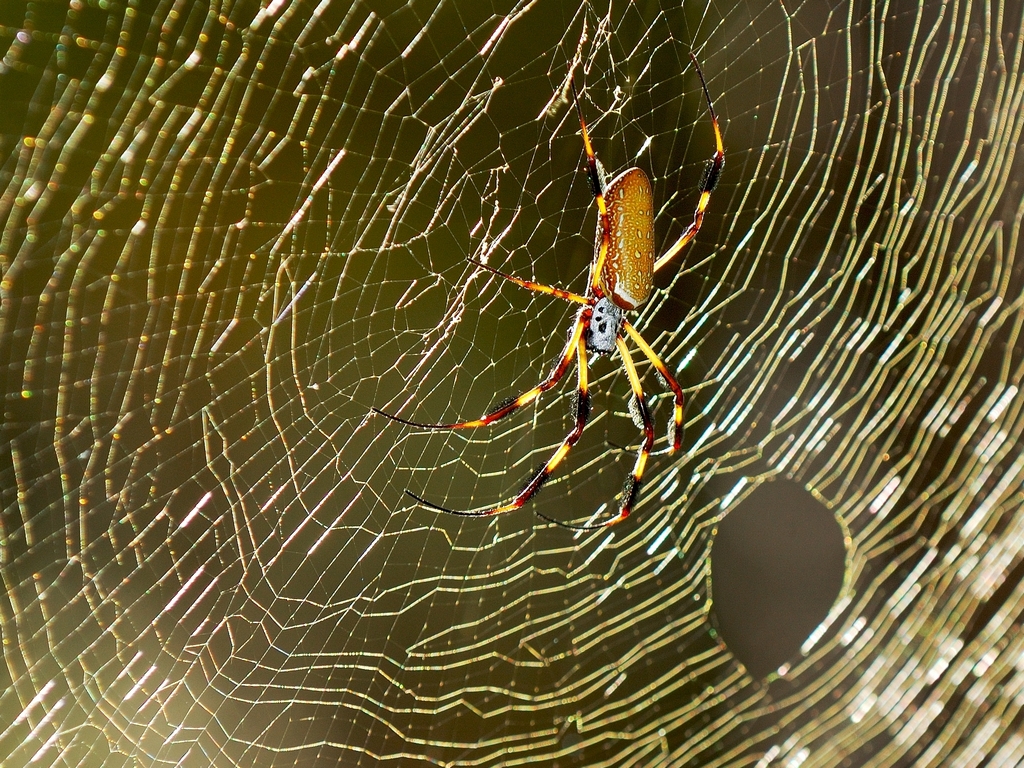
DSC_3203acr107

But not all spiders spin webs like that. For example, here is a jumping spider I found this morning. It doesn’t use a web at all except for nesting. It just jumps it’s prey and bites. On the right is a Green Lynx spider. It spins an anchor line when it jumps it’s prey but it doesn’t spin a web. It’s green color makes it hard to see in foliage but, this one decided to catch a few rays.
DSC_9381acr107 DSC_9432acr107
Another use for silk is to create a nest. Here is a leaf bending spider which has tied a couple of leaves together and hidden itself inside. I managed to tease it out for a less obscured shot.
DSC_9413acr107 DSC_9424acr107
Finally, an orchard spider which has spun a chaotic mess of a web and a really tiny crab spider which attack flying insects.
DSC_9466acr107 DSC_9454acr107
The first picture here was taken with my old Nikon D50 and 70-200mm VR zoom with a TC-17E II teleconverter. All the others were taken today with the Nikon V1, 30-110mm zoom and a Leitz ELPRO VI closeup lens.
Posted in animal behavior, Spider | Tagged , , , , , , , , | 3 Comments

Yellow Crowned Night Herons – the babies are up

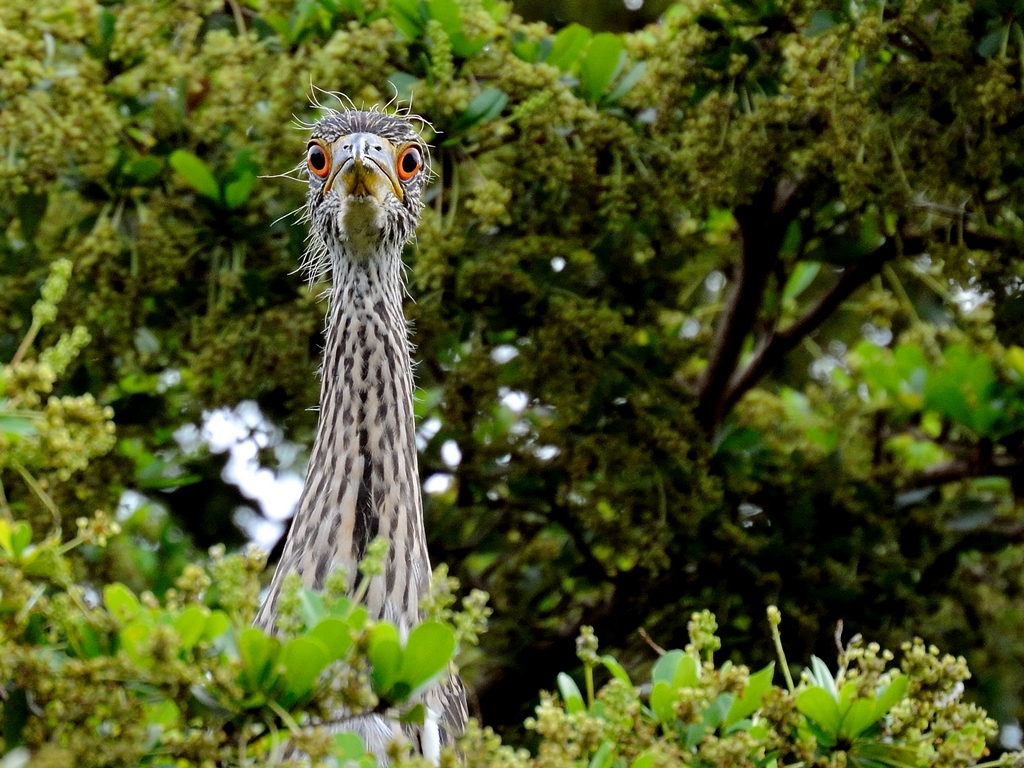
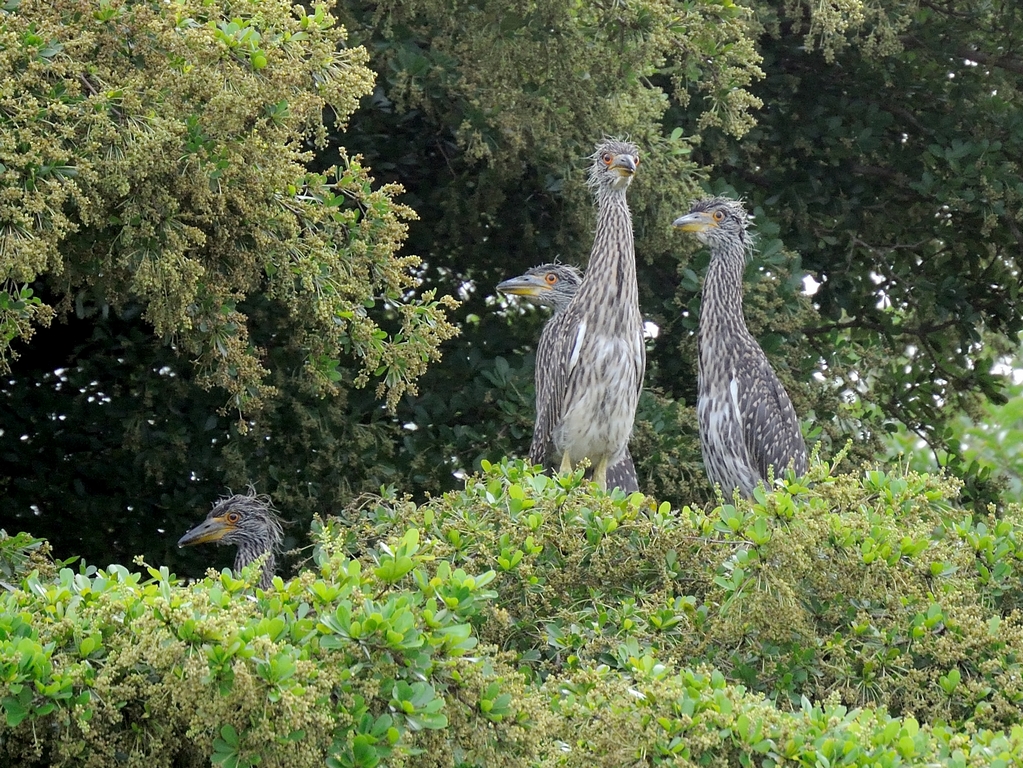
With a respite in our rainy weather from TS Andrea I walked over to the Yellow Crowned Night Heron nests where the mama’s were playing peekaboo with me. Today I found four babies who were finally able to stand and were walking around in the branches of the Black Olive tree. One of them was still hiding in the lower nest but even it’s head could be seen in the tree. The weigh of them was opening up the normally dense foliage.
DSC_9048acr107

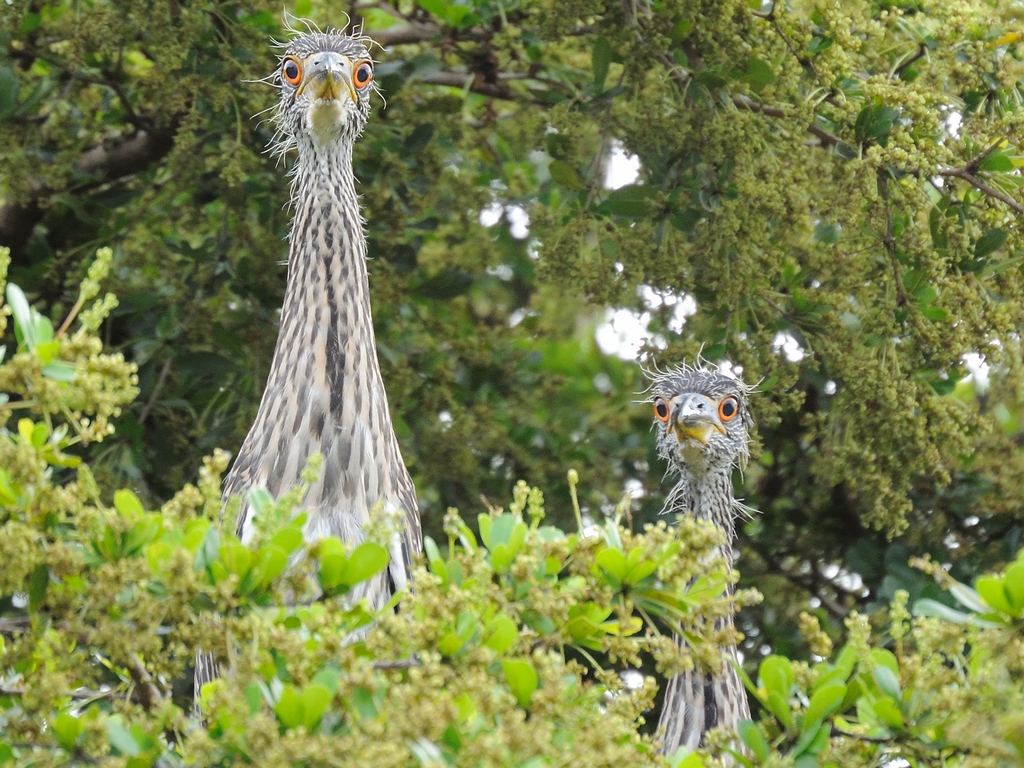
While I was watching them, they were keeping a close and curious eye on me.
DSC_9064acr107 DSC_9051acr107
My favorite shot of the morning went back to the peeking images I had been getting of the mothers. This time though, it was the lower baby.
DSC_9058acr107

Posted in Bird | Tagged , , , | 1 Comment

Weekly Photo Challenge: The sign says …

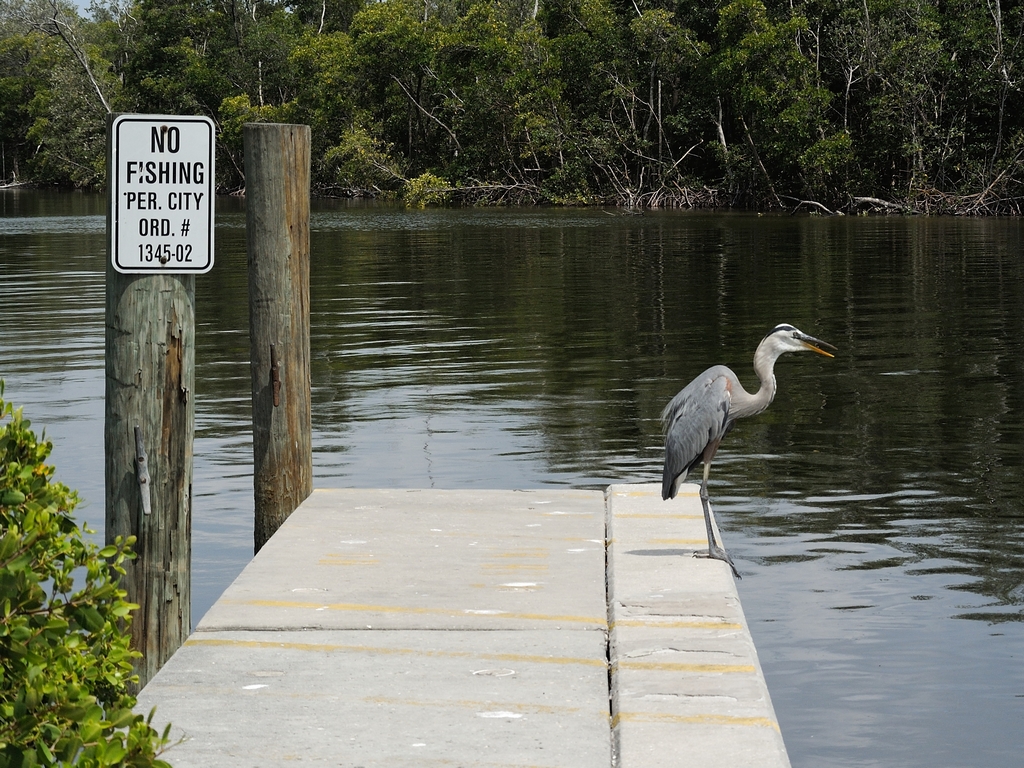
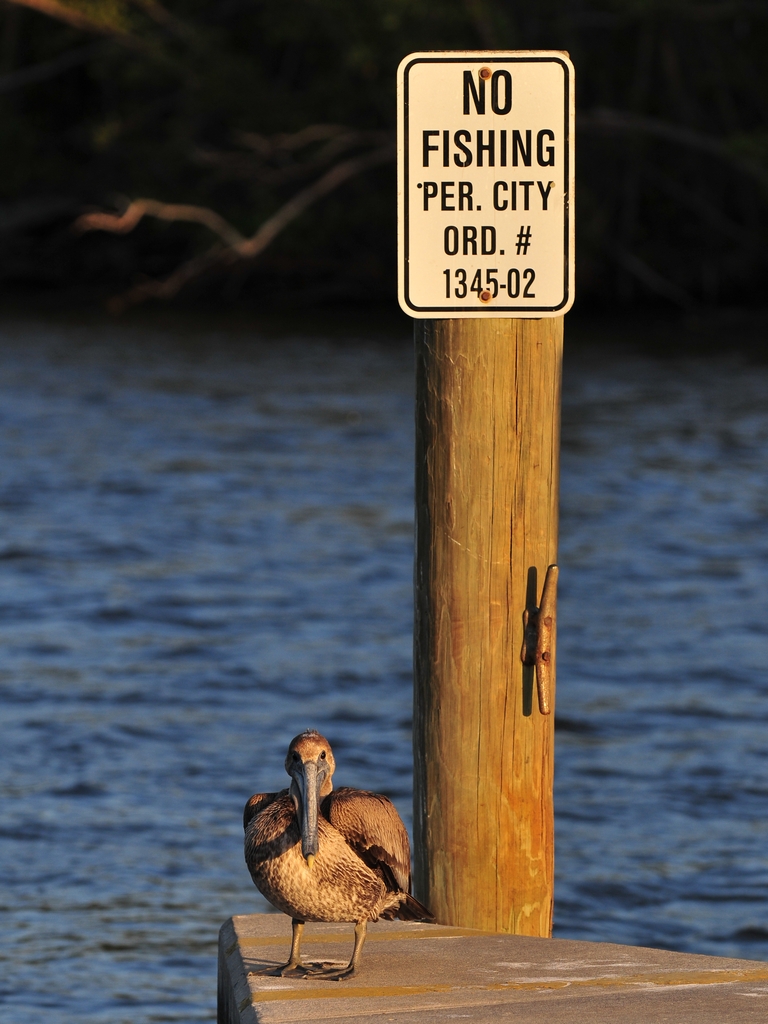
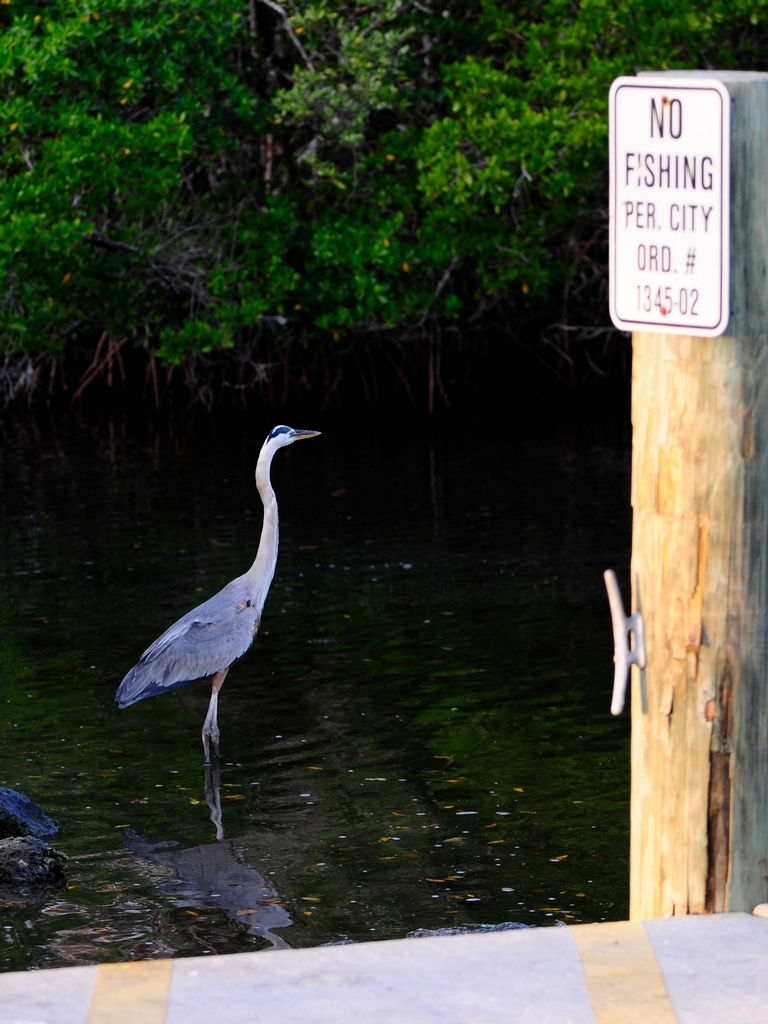
The sign basically says NO FISHING but plenty of folks down at the park seem to completely ignore the admonition.
DSC_7342acr107

DSC_1684cr107 _DSC6566cr107

Posted in Bird, Wordpress Photo Challenge | Tagged , , , | 1 Comment

Odonata – Dragonflies and Damselflies

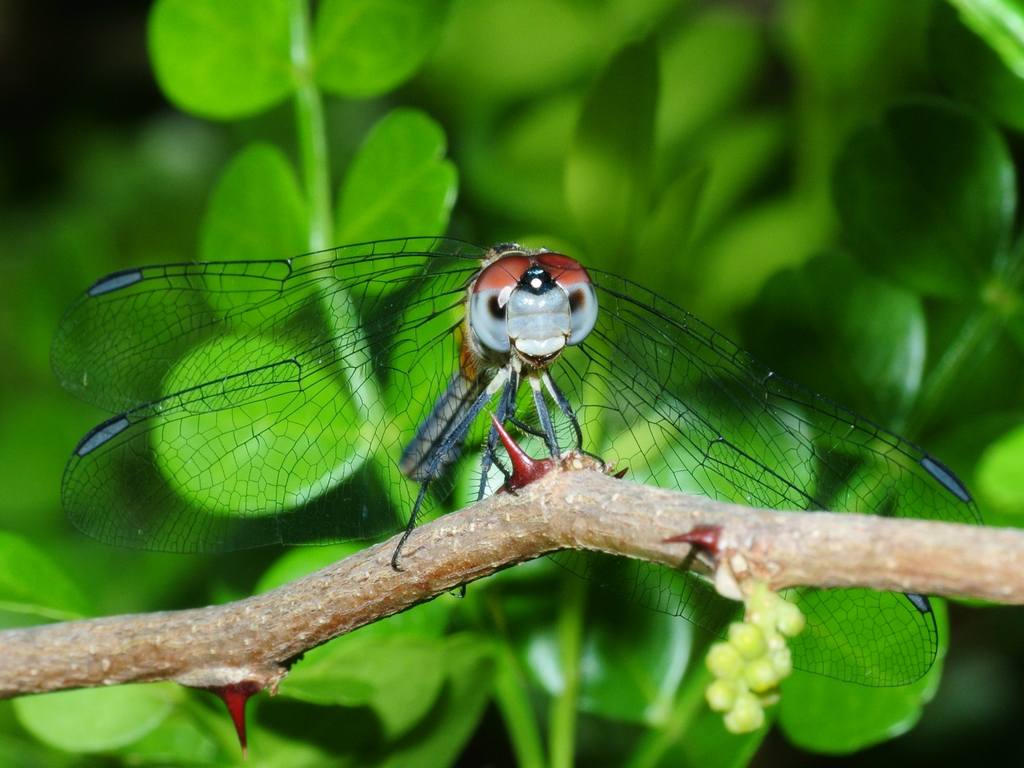
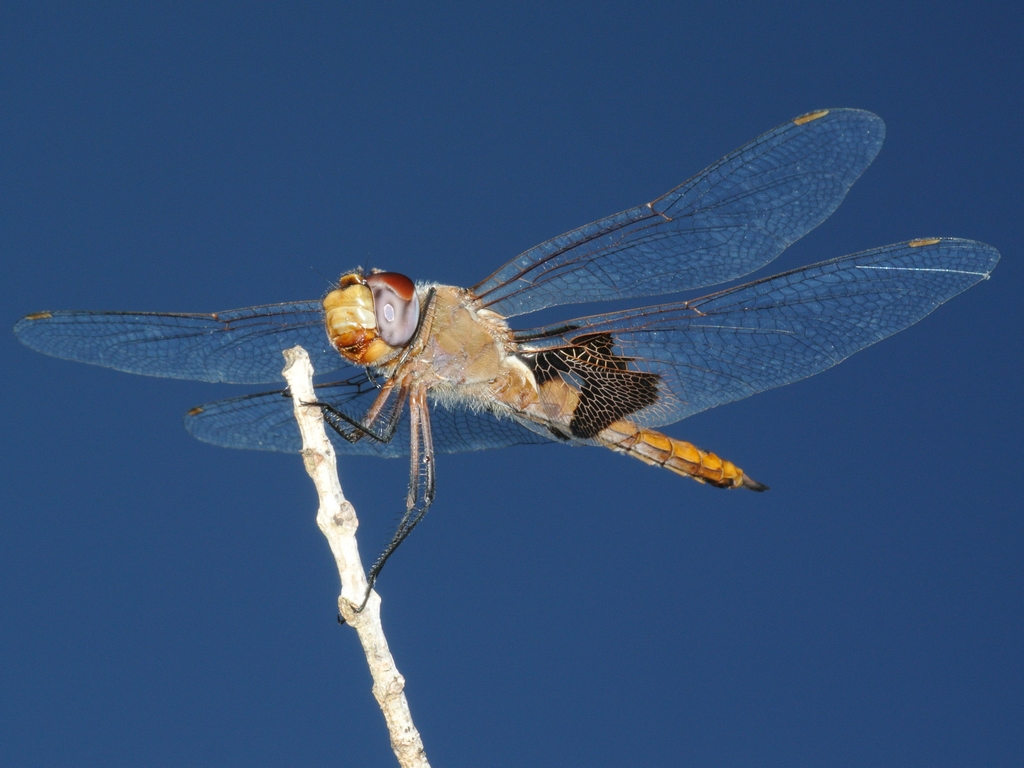
The moist days bring the dragonflies out as all of their small insect prey hatches. I see quite a few of them on walks now. Particularly along the mangroves. Here are a few shots from the last few days. The first is a straight on portrait of one of the more patient ones.
DSC_8360cr107
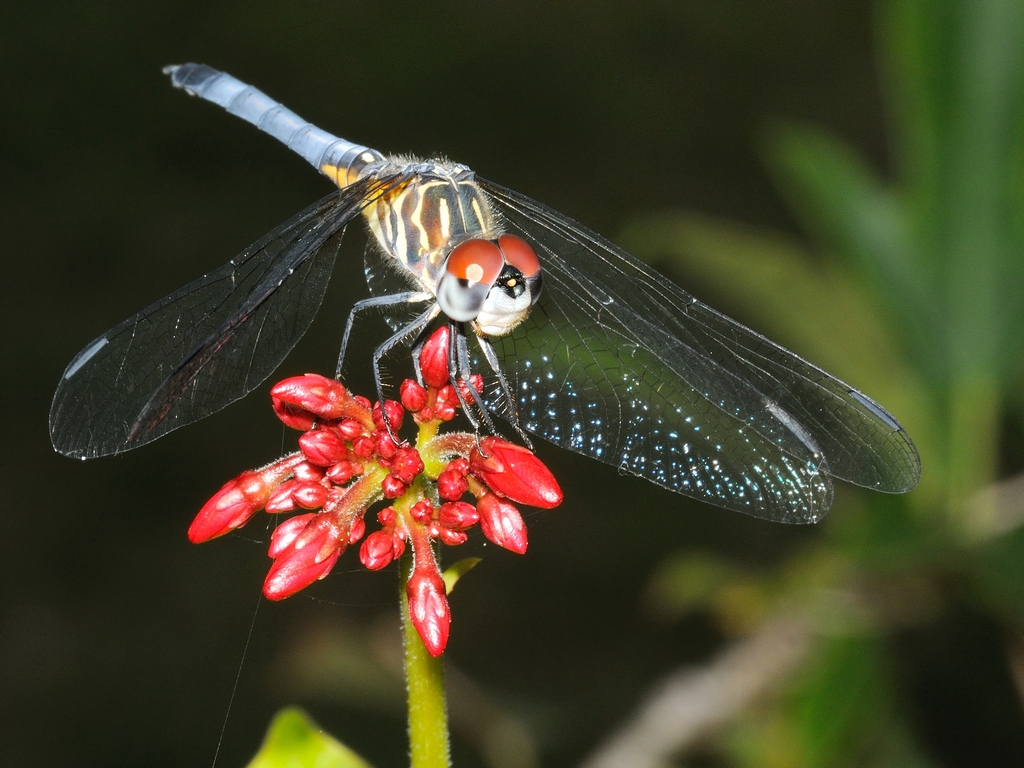
Now, a couple more of the same species.
DSC_8622acr107 DSC_8487cr107
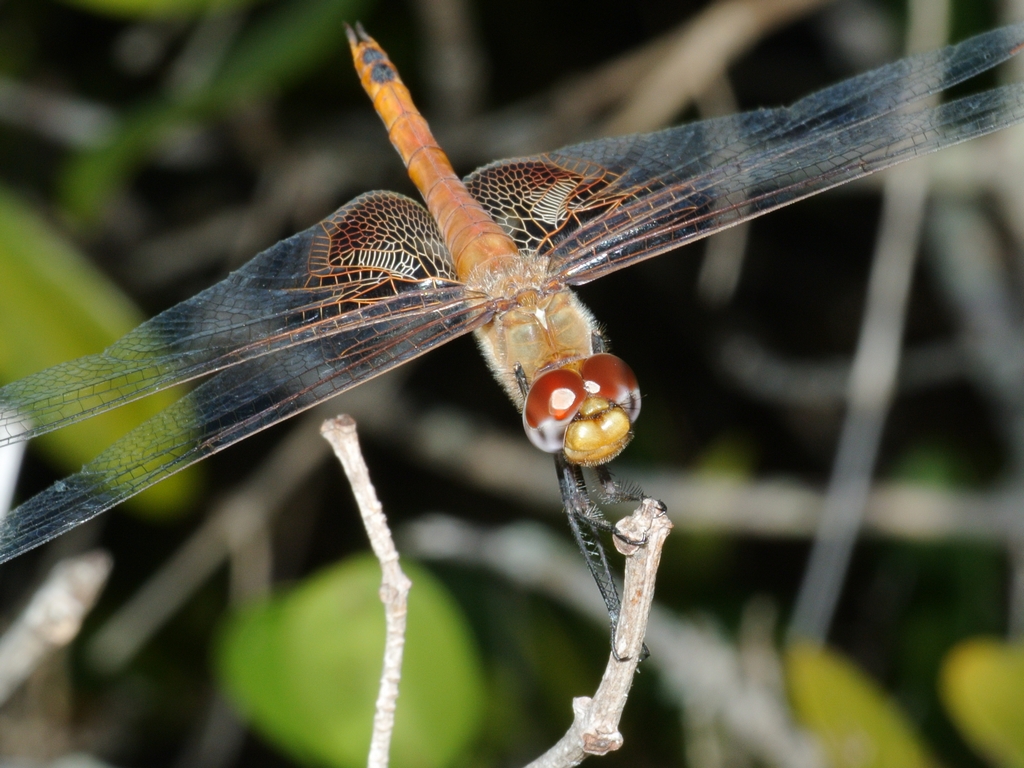
These shots are of one called a Carolina Saddlebags because of the color patches at the base of the wings. I usually see these perched very high in the brush but, the low cut mangroves along the seawall in Ponce Park made it possible to get closer.
DSC_8472cr107 DSC_8465cr107
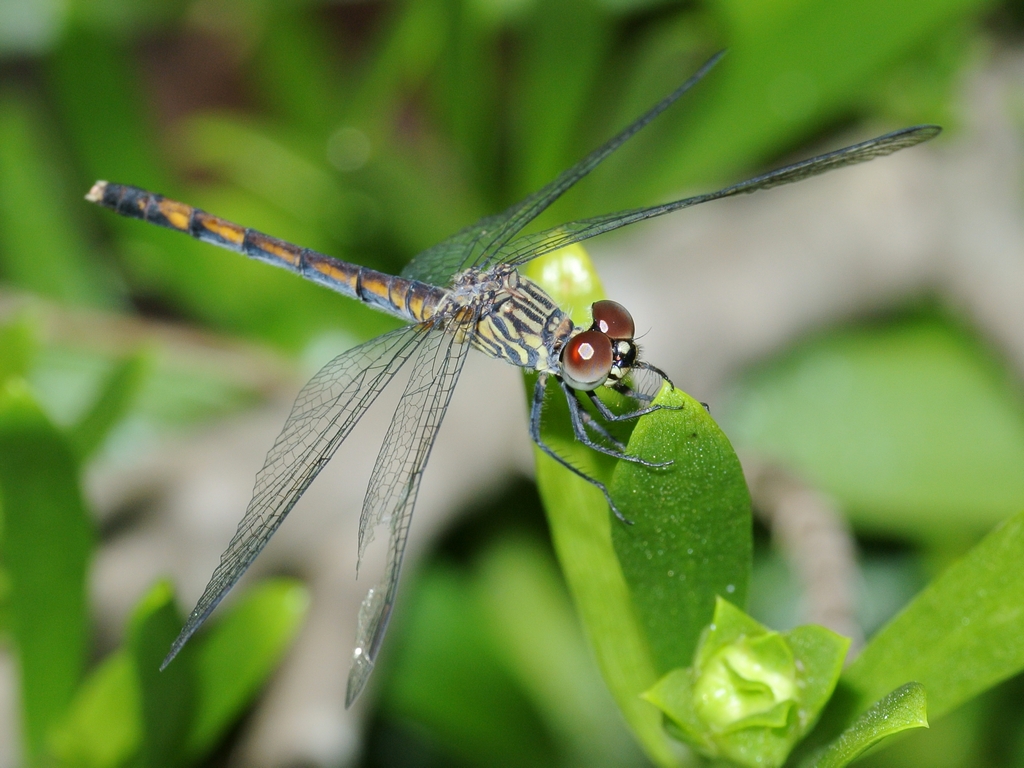
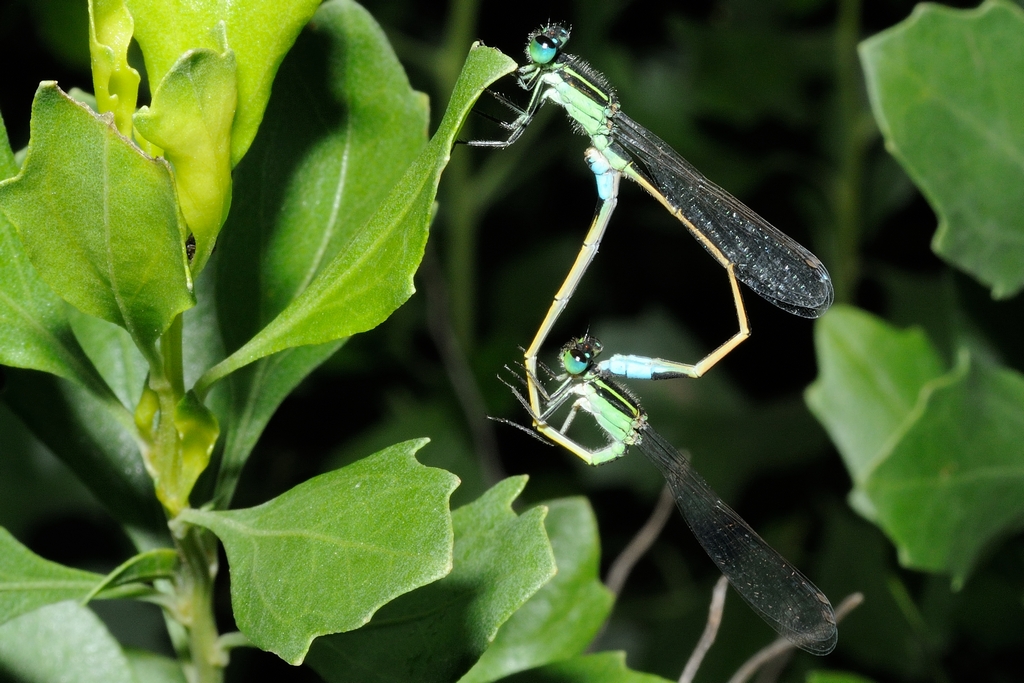
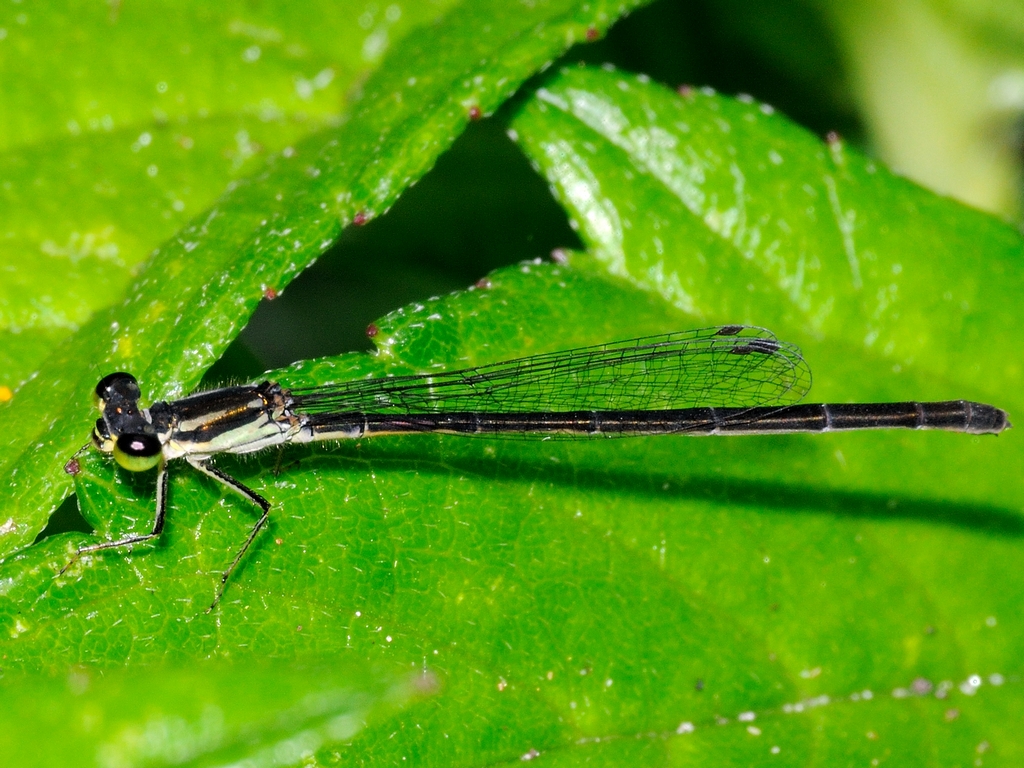
And now, a couple of damselflies. These are smaller than the dragonfly and usually a bit more skittish. You can tell them apart by the eye placement too. The damselfly has it’s eyes on the sides of the head while the Dragonfly has them on the front and they are nearly joined.
DSC_8414acr107 DSC_8578ar107

Posted in animal behavior, Bug | Tagged , , , , , | 2 Comments

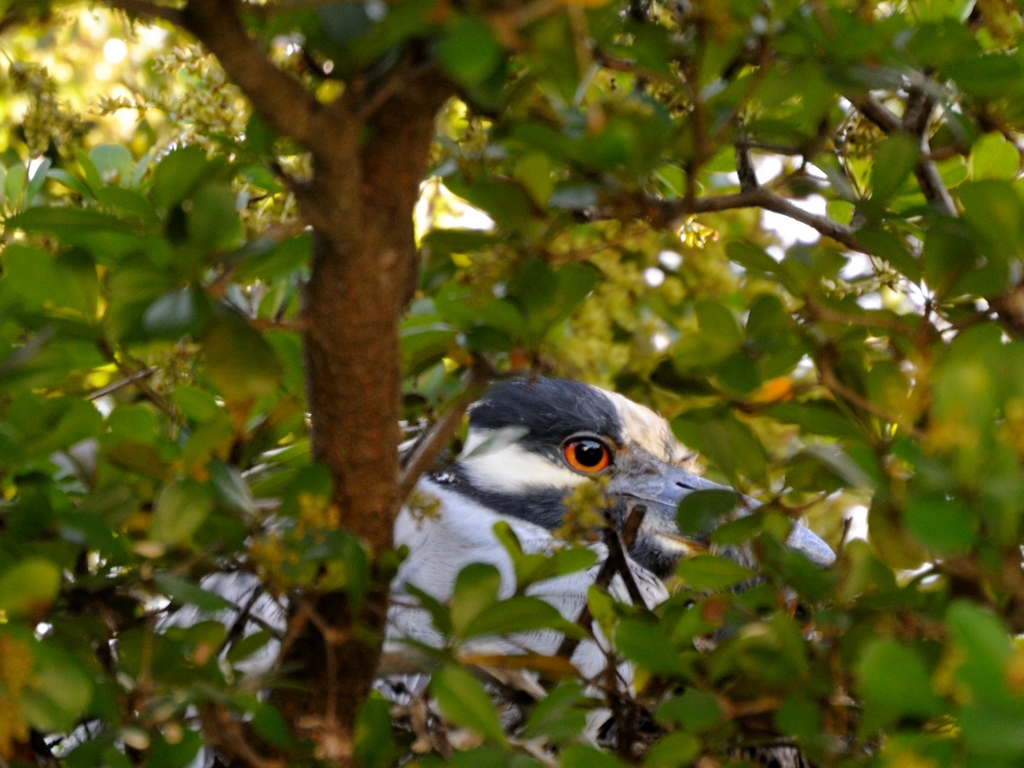
Yellow Crowned Night Heron – playing peekaboo again

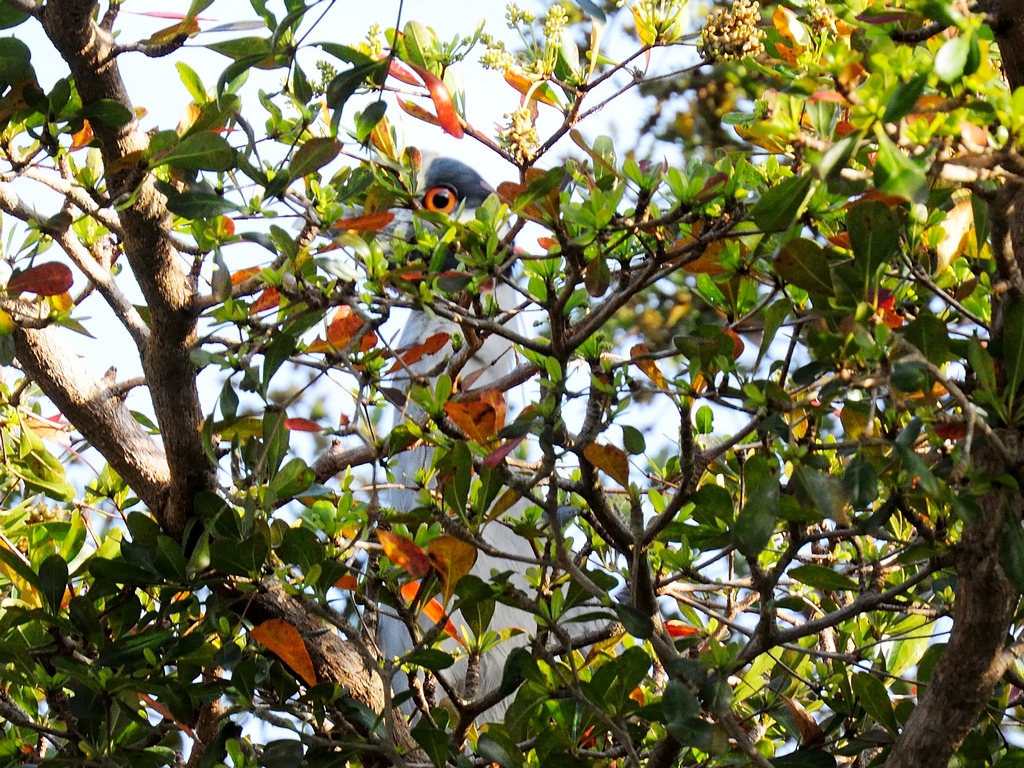
There is a black olive tree on one of my morning walk routes that had two Yellow Crowned Night Heron nests in it. We had a pretty hefty windstorm the other day so I went that way to check on things. It’s hard to see the nests because the black olive is a tree with very dense foliage. You can see the Heron looking at you as you try to find a way to get a shot as the breeze moves the leaves. You can almost always find the eye peeking at you. Here are a couple of shots of how I manage to see them now. Once the eggs are hatched though there will be a lot more activity around the nest as they feed the young so I hope get better shots.
DSC_4319acr107h DSC_8557acr107

Posted in animal behavior, Bird | Tagged , , | 1 Comment

A Hairstreak Butterfly

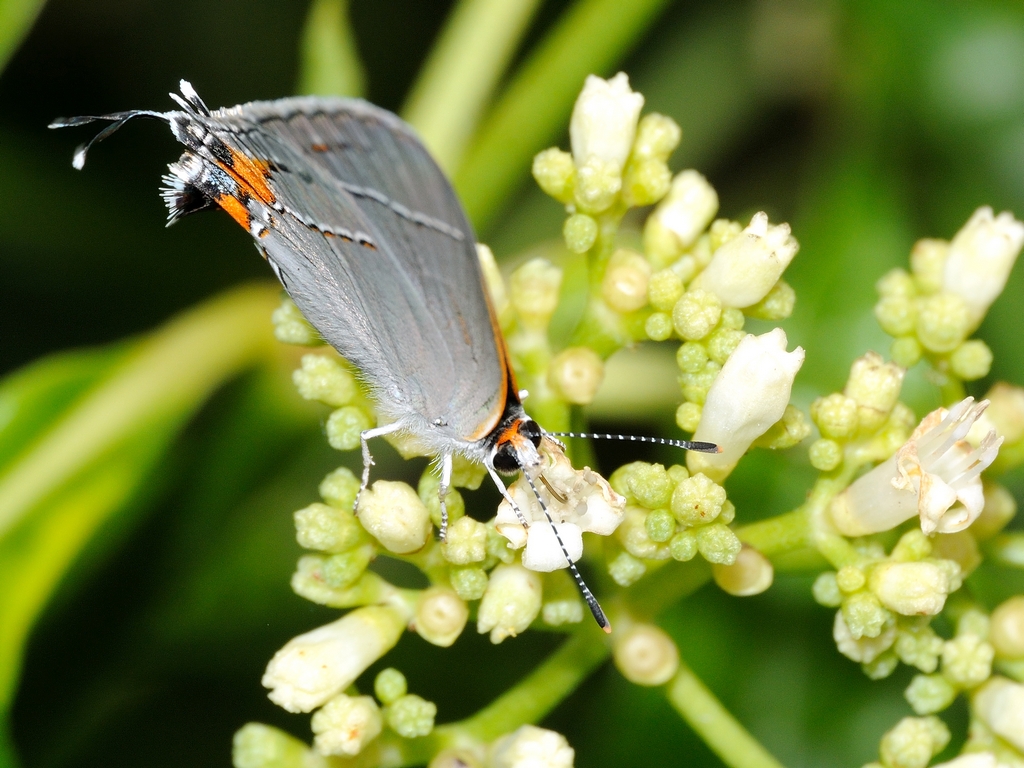
I found this fellow in the Punta Gorda History Park. It’s a Grey Hairstreak. These have a bit of a disguise. The ends of the wing have little extensions that flutter about in the breeze. It almost look like there is a head with eyes and antenna at the back of the butterfly. This one is in good condition but I often see them with the fake antenna and part of the wing missing. It would appear that this is the result of a predator grabbing the wrong part for a meal. As usual, just click for a larger view.
DSC_8536acr107 DSC_8545acr107

Posted in animal behavior, Bug, Park | Tagged , , , , | 1 Comment

Crablike Orb Weaver – Gasteracantha cancriformis

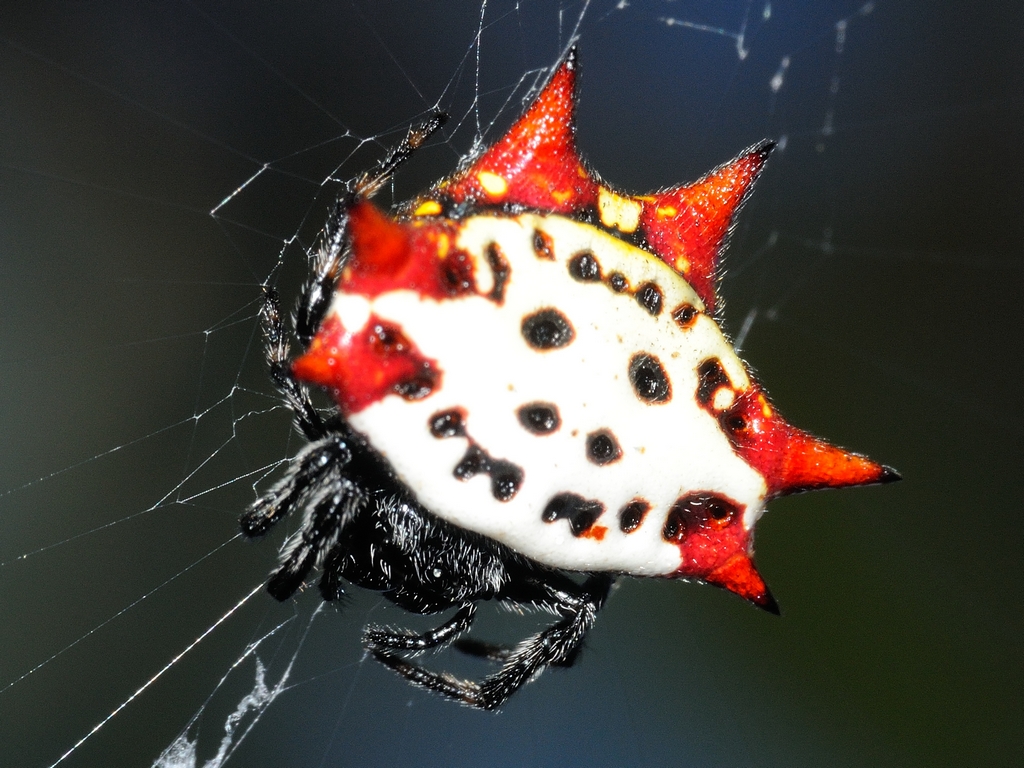
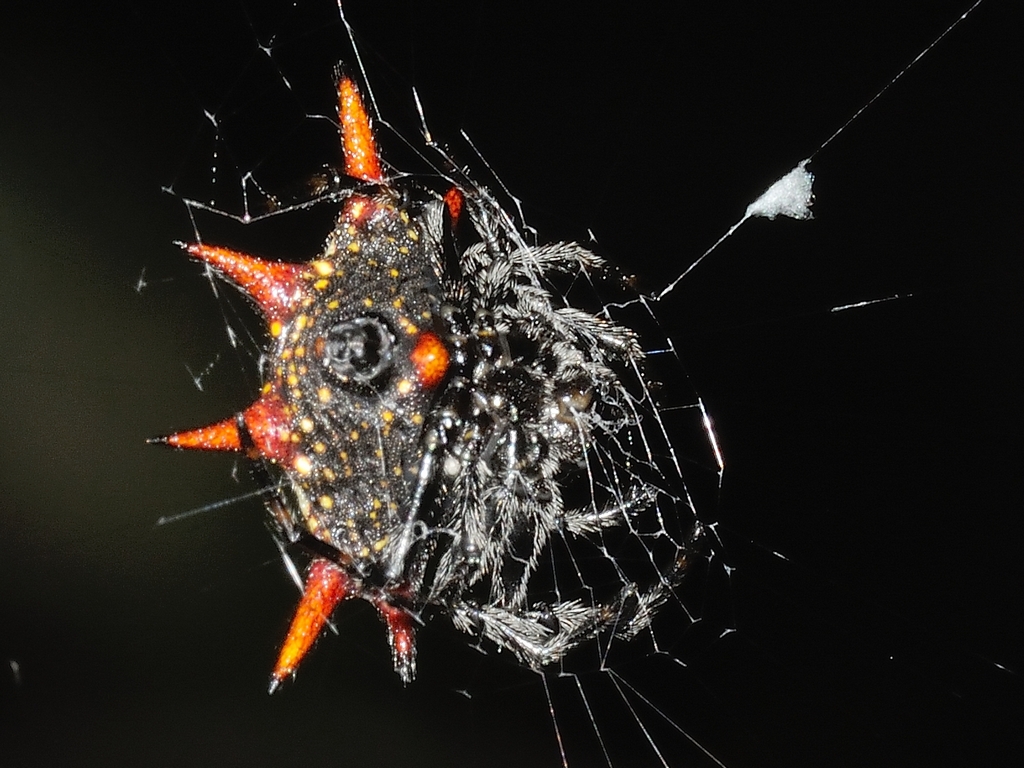
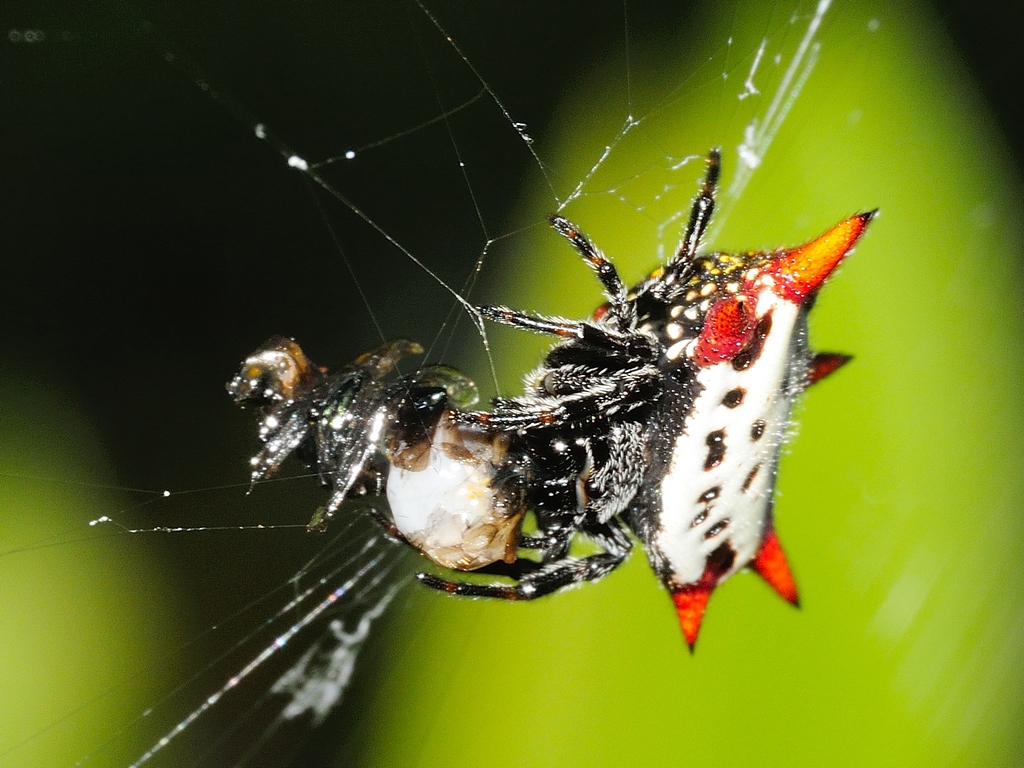
These are interesting little spiders because they look like a crab. Generally small they spin their geometric webs in the mangroves and wait for lunch to arrive. They generally sit in the middle of the web and I sometimes think they should really be called flowerlike Orb Weavers because they are about the size and coloring of a lot of the mangrove flowers. But, the shell and spines make them look crablike up close.
DSC_8385acr107 DSC_8215acr107
As you can see, the top of the spider is colorful while the bottom is almost completely black. This final shot shows one with lunch.
DSC_8266acr107

Posted in animal behavior, Bug, Spider | Tagged , , , , | Leave a comment

Upate on the debris carrying bug

As I said, I posted the images of the bug which had disguised itself with debris. I posted it at bugguide.net as an ID request at 4:53PM and at 4:55PM there was a response with a link to similar images and where you could find out more.

Turns out it was a green lacewing Chrysopidae. When it grows up, it’s going to look like this.
DSC_4616acr107

and it came from eggs that looked like this.

DSC_8878acr107


Posted in animal behavior, Bug | Tagged , | Leave a comment

The Sea Grape – Coccoloba uvifera

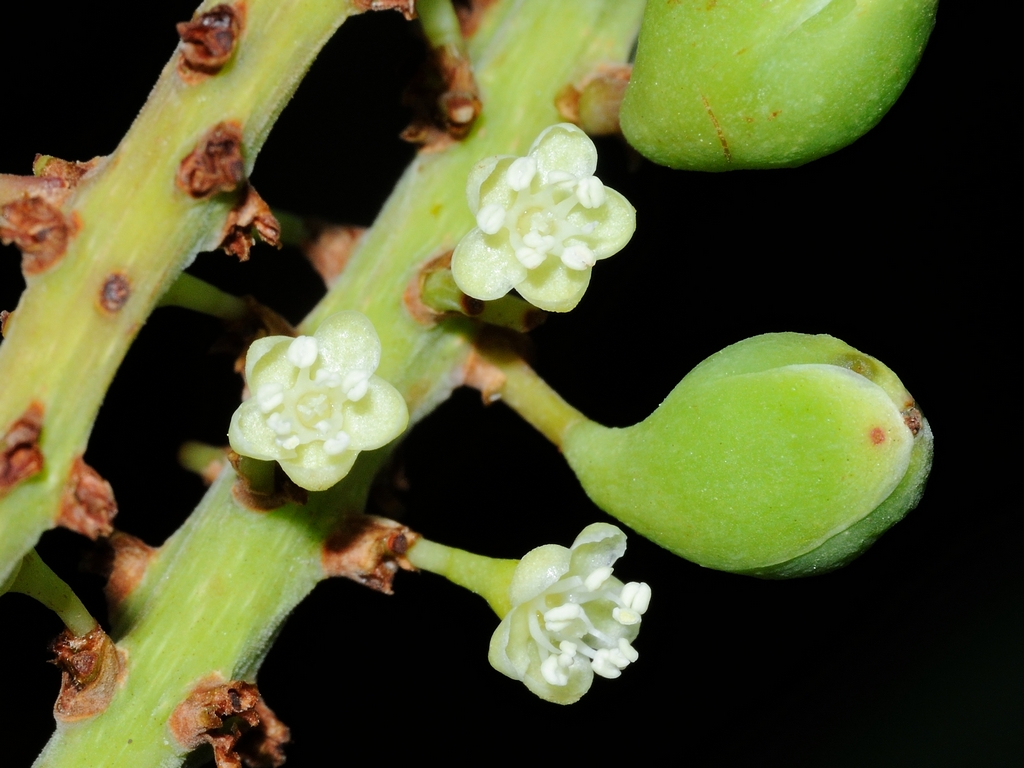
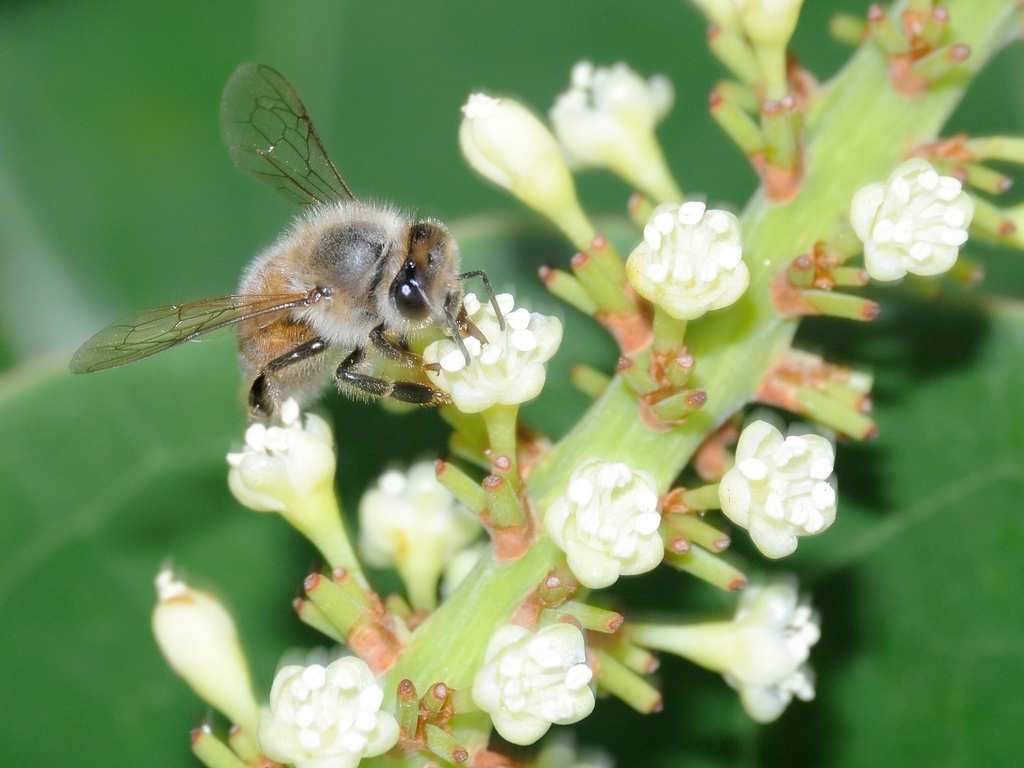
Sea Grape is a common plant in Florida. We like it and it is as common as pinewoods and palmtrees. In Punta Gorda we even have an art gallery named after it. It can be grown as a tree or a bush and some folks used it for hedging. It has dense foliage of large circular leaves. The small waxy flowers appear on stalks which later become the ‘grape’ clusters I could see the blooms getting denser today and they were attacting a lot of bees. You can see the size of the flower in comparison to this bee.

DSC_8184acr107 DSC_8149acr107

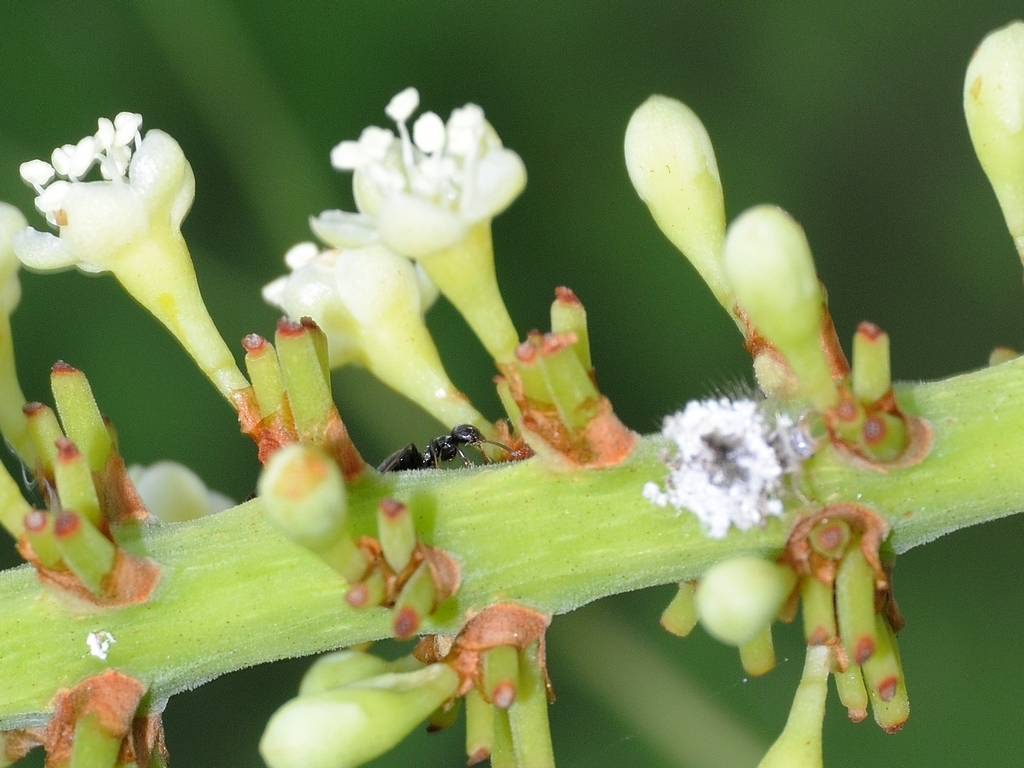
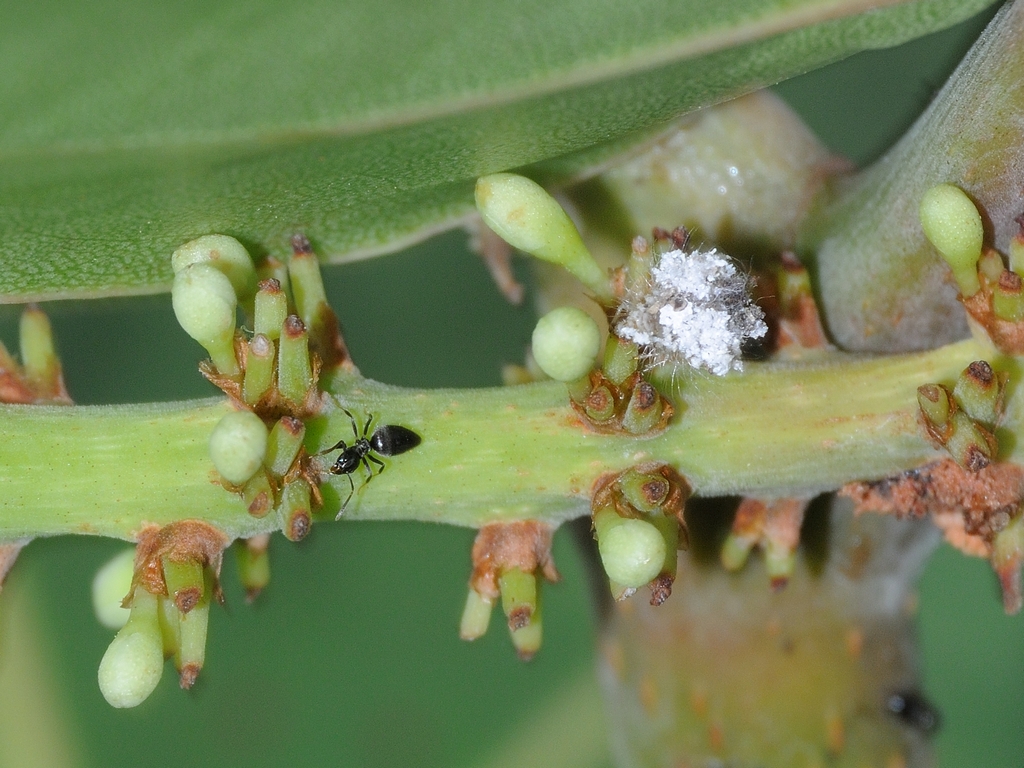
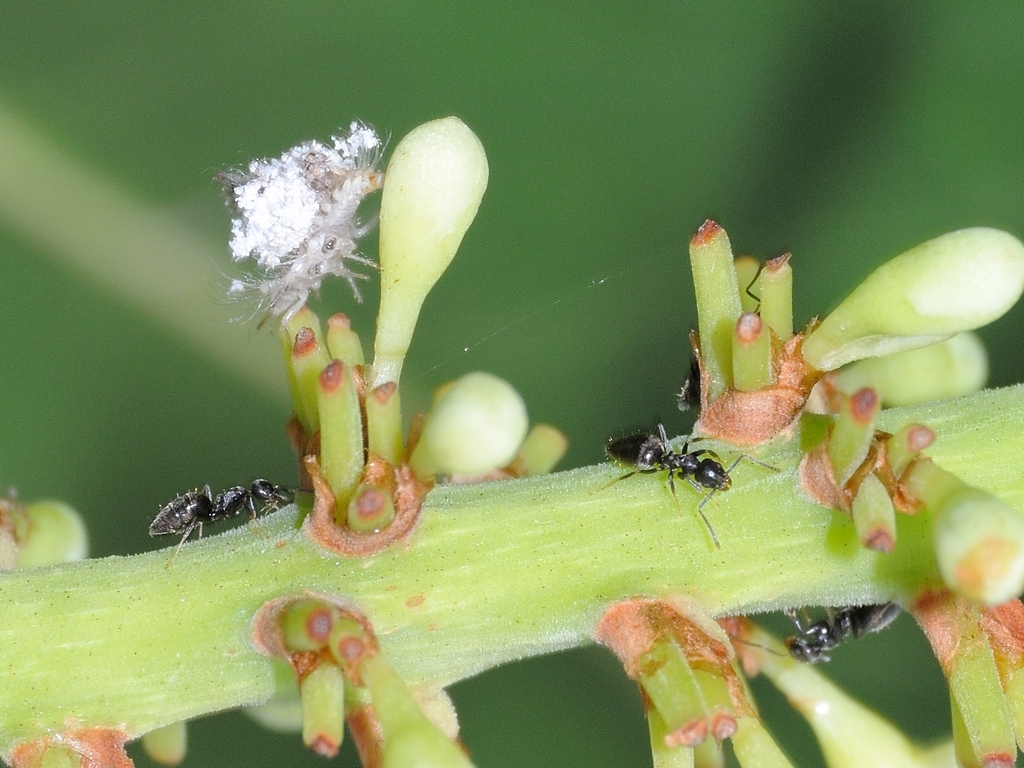
I notice that there were also some small black ants climbing all over it. I took a couple of shots and when I looked at them on the screen for review I noticed something else in one picture. At first it looked like a dead blossom that was out of focus but, I zoomed in a bit closer and decided it was something else. I went back for another shot, in focus this time, and discovered that it had moved.

DSC_8155acr107 DSC_8160acr107

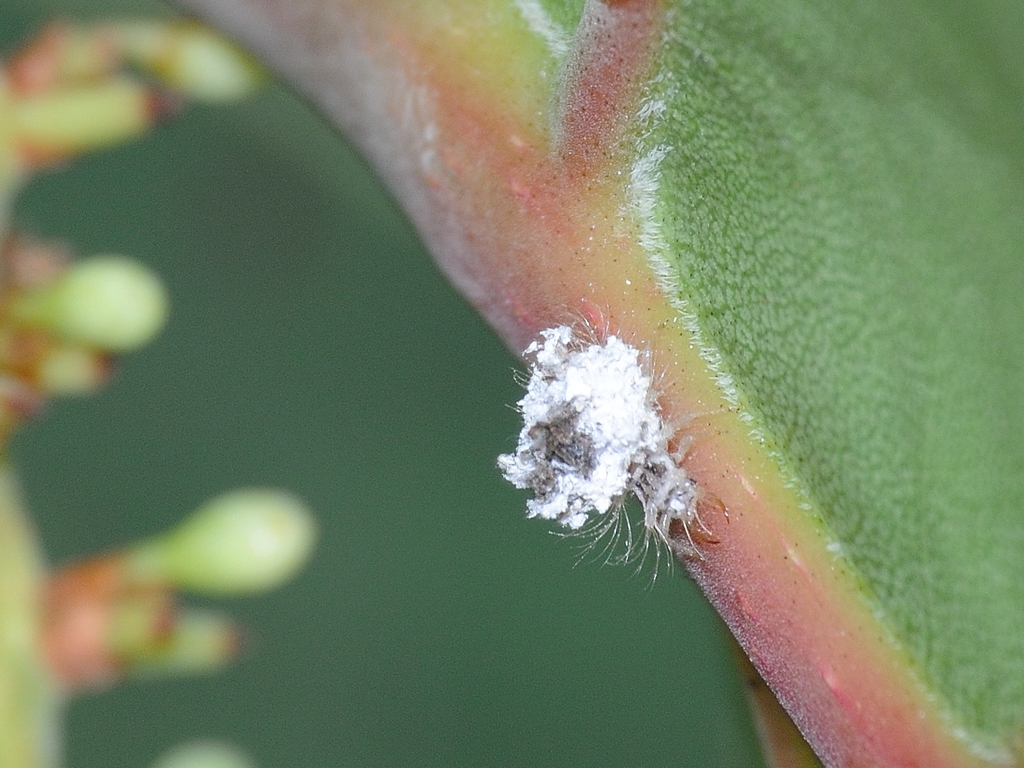
Hmmm, a small hairy insect that covers itself in debris as a disguise. This one is definitely going off to bugguide.net for identification.

DSC_8156acr107 DSC_8162acr107

Posted in Bug, Park - Ponce de Leon, Photography | Tagged , , , | Leave a comment

Long-legged Flies – Dolichopodidae

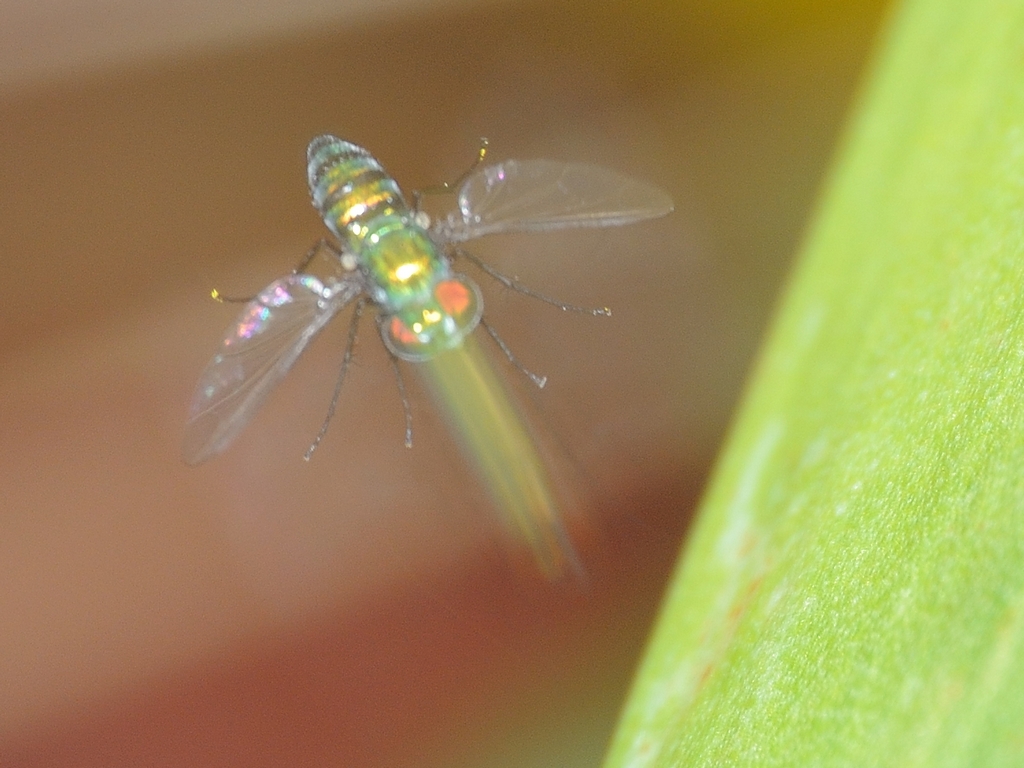
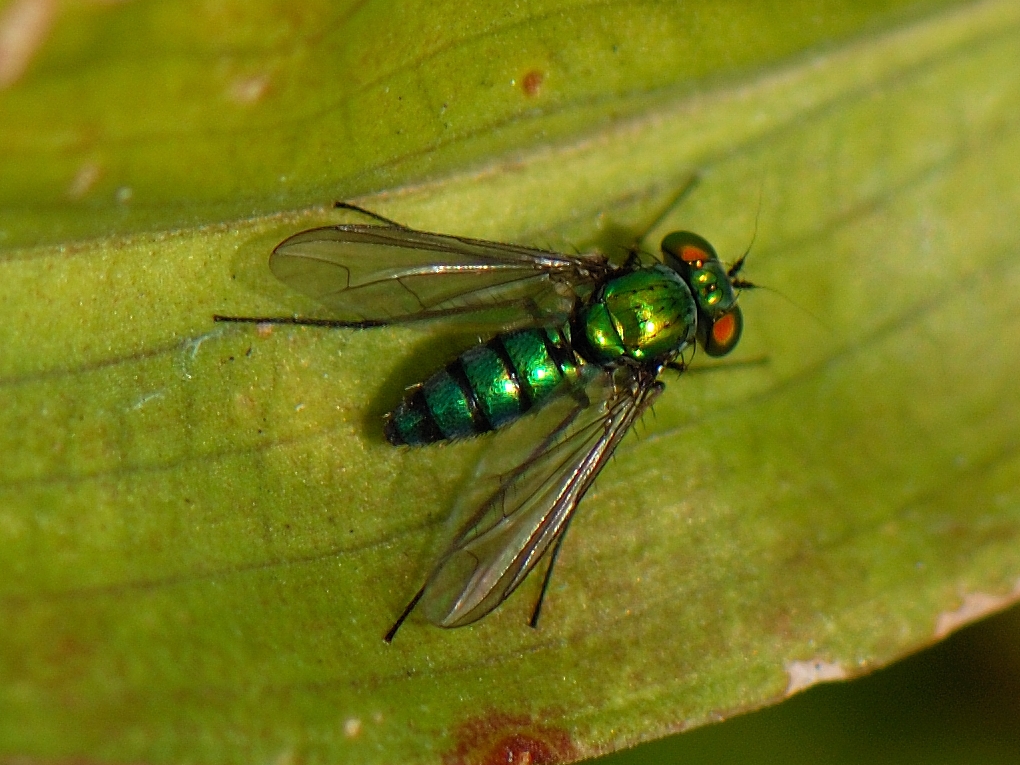
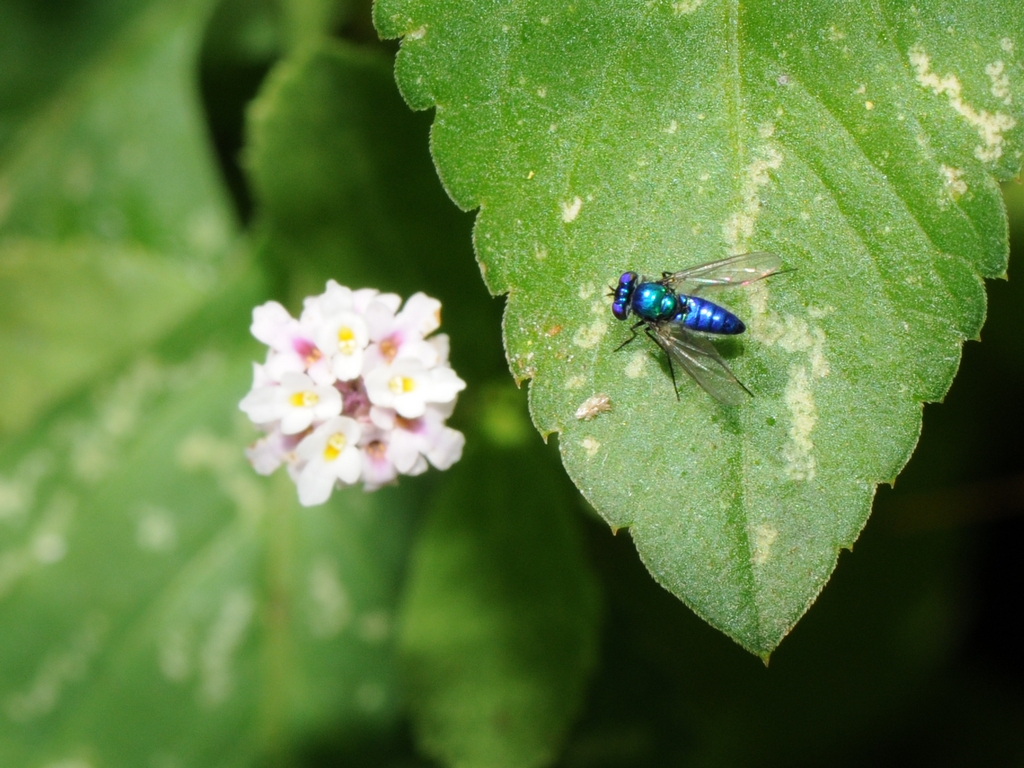
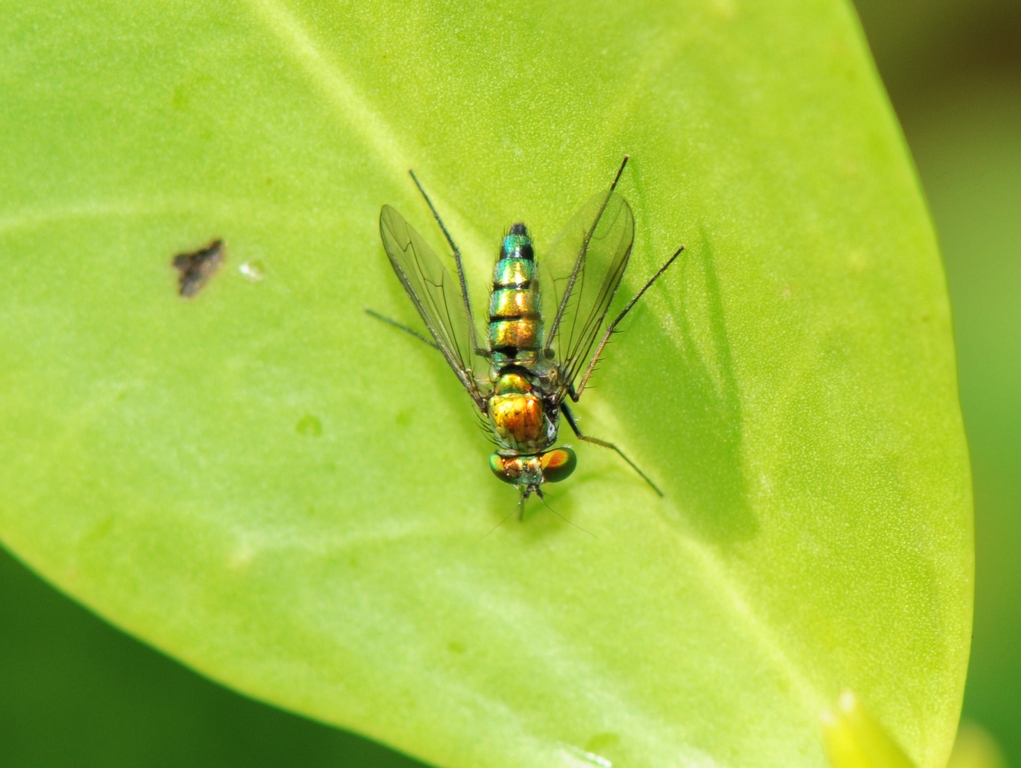
These flies are very, very common all over the world. There are about 7000 different species so, I have no idea which these particular flies are from. I do know that I see them often but they are difficult to photograph. They are only about 2-3mm in length and they are very, very quick. If it’s relatively cool they are less active but most of the time they don’t sit still long enough to get their picture taken. Yesterday evening, I was out walking around the yard with the Nikon V1 and Leitz ELPRO VIa. I discovered that with the flash and short working distance it was difficult to get them standing still. I did get some unusual in flight shots though.
DSC_8046cr107 DSC_8038acr107
In the one on the left, the flash has made for some dazzling diffraction on the wings and the one on the right shows motion blur from ambient light. It also shows that the fly leaps into the air backwards. Here are a few others that show them stationary. Most of these were taken with a D300 and 105mm Micro-Nikkor which allows for be to shoot from further away and less likely to frighten them off.
DSC_5846ac107 DSC_2785acr107

DSC_1613cr107 DSC_0476cr107

Posted in Bug | Tagged , , , , , | Leave a comment