Ollies Pond – Port Charlotte FL

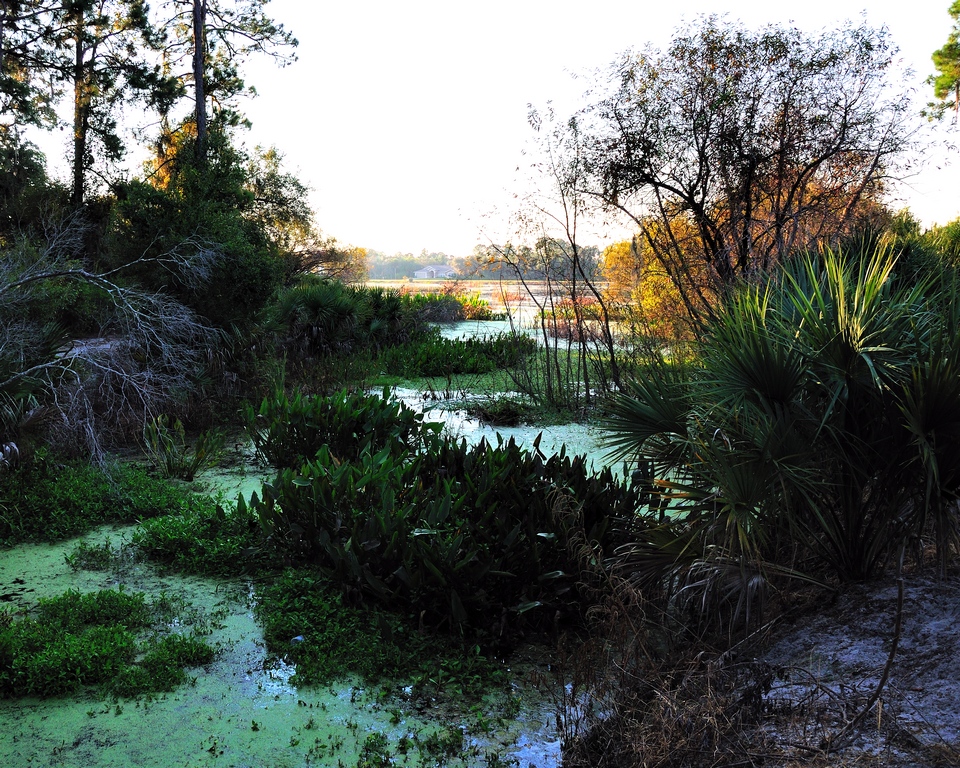
Today, Oct 22 the Photo Adventure Camera Club that I belong to took a field trip to a 41 Acre Park in Port Charlotte FL. It’s called Ollies Pond and has about a 1 mile walk through it. I took my usual walk around kit. A Nikon D300 with 70-300mm VR and a D90 with the 105mm f2.8 Micro-Nikkor and a Nikon SB-800 flash. Since it’s not a long walk, I took the lens bag too giving me a range from 12-200mm in various zooms and primes.

I arrived a little early hoping for a nice misty sunrise over the pond but, it wasn’t to be. The low humidity and cloudless sky just made for clear air with the sun a big hot ball. Still, there were a few shadowy opportunities for small scenics that promised more activity with fewer people in the locale.

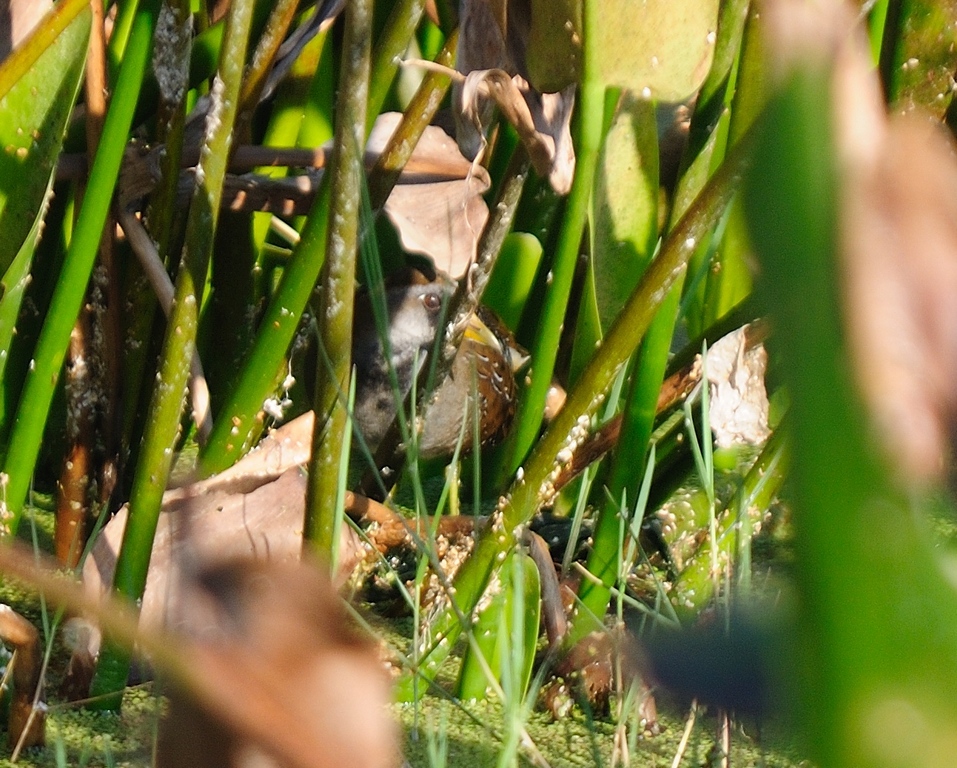
Even though a large group walking around moved a lot of the animals away from the path, there were still a lot to be seen. One of my surprises was a bird that I had never even heard of even though it is quite common. It’s a Sora – Porzana carolina which is described as a secretive marsh bird. Since I never heard of it, it was certainly living up to it’s reputation. It lives within the cattails and other foliage of marshy land. I got a couple of rather unsatisfactory shots of it just to show I had seen it.I never would have seen it without it being pointed out by a friend who maintains his own record at zinnysworld.
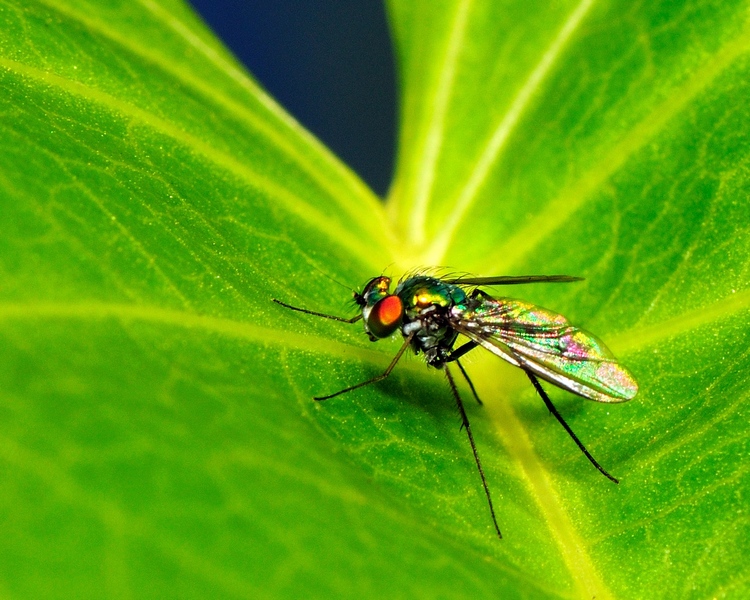
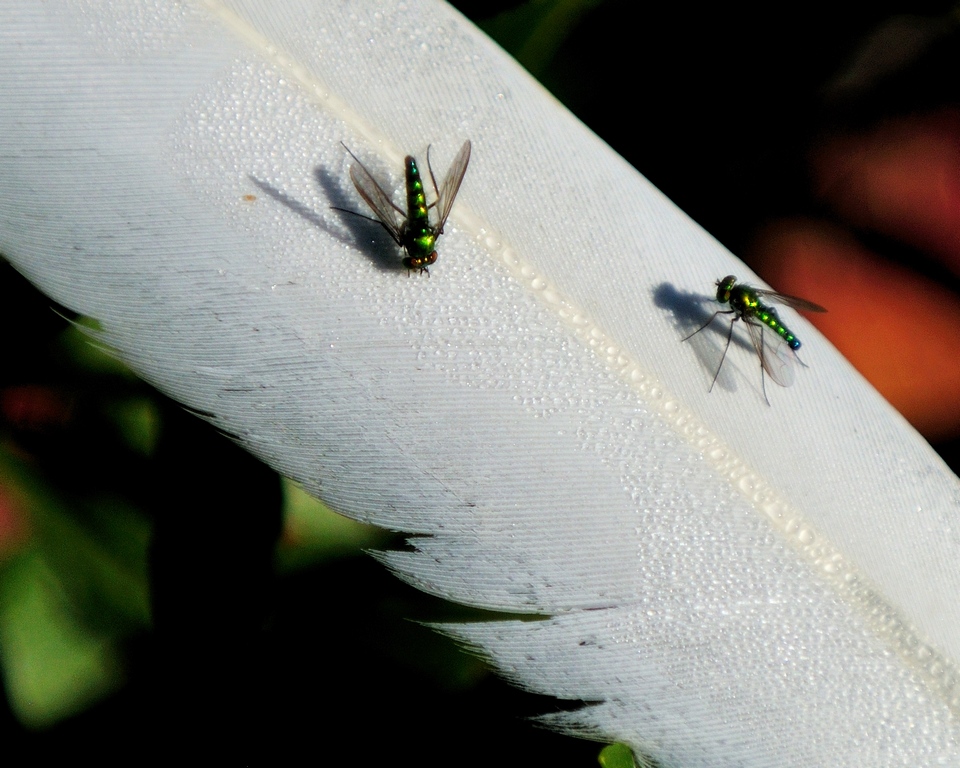
One of our group found a shed egret feather covered in dew. While I was looking at it a couple of Long-legged flies showed up for a sip of water from the dew.
And, of course, the usual range of marsh wildflowers shining in the morning sun. If you look closely, to the right of the white flower, you will see a small beelike insect on the stalk.

Posted in Park | Tagged , , | 3 Comments

Extreme Sports for Squirrels

Yesterday, I went to the Punta Gorda History Park to see what our local urban eagles were up to. The male must have been out hunting and the female was just sitting on a perch above the nest. I noticed some motion on the tree and took a look. A couple of squirrels had decided that the tree would be a great place to play.

Extreme Squirrel Sports

Take a look at this picture. The eagles nest is just about in the center, the eagle is at top left looking down at the squirrel on the other side of the tree. The second squirrel was directly below.
I’m not sure these guys knew how much trouble they could be in if mama had been a bit hungry.

Posted in animal behavior, Bird, Other Animals | Tagged , , , | 1 Comment

White Ibis – Eudocimus albus

The White Ibis is an odd looking bird. It’s white body with a bright blue eye in a red face and bill makes it quite striking. The young start off as brown birds with a tan neck and face but become white as they mature. Mornings and evenings, you will often see flocks or small groups flying to the days feeding grounds.

In flight, the adults show black wingtips. Ibis fly with their necks extended. The curved red bill is obvious from almost any distance. If you open this as a seperate topic, the top picture shows a flock of young Ibis in flight.

They may be seen feeding solitarily but are most often seen in flocks. They will also join with herons and egrets feeding in groups. If you see a flock of Ibis feeding in your yard, it’s a sure sign of grubs.


Posted in Bird | Tagged , | Leave a comment

Gulf Fritillary – Agraulis vanillae

The Gulf Fritillary is one of the most attractive butterflies here is SW Florida. It’s host plant is the passion fllower and they can bee seen everywhere that it grows, wild or cultivated. Despite it’s name, it isn’t unique to the US Gulf states. It’s range is from Argentina to the southern US as far north as San Francisco but it can and does migrate across the Gulf of Mexico.

It’s brilliant orange coloring makes it easy to spot and you can often see the silver spots of the underwing when it’s at reast or feeding. The caterpillar is also orange and black with fearsome looking, but soft, spines.

Posted in Bug | Tagged , | 1 Comment

Charlotte Harbor National Estuary Program (CHNEP) Calendar

Well, that’s a mouthful. Each year the CHNEP produces a calendar and asks local photographers to provide photographs for public voting and consideration. To be included, each photographer can submit up to 3 pictures from the Peace and Myakka River watersheds. Once collected, the images are put up on the CHNEP website for voting and that is followed by selection for the calendar.

For the last couple of years I have managed to get one or two pictures in the calendar including one of the full page month featured pictures. This year, no such luck. However friends of mine from the Photo Adventures Camera Club did do well.

My three entries were:

The first two were taken at the Circle B Bar Preserve at the head of the Peace River and the Yellow Crowned Night Heron in Ponce De Leon Park.
Once the 2011 calendar is complete, you can download it in PDF format at the CHNEP calendar page. If you go there now, you can look at the previous years calendars. 2011s should be up in November.

If you go to their home page from the link on the right, you can subscribe to their newsletter and get the calendar every year.

Posted in Bird, Park | Tagged | Leave a comment

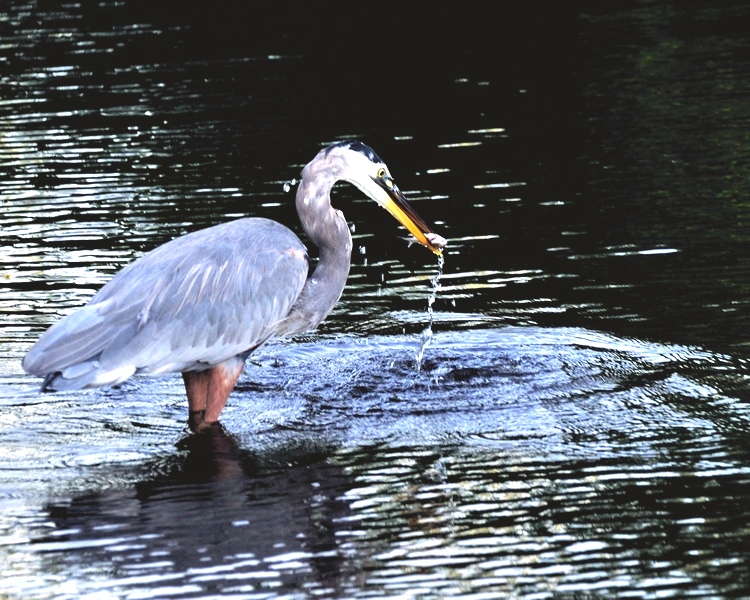
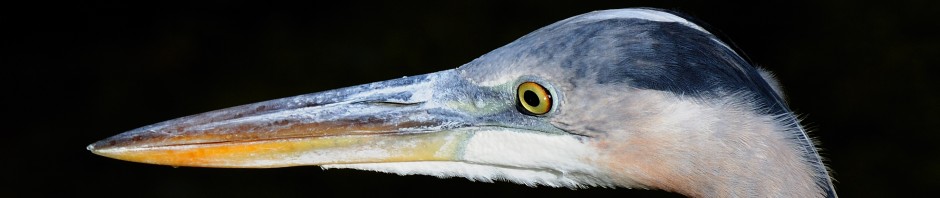
Great Blue Heron – Ardea herodias

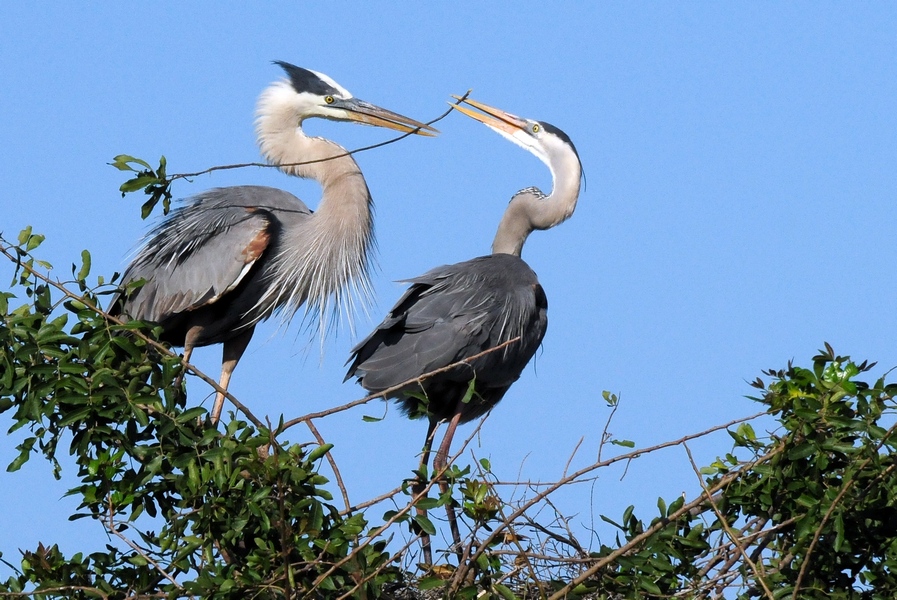
The Great Blue Heron is always a favorite of photographers. It’s large, stately, graceful and stands still a lot. To a photographer this means that you don’t need an expensive super long telephoto lens or a particularly fast one. When you consider that it’s range covers most of Canada and all ot the US, Central and Northern South America it is undoubtedly one of the most photographed birds in the world. I generally get most of my shots at my local Ponce De Leon Park in Punta Gorda.

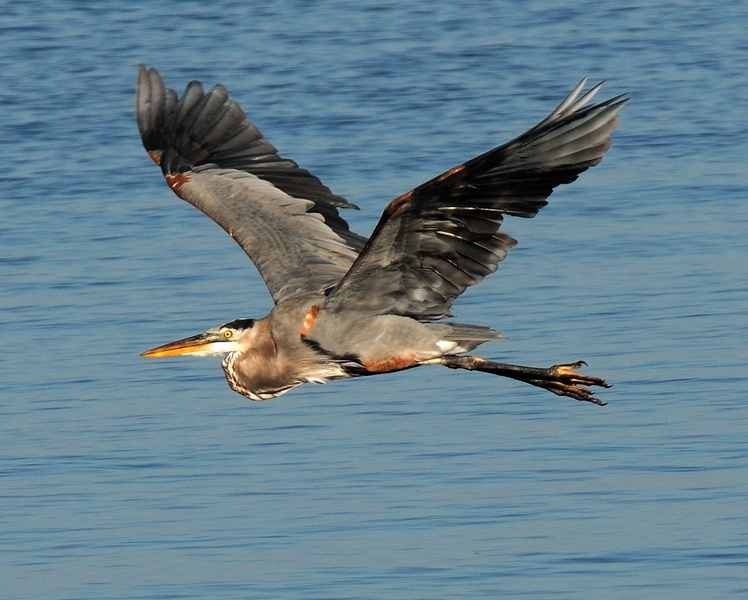
As you can see in the picture on the right, Herons keep their necks tucked in in flight. Egrets do the same while other long necked birds like Cranes, Storks, Ibis and Spoonbills fly with their necks extended.

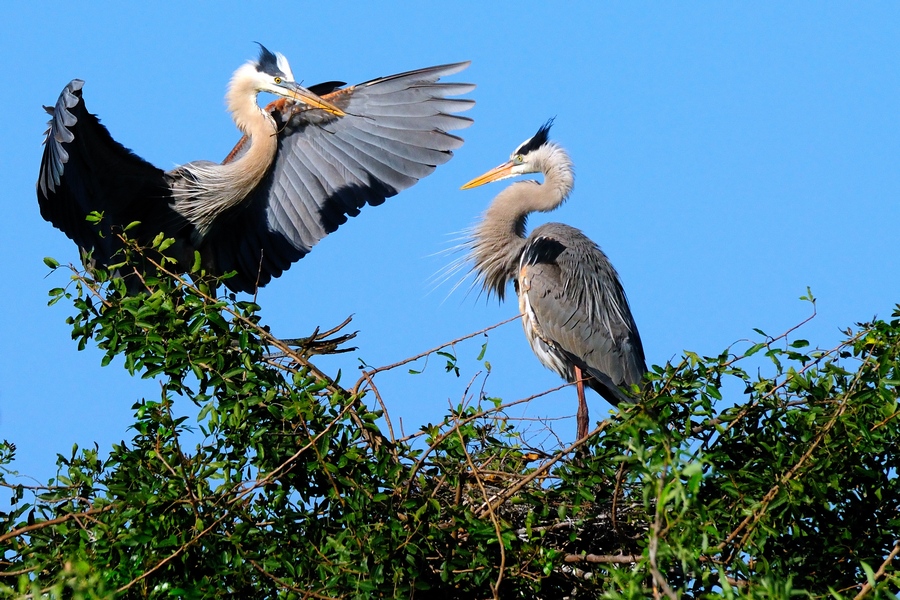
Another favorite location is the Venice Rookery. At the rookery you can be pretty close to active nesting and mating activity. The nests are generally on a small island in the middle of a pond. Security is provided by alligators so, the birds feel pretty safe there. Of course, a few chicks get lost each year but, the area is very secure from other predators.

Posted in Bird, Park | Tagged , , | Leave a comment

Ladybugs – Coccinellidae

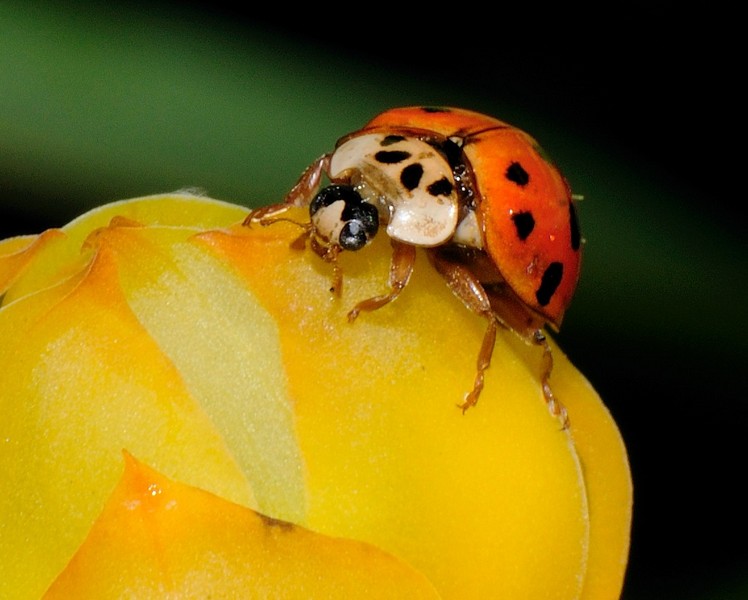
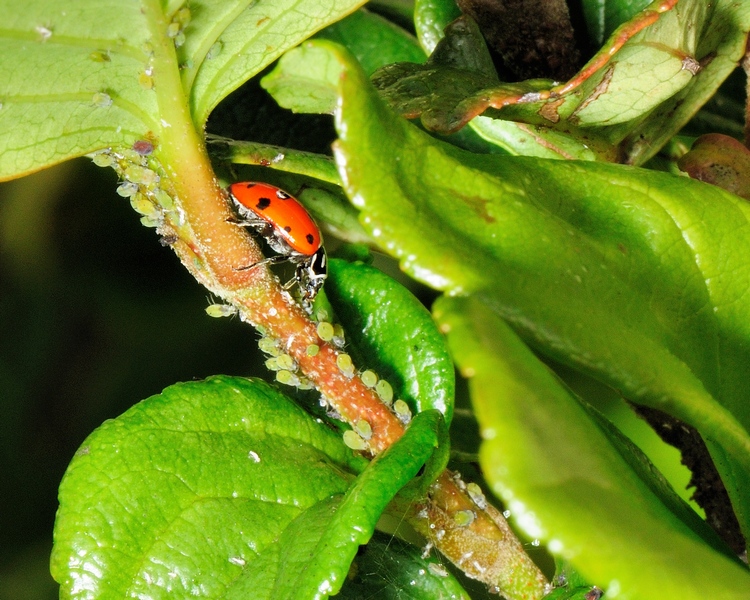
Ladybugs are small and benign. In fact, they are downright helpful to gardeners because they eat aphids and other sapsucking parasites. There are over 5000 species of them all around the world.

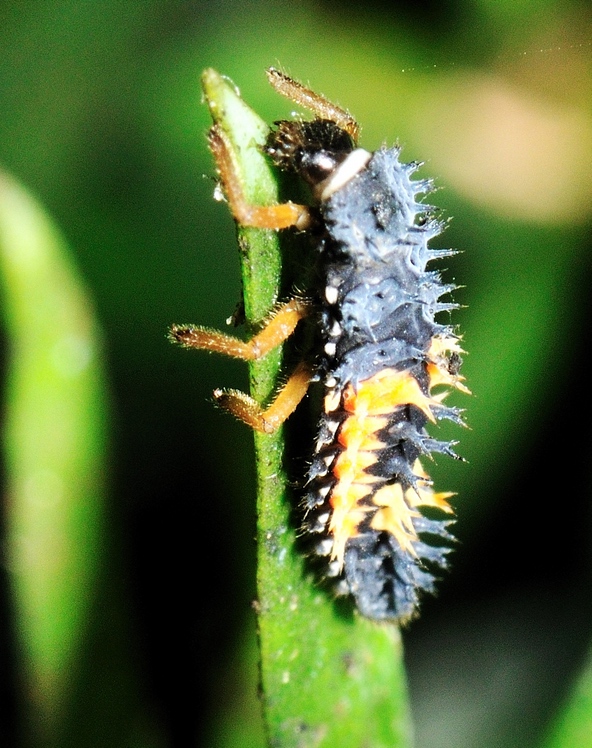
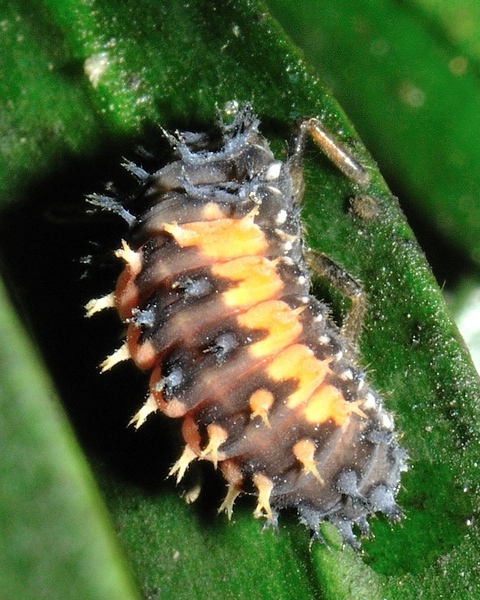
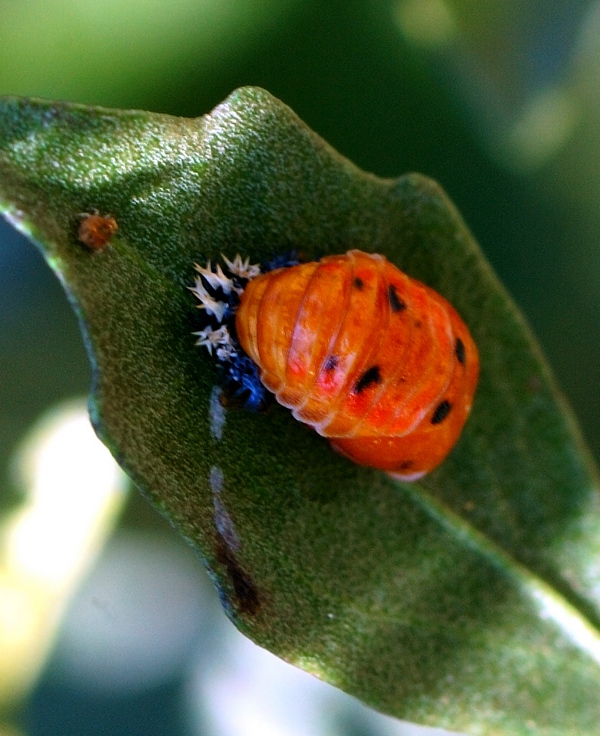
But, they aren’t always the cute little orange button beetle we usally see. In fact as a larvae they look a little bit monstrous.

The larvae developmental stages are called instars and you can see the development of a adult ladybug in the pictures above. Each time they molt, they get a little bigger and a little oranger until the final molt.


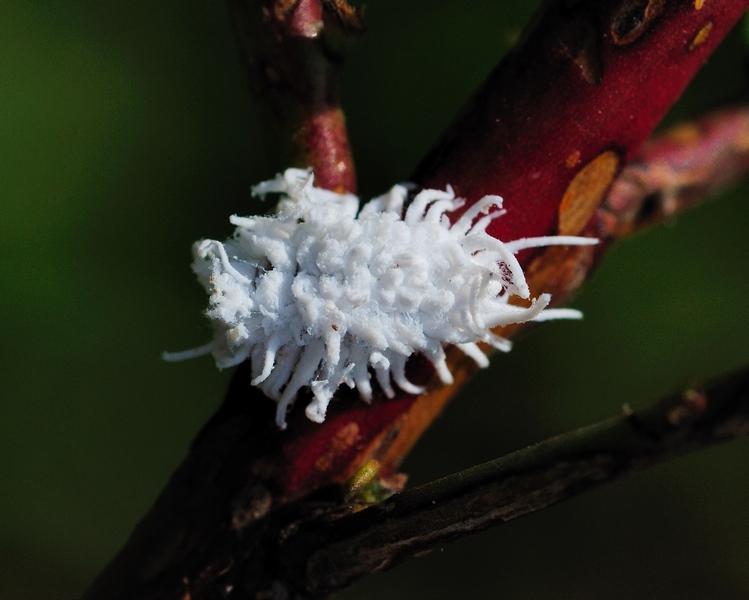
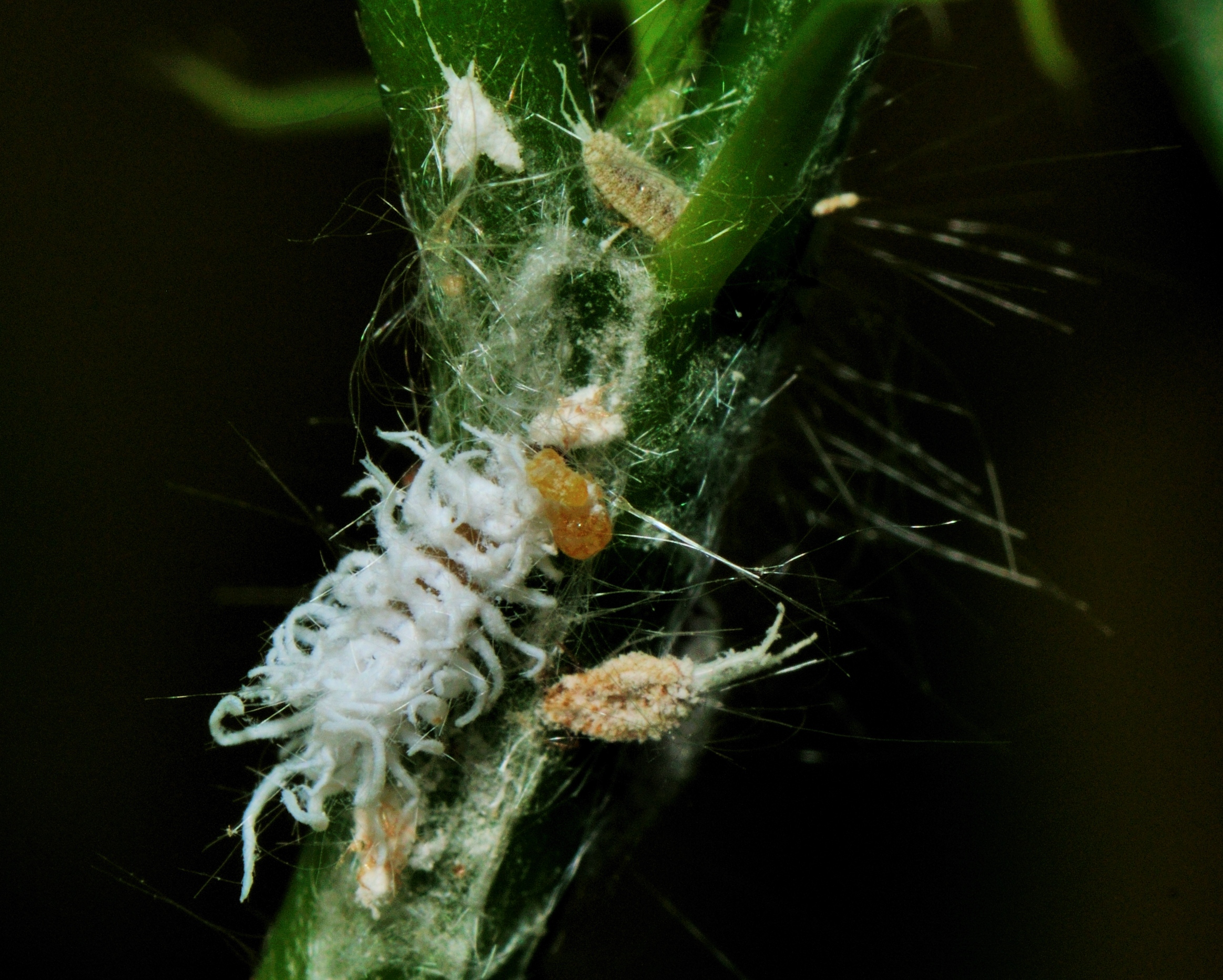
This is the larva of another similar bug called the Mealybug Destroyer – Cryptolaemus montrouzieri. When it reaches it’s final molt it becomes a very small non-descript brown beetle about 1/3 the size of a ladybug.

Posted in Bug | Tagged , , , | Leave a comment

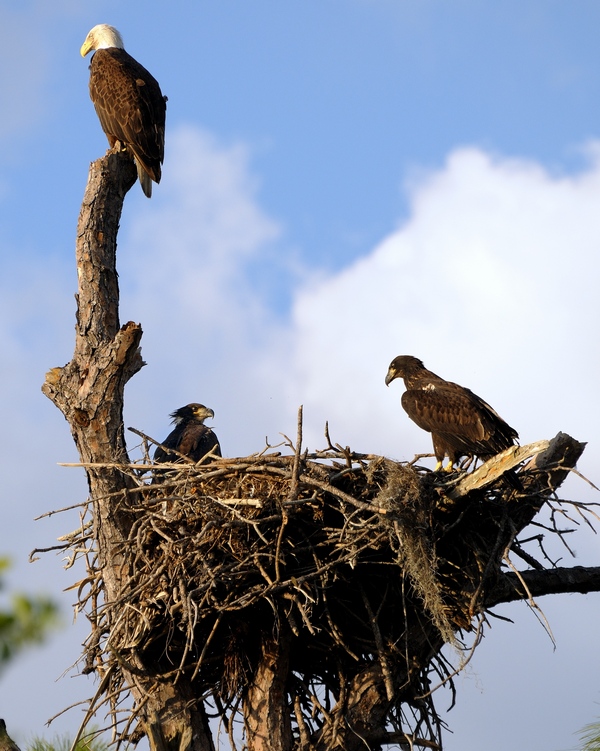
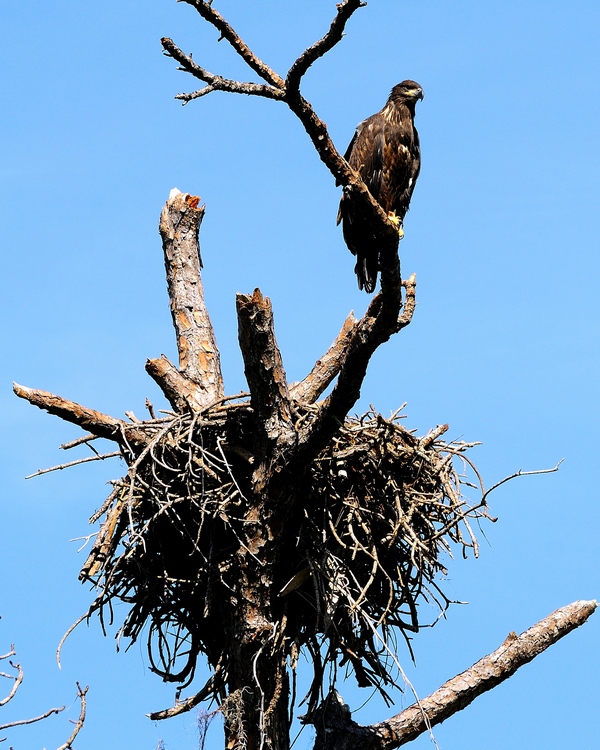
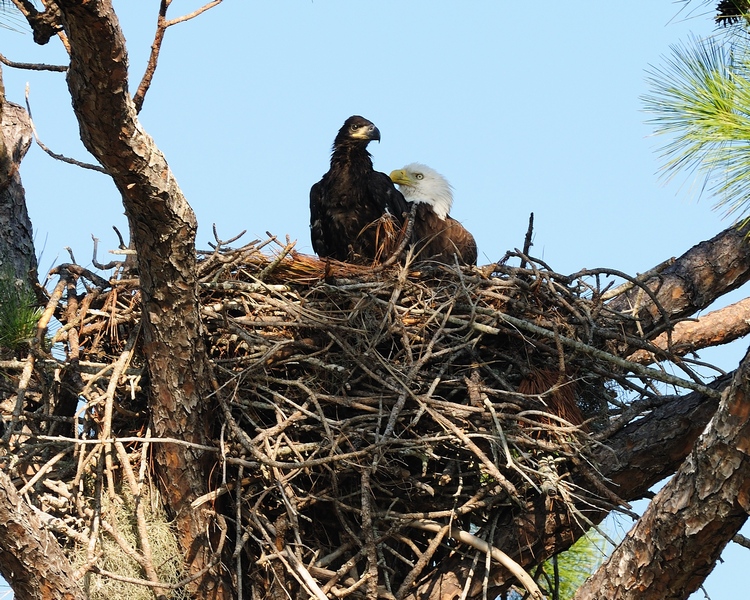
Punta Gordas Urban Eagles

We have a pair of eagles who decided that they liked living here. They’ve shown up at their nest again but haven’t taken up housekeeping yet. They generally live here in the fall through the spring. Once they young are raised they move off allowing their local hunting territory to recover.

They first arrived in 2006 and it was obviously their first year as a couple. They tried nesting in a couple of locations, one less than 100 yards from US 41, before deciding on a tree next to one of the busiest local roads in town. It was right across the street from our Visual Arts Center so, photographers and artists quickly discovered them. They didn’t raise any young that year.

During the 07/08 season they had two young. One timid and one bold .

In 08/09 they mated and produced two eggs. Unfortunately, the tree which held the nest was damaged in a windstorm. As you can see in the two pictures above, the nest was basically in a fork with some slight extra support at the bottom. Eagles continually add to their nests and as a result the smaller support collapsed under load. the The nest fell and the eggs were broken. When that occured, they moved to their current location next to the Punta Gorda History Park and built a new nest. No young were produced at the new location. The new nest seems a lot more secure than the first so we hope to see them for many more years.

Last year in the 09/10 season they had one baby which sadly didn’t live long enough to make its first flight. While it lived, it created a lot of joy for the local birders who named the baby Yoyo because of it’s habit of popping up and down. The second picture shows the full nest in the new locations. It obviously has a lot more supporting branches and should be a good location for years.

Posted in Bird, Park | Tagged , , | 3 Comments

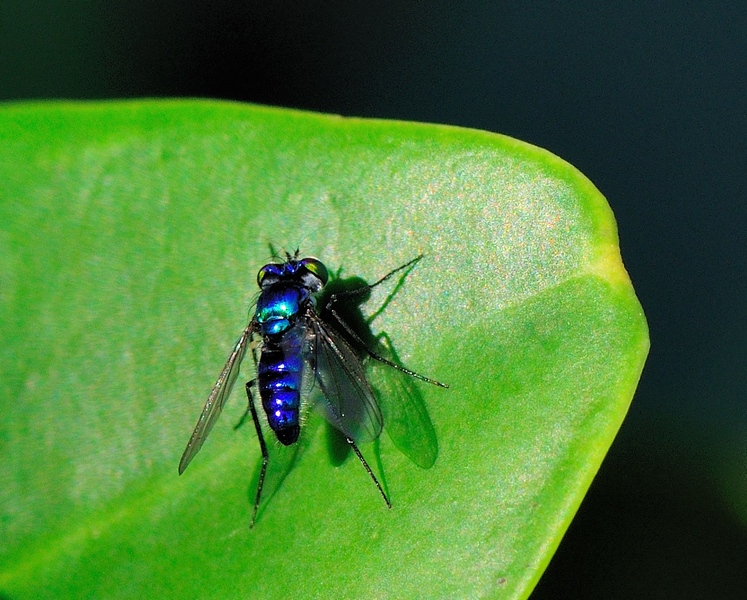
Long-legged Flies – Dolichopodidae

These are really tiny flies. Most not more than 1/16 of an inch (1.5mm) they are brightly colored but, so small that most people don’t notice them. They are good to have around swampy areas like SW Florida because they eat smaller insects like no-see-ums. Colors range from brilliant blues and greens to golds and coppery reds. The wings are irridescent.

Tech Data: Both of these were taken with the Nikon D90 and 105mm F2.8 VR Micro-Nikkor. I used the SB-800 flash on both. I set the camera to manual mode and let the flash decide how much light was actually needed for the exposure. The Nikon Creative Lighting System is pretty nifty used this way.

Posted in Bug | Tagged , | Leave a comment

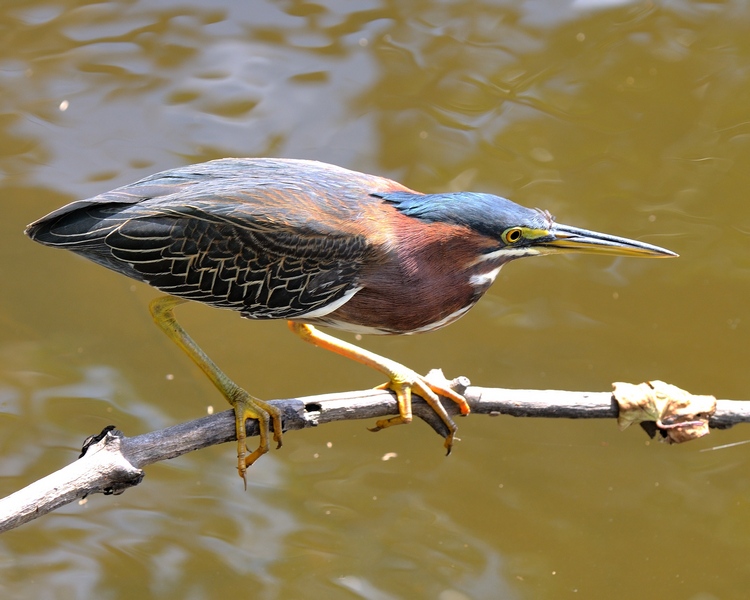
Green Heron – Butorides virescens

The Green Heron is an interesting little bird. It is the smallest heron in Florida and nicely colored. They are solitary feeders and their coloration blends into reeds and foliage so well that they can be difficult to see at first. If approached in a non-threatening way, you can often get quite close to one as they concentrate so intently on their prey when stalking.

The left picture was taken in a drainage canal opposite the Visual Art Center in Punta Gorda. The location will be a part of the Linear Park under development. The right picture was taken on the nature trail at Ponce De Leon Park in Punta Gorda.

Tech data: The left picture was taken with a Nikon D300 using the Nikkor 70-300mm VR at 250mm 1/200 at f8. The right picture was taken with a Nikon D300 using the Nikkor 70-200mm f2.8 VR I 1/200 at f7.1

Posted in Bird | Tagged , , , | Leave a comment