Ants and Aphids – Small scale farming

Really, really small scale but, it really is farming.

A 2007 article from the website ‘Science Daily’ gives an excellent explanation of how ants control aphids. Aphids are sometimes called Ant Cows because they are herded by ants and exude a sugary ‘honeydew’ that ants eat.

The aphids above were on one of the pea flowers that grow in the mangroves on the way to Ponce De Leon Park. Taken with a D90, 105mm f2.8 VR Micro-Nikkor, TC-14E teleconverter at 1/320 second, f16 using an SB-800 flash.

Here is another shot of Ants getting honeydew from what appear to be whitefly nymphs. This was taken in the Punta Gorda Nature Park with the same camera and settings.

Posted in Bug, Park | Tagged , , , , , | 3 Comments

Babcock-Webb WMA – Tucker Grade

Tucker Grade is the main road in to the WMA. As you enter the WMA you will be travelling from west to east. Like most of the roads, it is a straight line through the area. There are three intersections in the recreational area, Lake Road, Oilwell Grade and Seaboard Grade. Beyond Seaboard is the managed hunting area which is normally closed to vehicular traffic by a gate . Tucker Grade runs all the way to a permanently closed gate at US-31. The grade is paved from the entrance to the Gun Range and beyond that is hardshell road until the gate to the hunting area. The hardshell roads are passable by all vehicles.

There is a hunter check station just past the entrance at the intersection of Tucker and Lake. There is no need to stop here unless the station is open and the main road will be blocked if that is the case. If it is open, you will need to check in for safety reasons. Hunters and others are counted in and out. There is a drainage canal that runs into Webb Lake just past the check station. The right side is the northernmost end of the lake and the left a marshy area where you can frequently find wading birds. There are fresh water mussels in this area as this Limpkin has discovered.

The next point of interest is marl pond #3 on the right hand side. The left side of the road here is scrubland and can be followed to the left and the drainage canal.

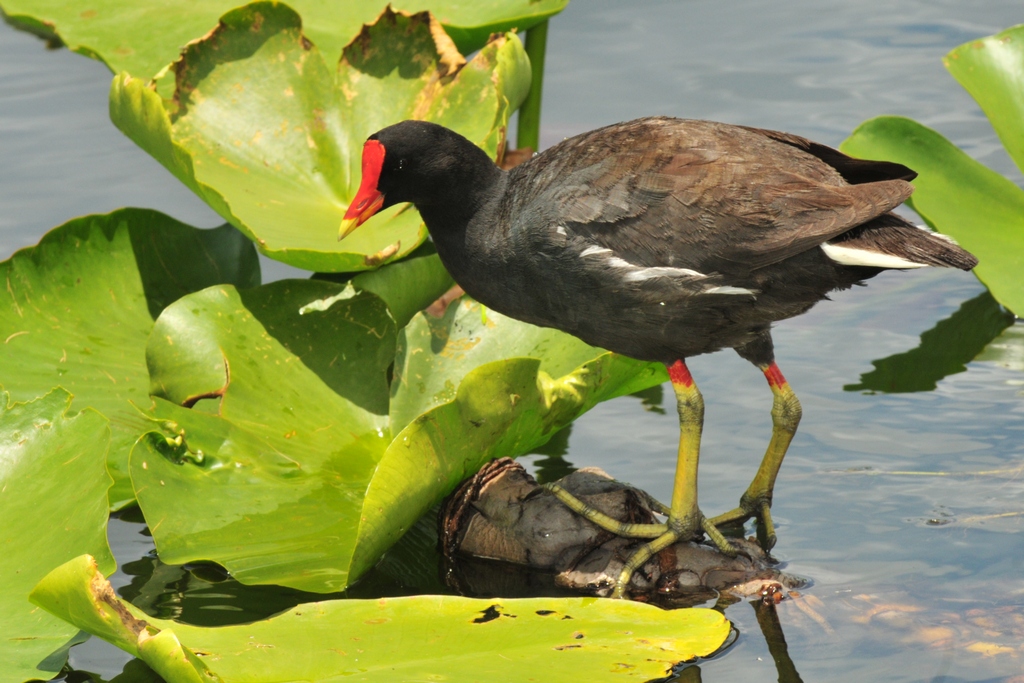
This is another area where moorhens live in the cattails on the east and far sides. At the eastern end of the pond is a gate which can be used to follow around to the marshes on the far side.

Once you are past Marl Pond #3, I seldom see much in this area so generally continue on past Oilwell Grade before stopping.

There is usually some traffic to and from the range so I wouldn’t recommend stopping until you are past it. Even then, the road is narrow and if you want to stop and watch from the car keep an eye out for traffic. There are a few places where the shoulder is firm enough to pull partially off the road.

Once past Oilwell, the land becomes marshy on the left side with a lot of potential for waders. In many instances they will be quite deep in marsh grasses but, there are some more open spots. This shot of a Great Egret was taken there. I kinda of like the way that the angle of it’s neck matches the angle of the grass.

Most of the right side isn’t normally wet except after a lot of rain.  There are some exceptions though where drains are placed to keep water pressure from damaging gthe grade.   The right side is a good place to see deer.

This is a view of Tuckers Grade beyond the Firing Range showing the hardshell surface and pine flatwoods across a dry meadow.

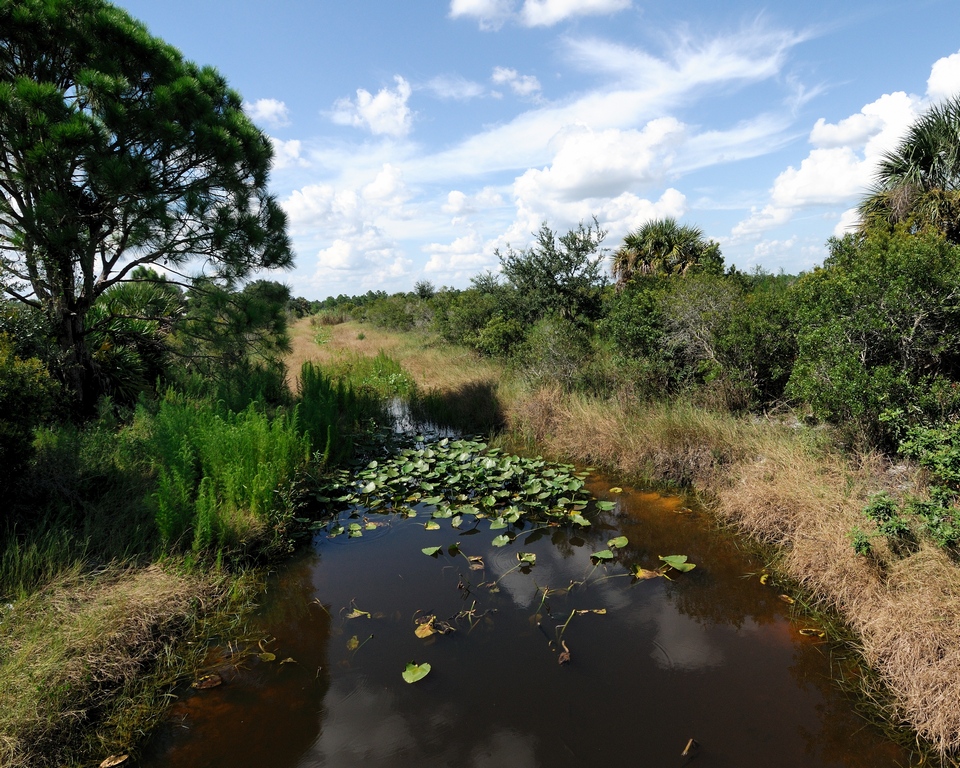
This is a marshy area.  While the grasses look the same, these can withstand longer periodss of wetness.  To the right is Alligator Flag which requires standing water.  The plants are brown due to a cold snap.  It doesn’t take a frost to hurt some of these tropical plants.  Beyond the Alligator flag you can see a hammock which indicated higher, dryer ground.

Posted in Bird, Park, Park - Babcock Webb WMA | Tagged , , | Leave a comment

Hathaway Park – East Entrance, Punta Gorda FL

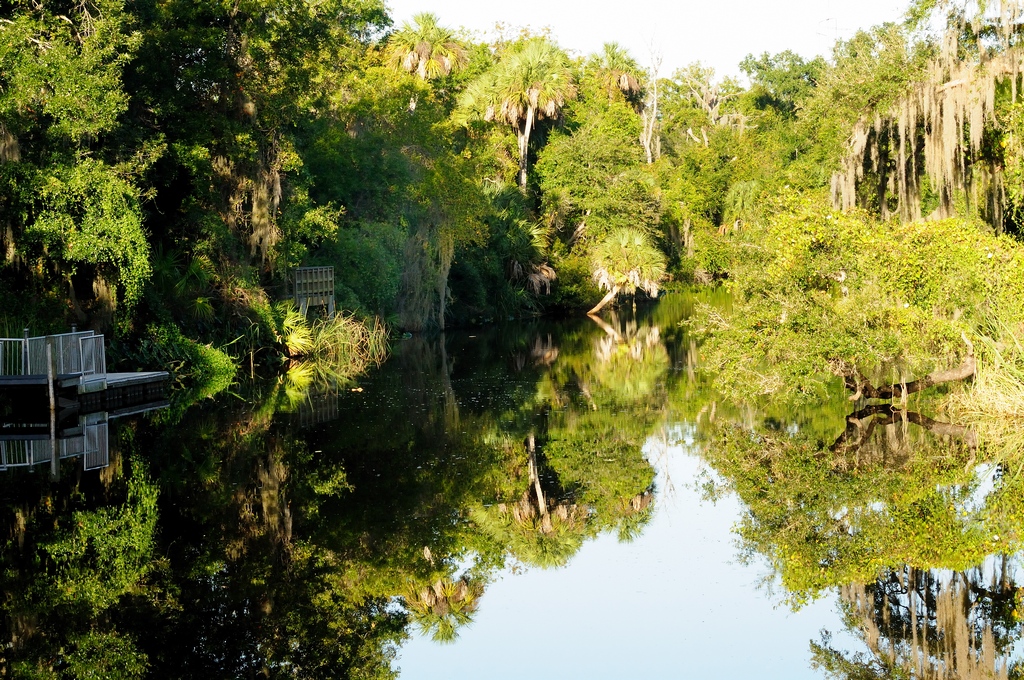
The east entrance to Hathaway Park is just past the west entrance. They are seperated by a drainage canal which, on the east side, is also the kayak and canoe launch point. This side provides more nature trails where the undergrowth is not as lush. That makes it a lot easier to get off the hardshell path and sit and wait for nature to approach. There is one water overlook which looks across the boat launch ramp and past the viewing deck on the west side. This picture was taken on a still morning when the reflections were so pure that, without the ramp and deck it would be difficult to tell where the land ended and the reflection started


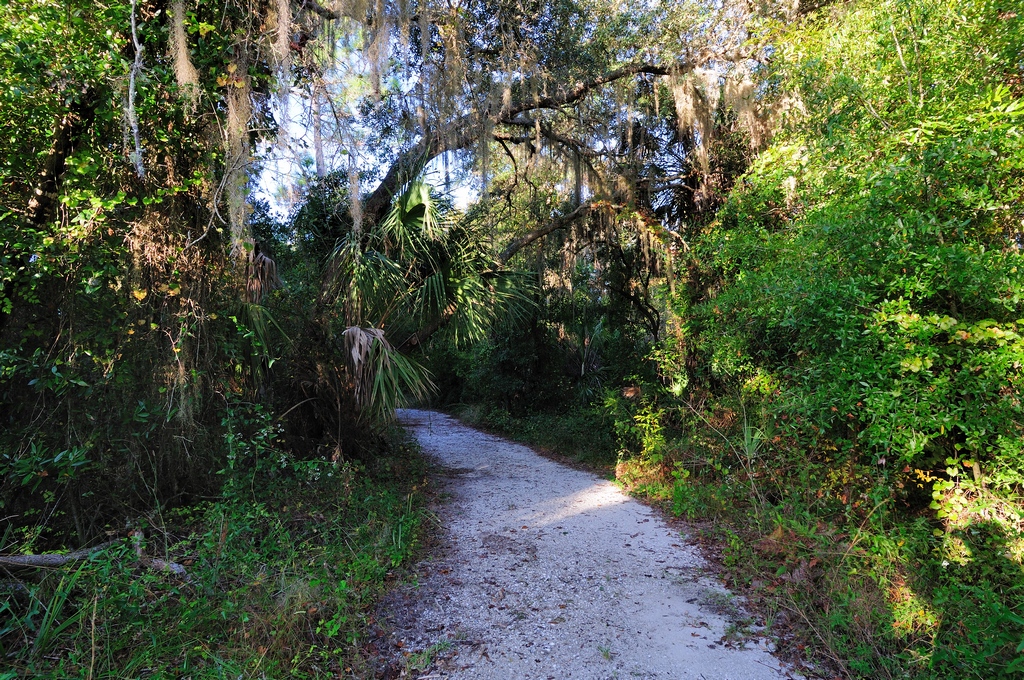
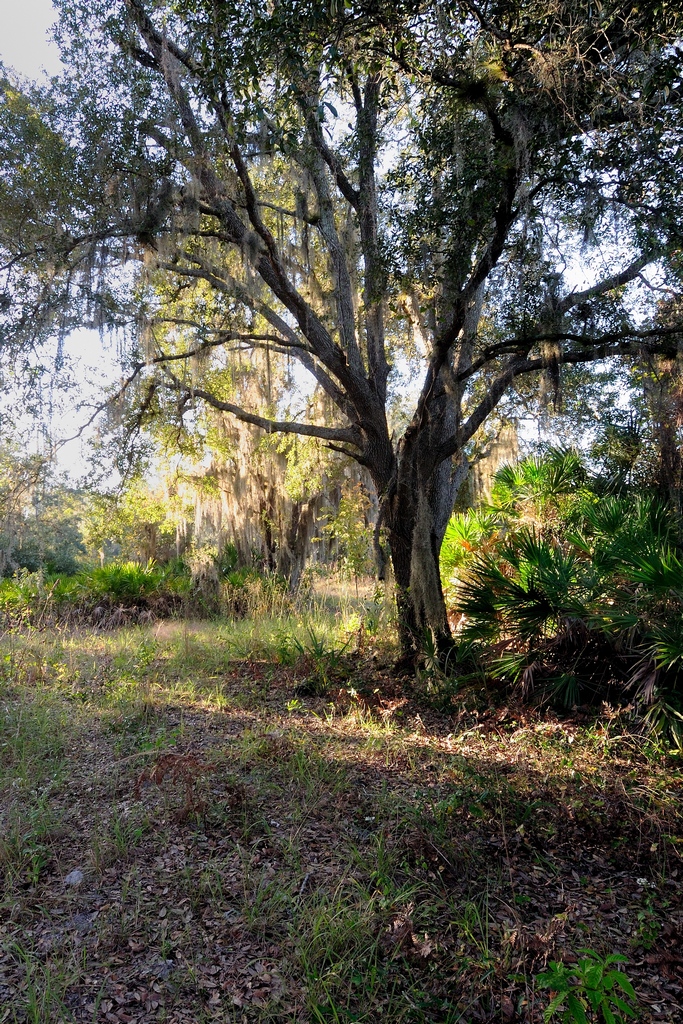
The nature paths are all dry, hard shell and are easily traversable by powered wheel chair. There is some slope to them as the park rises from shell creek but, it isn’t difficult. Unlike the west entrance which provides a path along Shell Creek these are primarily woodland trails with a lot of oak present. It is easy to step off the path and wander through the light underbrush seeking good viewing spots. This is a typical path beneath oak and spanish moss.

And this is an open area beneath the oaks. The underbrush on the western side is much heavier and the ground a bit softer. The western trails are also intended as bridle trails and have a softer surface.

Posted in Park | Tagged , | Leave a comment

Babcock-Webb WMA – Entrance and Lake Road

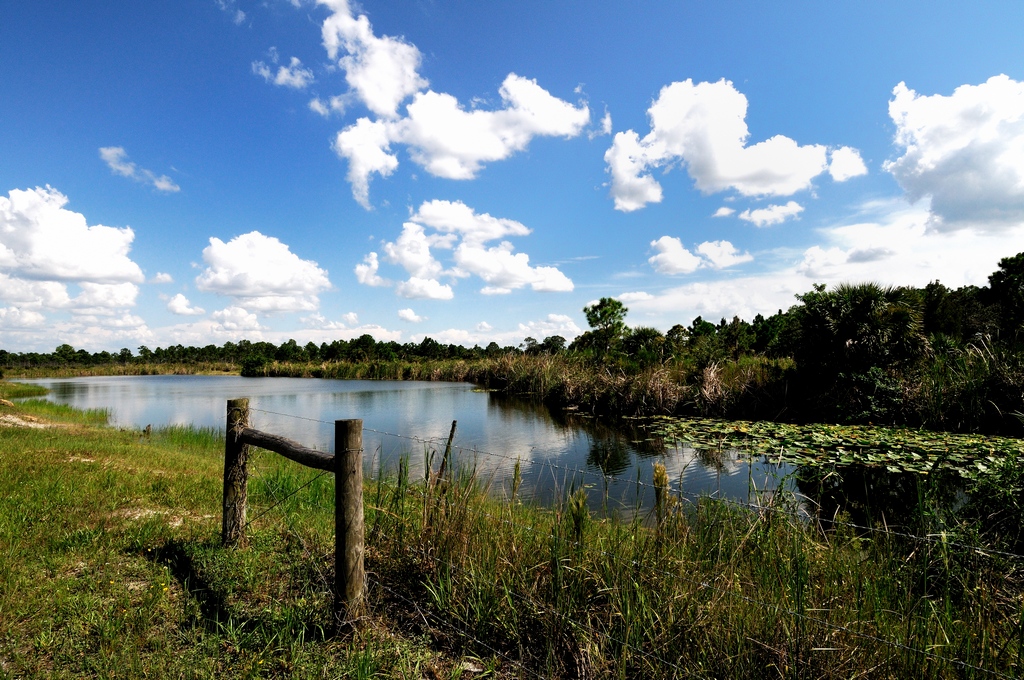
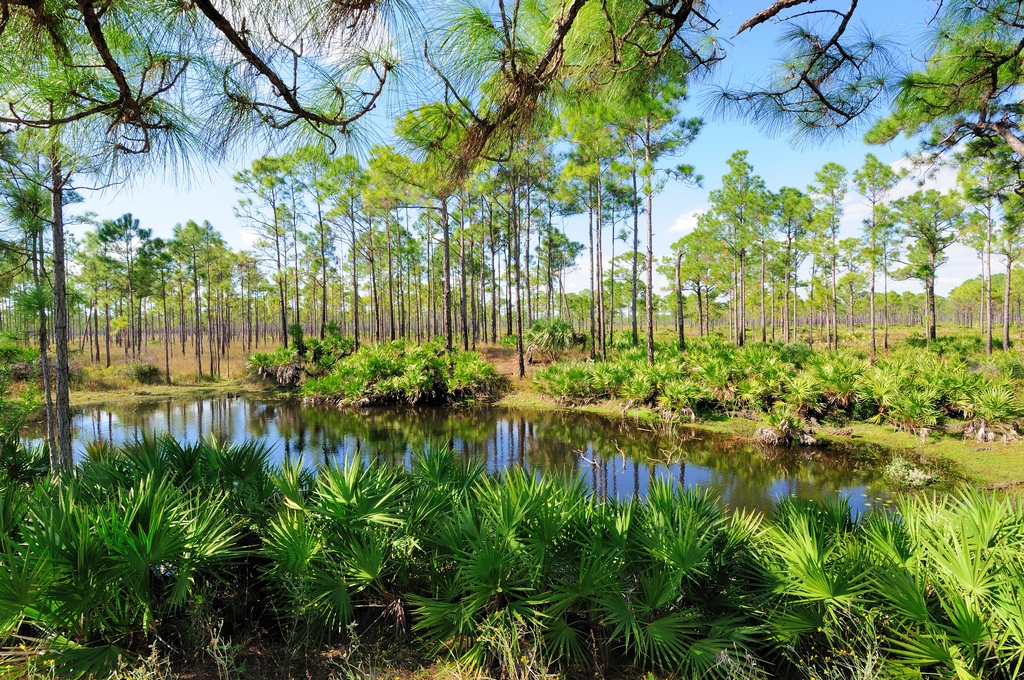
The Babcock-Webb Wildlife Management Area (WMA) is one of my favorite spots to spend some time outdoors. It is primarily Pine Flatwoods but, there is enough variety to make it interesting almost any time of the year. The site has a number of natural and artificial water elements which help wildlife during the dry times. This is a small excavated pond just off Tram Grade. It is virtually invisible from the road and is a great place to sit and wait for wildlife.

The WMA is made up of approximately 92,000 acres of which 17,000 acres are open public access all year round and called the recreational area. This includes rustic camping spaces which are busy in the hunting seasons. The remaining area is only open to vehicles during hunting season. Because of it’s size, Babcock-Webb will take a number of posts to cover. With each I will cover a different route through the WMA.

There is only one entrance which is on Tuckers Grade near Exit 158 of Interstate 75. It is only a few miles south of Punta Gorda.

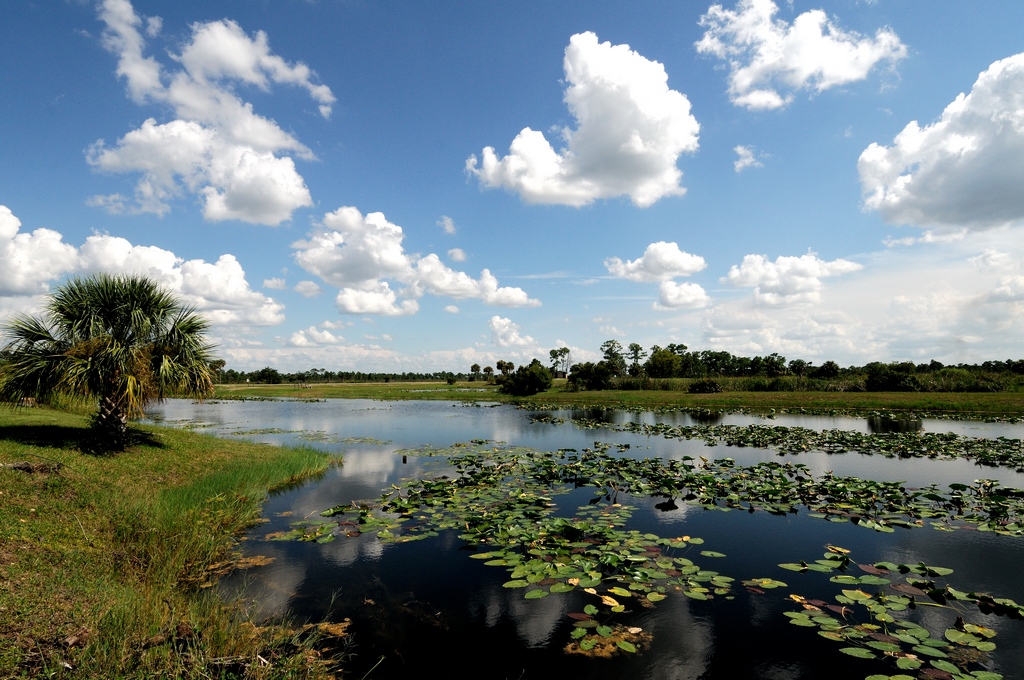
The wildlife begins right at the entrance. The entry, where an nominal fee is charged, is between two marl ponds. I often see Common Moorhens on this pond and the occasional gator can be seen on the grade in the middle. Since the entrance is busy, these shy birds usually run off but can still be found if it is quiet.


Just after the entrance you can turn right onto a fully paved 7 mile road which runs along the side of Webb Lake. There are numerous pulloffs with picnic tables and boat ramps (no gasoline engines allowed). This is a good place to stop and watch water birds. The sun will be in your face in the morning but, evening makes for some good photo ops with Osprey and waders. There is also a goodly population of Double-Crested Cormorants on the lake. In 2009 they did a planned drawdown of the lake for maintenance purposes and to simulate a drought to control some of the plants. This winding, paved road is popular with cyclists so please be careful.


Morning is still great for some spectacular sunrises.

If you go straight on Tuckers Grade the road is paved until you reach the Gun Range after which it is a hard shell road for some miles. The first intersection you will find is with Oilwell Grade and that’s going to be a future post.

Posted in Bird, Park, Park - Babcock Webb WMA | Tagged , , | Leave a comment

Cormorants and Anhingas

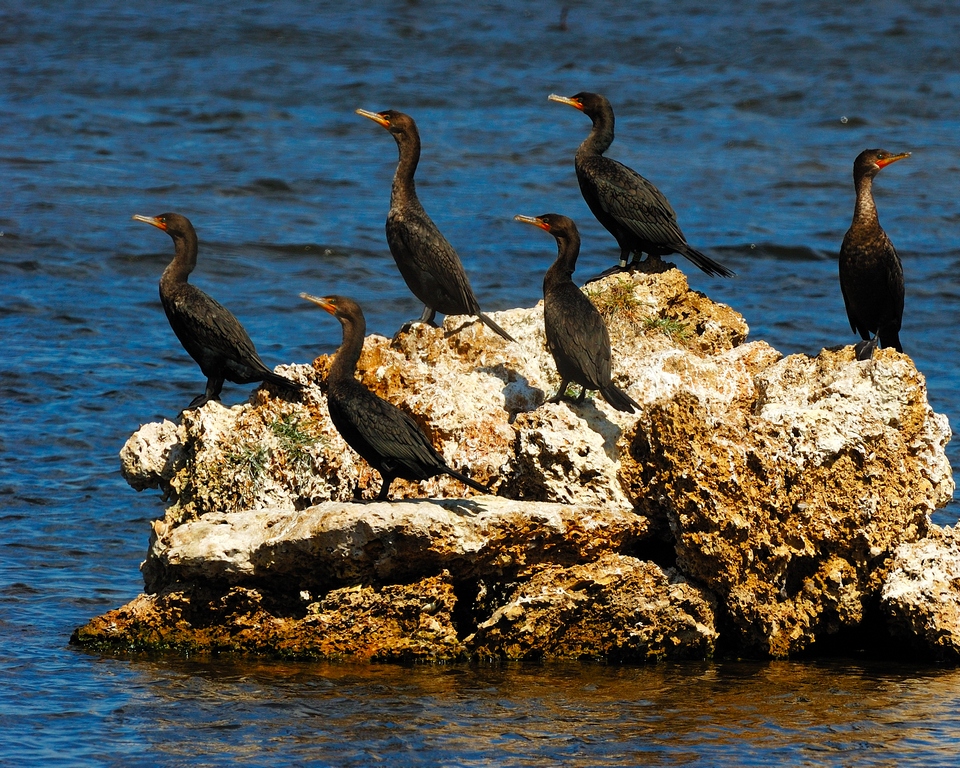
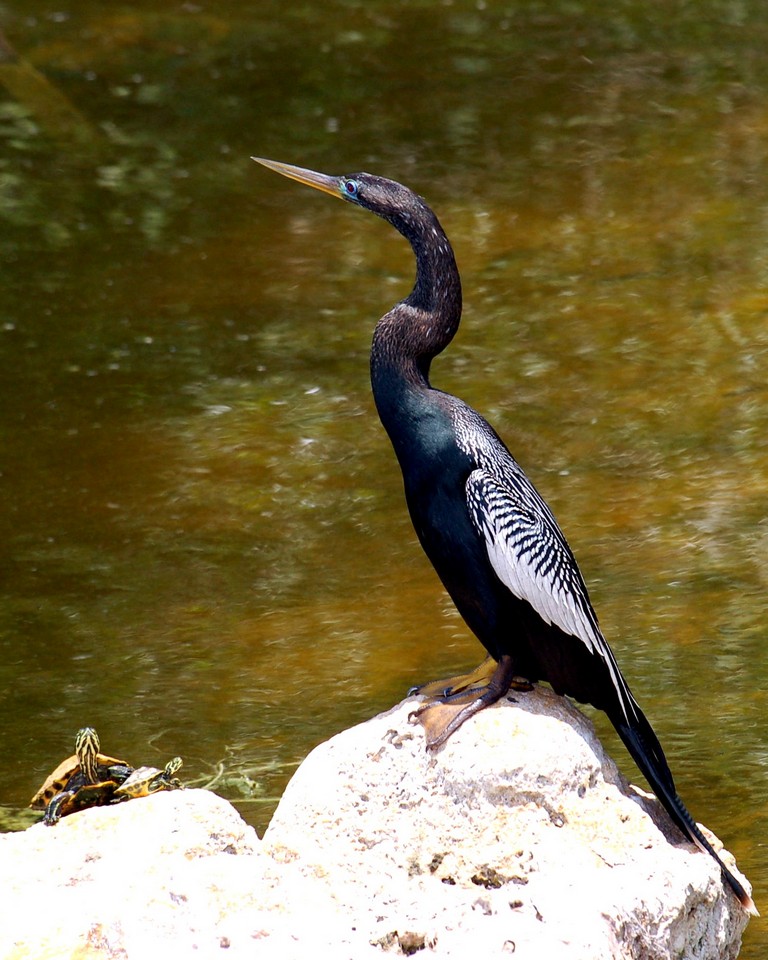
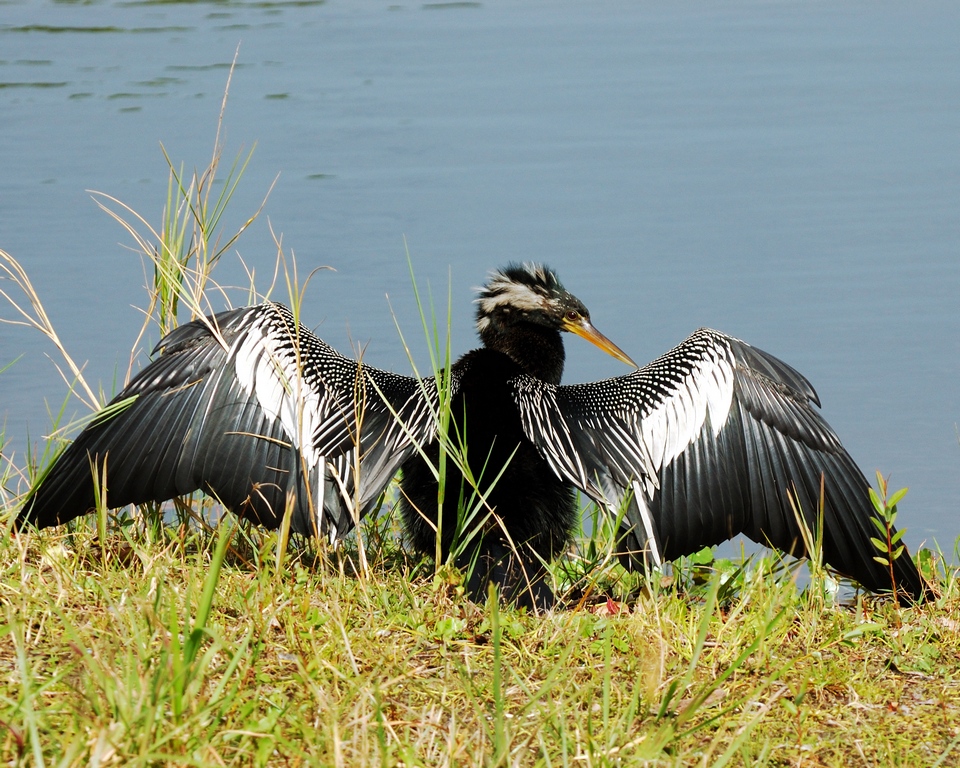
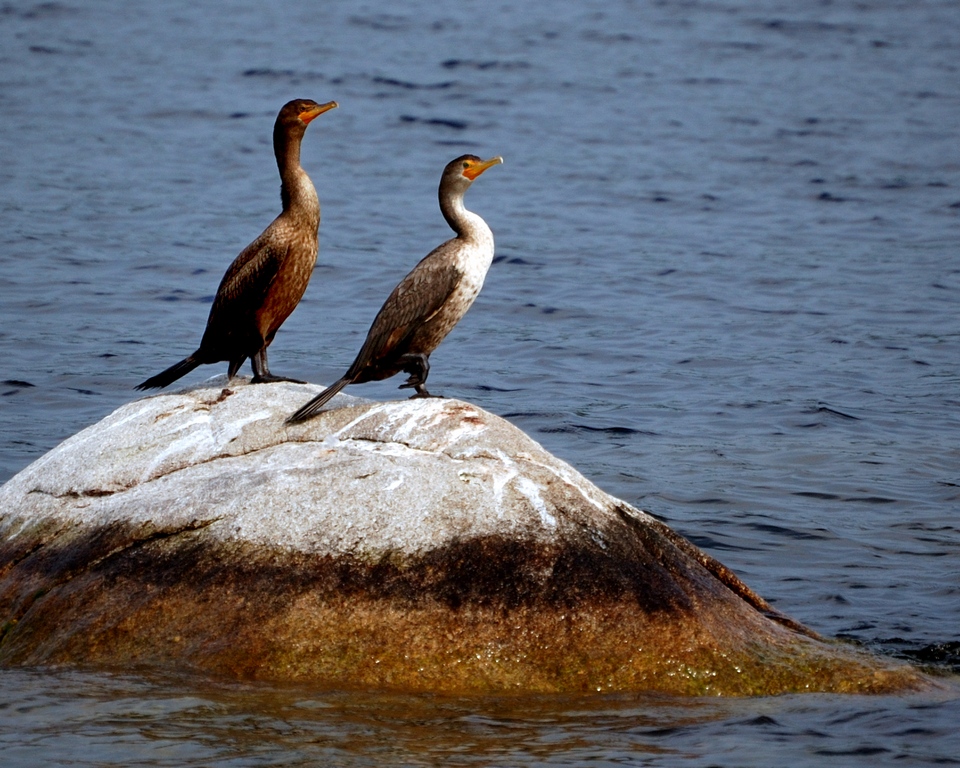
Cormorants and Anhingas are two water birds of similar size and appearance. Unlike ducks, neither has natural oil in their feathers and so tend to get waterlogged as they swim. The result is that both also pose with outspread wings to dry off after feeding. The beak shape is different and is reflected in their means of catching prey. The Anhinga has a sharp pointed beak with which it stabs it’s prey. The cormorant has a hook at the end of the upper beak and catches it’s prey.

Here are a couple of shots of Anhinga’s that clearly show their pointed beak. BTW, the latin name for the anhinga is probably the simplest there ever was to remember. It’s Anhinga anhinga so you usually see it written as Anhinga (Anhinga anhinga) which probably makes it the worlds most redundant bird.


The two leftmost pictures show the blue coloring around the eye that the Anhinga develops during breeding season. The bottom two pictures show why some folks call the Anhinga the piano bird.

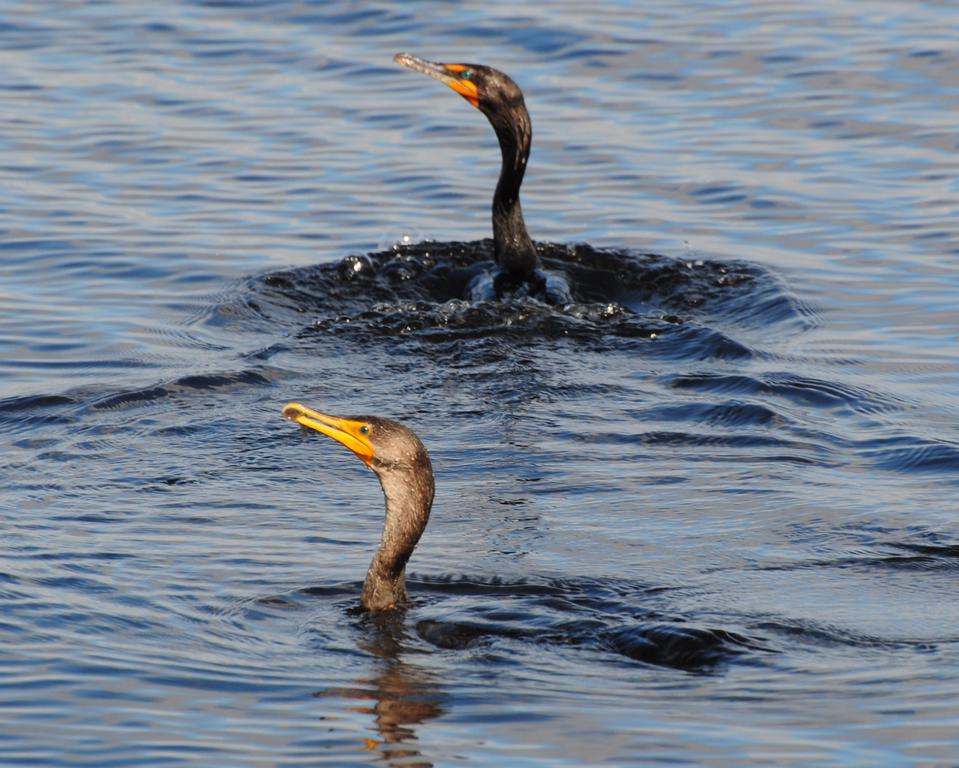
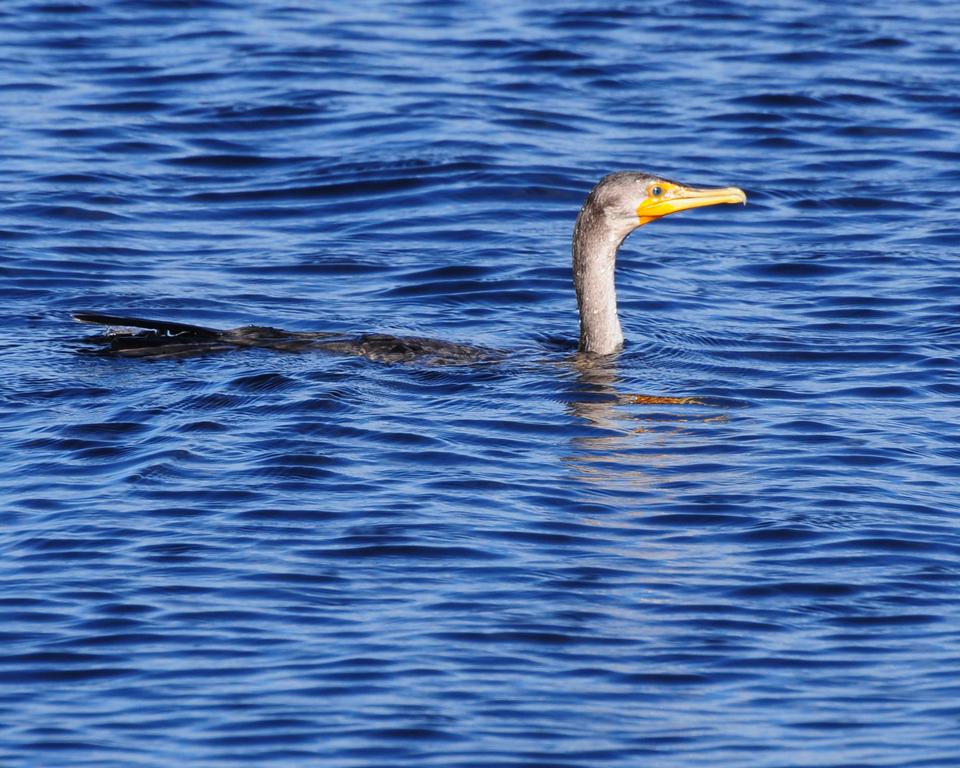
Around here, our we have Double Crested Cormorants (Phalacrocorax auritus) are a bit different in coloration as well as the beak shape. Here are a few shots of them. They have a beautiful blue iris all year round. Since their body is immersed, some folks call them snakebirds from their appearance in the water.

The two on the right have just entered the water. As time goes on, they get more and more waterlogged, like the pictures below, until they need to get out and dryoff.


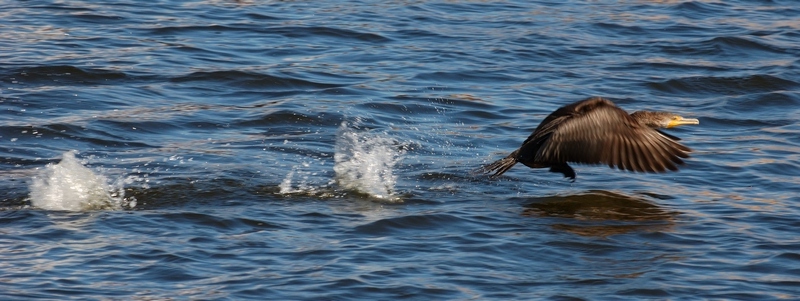
This one is a cormorant that has just lifted off the water. It doesn’t show much detail but, I just like the picture.


Since they are heavy with water, taking off is something of an effort. The wings have to work really hard and they also kick off the water like a kid on a skateboard trying to get up flight speed.

Posted in Bird | Tagged , , | Leave a comment

Experimenting with the 105mm Micro-Nikkor with teleconverters

When you take a lot of pictures of bugs, you need to get close to capture the detail. That means that a Macro or Micro lens is a necessity. At the moment, I have two. The 60mm f2.8D Micro-Nikkor, an older design lens and the newer 105mm f2.8 VR Micro-Nikkor.

Why Micro and not Macro? Well, taking pictures of very small subjects used to called Microphotography. In fact, that is still the definition of microphotography but, most folks use a microscope. Macrophotography used to be taking pictures of very large objects but, that was never used much. Nikon is a precision optical maker, they don’t just make cameras they also make microscopes. So Nikon stuck with Micro-Nikkor for their close focus camera lenses.

The reason you want more than one focal length is primarily to control the working distance when shooting. Both my lenses will produce a magnification ratio of 1:1 meaning that the image on the digital sensor is the same size as the subject. The difference is that you have to be closer to the subject with the 60mm than you do with the 105mm. Shooting live bugs in the open means that you can be a little further away and less likely to spook the critter. so, longer is better. Nikon makes a 200mm Micro-Nikkor but, at $1600, that’s a little heavy on the wallet.

At 1:1, the minimum focus distance from the specifications for the lenses is

60mm – 7.3 inches
105mm – 1 foot
200mm – 1.6 feet.

I happen to have the Nikon TC-14E and the TC-17E II. WHich provide additional magnification of 1.4X and 1.7X respectively. These are the newer models which don’t support the screwdriver of the 60mm f2.8D so, I can only use them on the 105mm. A lot is said about image degradation with TCs. Generally, the TC-14E is said to have little if any impact on image quality (IQ) and the TC-17E II only a slight amount. I try to get my subjects well focused but, I don’t necessarily want to get too close since I like to have some of the environment in the picture. I think it makes the picture more attractive and so long as I have enough detail to identify the subject, so, for my purposes the TCs work just fine. Here are a couple of examples.

Nikkor 105mm f2.8 VR

Nikkor 105mm f2.8 VR with TC-14E

Nikkor 105mm f2.8 VR with TC-17E II Thick-headed Fly – Conopidae

As far as I’m concerned, the loss of a little pixel-peeping detail doesn’t mean that the use of TCs should not be considered. Particularly since I shoot my bugs living free in the wild. If I were shooting them for scientific purposes and needed to observe very specific anatomical detail, I’d have the camera on a bellows and focussing rail in a lab shooting at a dead bug.
Posted in Bug, Camera Gear, Shooting closeups | Tagged , | 5 Comments

Punta Gorda Nature Park

This is a nice little park. It is about 1 city block square at the corner of Aqui Esta and Bal Harbour in Punta Gorda. There are two small parking lots at the East and West End. The park surrounds the Punta Gorda Fire Department station #3 and a Water treatment plant. There are two trails. One is long and covers the perimeter of the park. The short trail starts from the western lot and goes around the water plant and fire department. Both are hard shell and suitable for wheelchairs.

There is a lot of underbrush so you are unlikely to get far off the trail but, that just makes for better habitat for the critters. The birds are small and quick and the thick underbrush makes them difficult to photograph but fun to watch. The real photographable nature here is the insect life and the wildflowers that make up the underbrush.

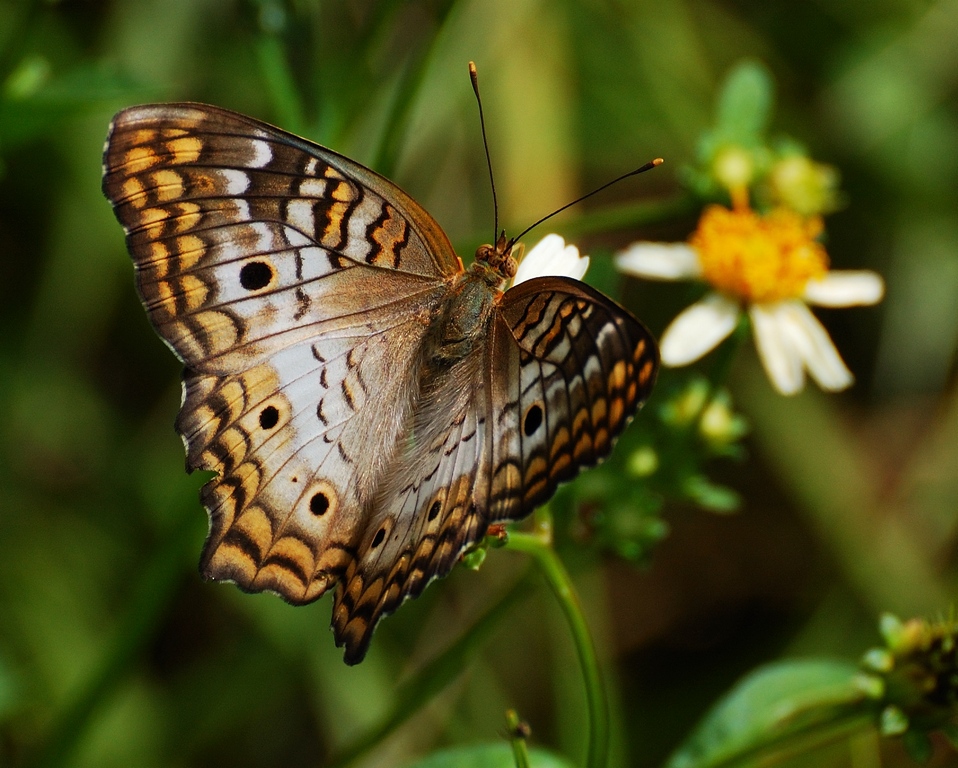
It’s a good place to find butterflies. White Peacocks (Anartia jatrophae) are everywhere and Pearl Crescents (Phyciodes tharos) are common as are plenty of other species.

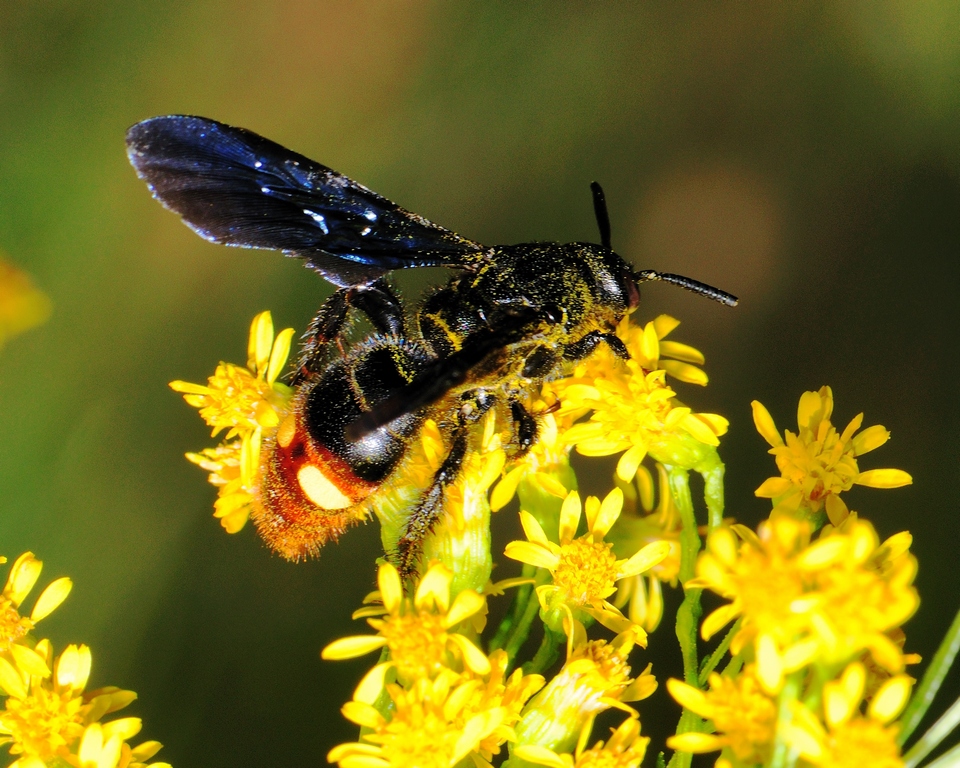
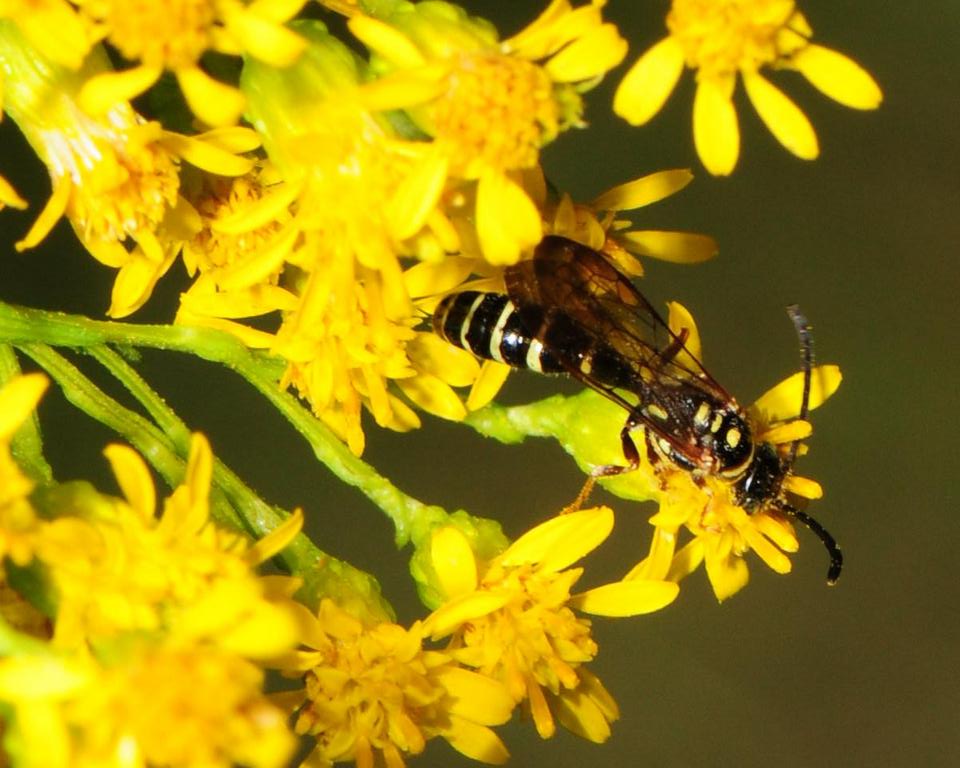
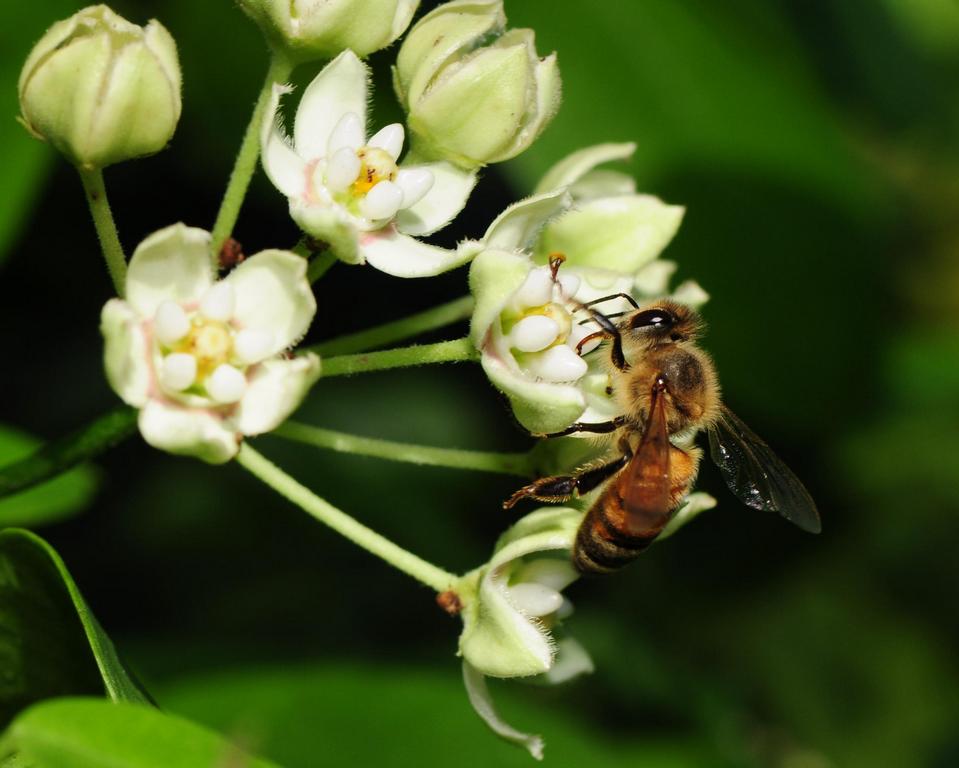
The wildflowers attract plenty of different bees and wasps as pollinators. Right now, the Goldenrod is in bloom on the edge of the marshes and in addition to the usual bees, I’ve found Blue-winged Wasps and Myzinum Wasps.

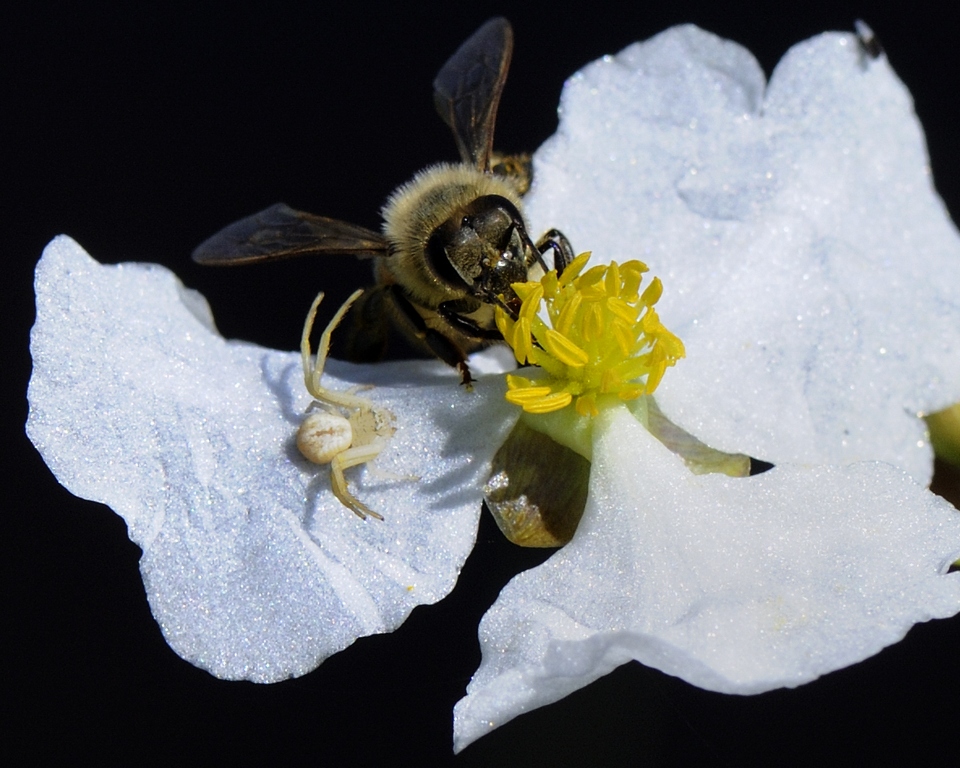
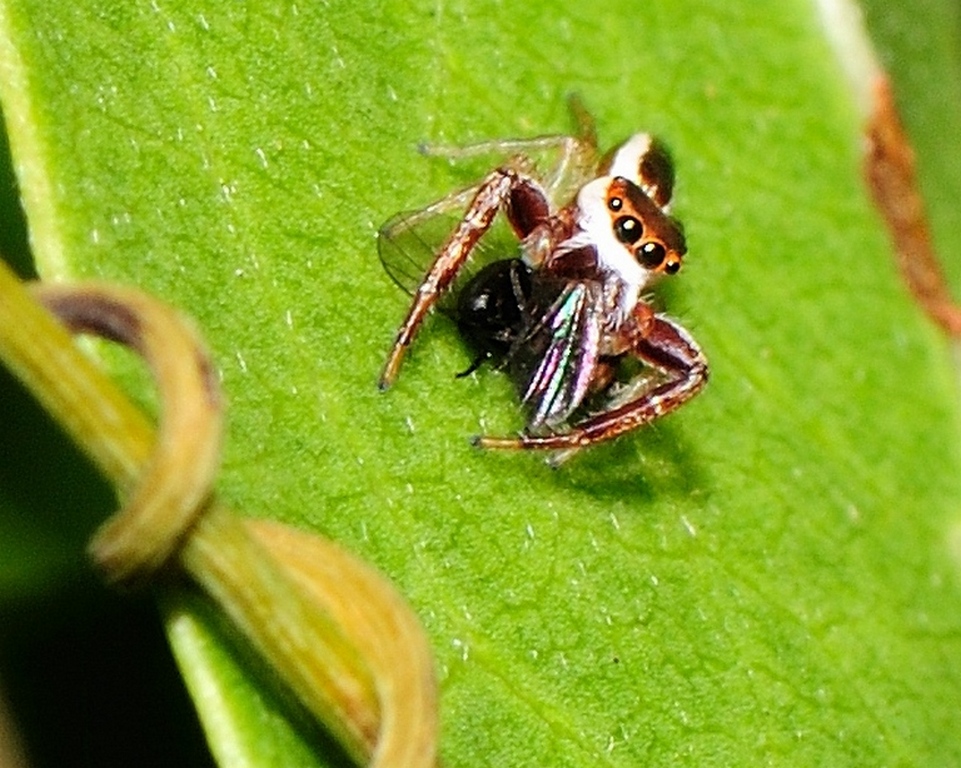
And finally, two even smaller denizens. A Dainty Sulphur (Nathalis iole) which is about an inch long and a Hentz Jumping Spider (Hentzia palmarum) which is only 3-5 millimeters in length.

Posted in Bug, Park, Spider | Tagged | 1 Comment

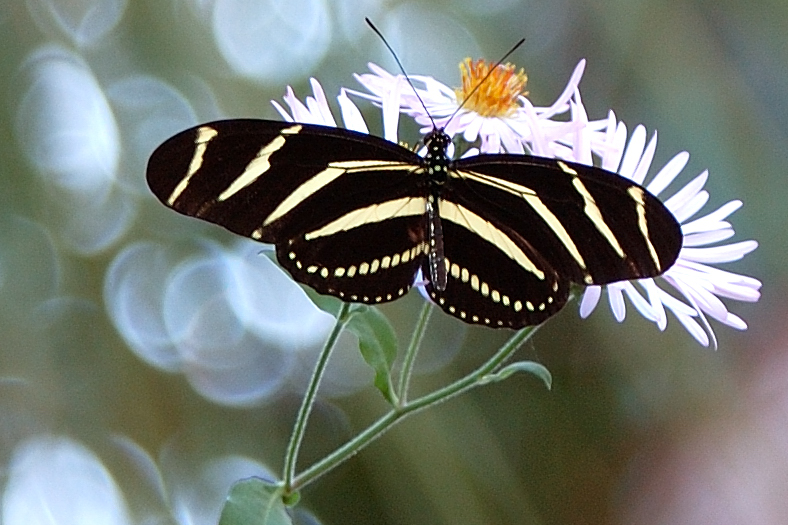
Zebra Longwing – Heliconius charithonia

The Zebra Longwing is the Florida state butterfly. I suspect that the butterflies are unaware of the honor but, they are a pretty little insect.

They are woodland butterflies so, don’t often get seen in the pine flatwoods but, wherever you find stands of oak with decent underbrush they will show up. One of my favorite places to find them is Audubon-Pennington Park at 1153 Alton Road in Port Charlotte FL.

Their host plant is varieties of passionflower and they eat pollen as well as sipping nectar.

Posted in Bug | Tagged , , | Leave a comment

Hathaway Park – West entrance, Punta Gorda FL

This little park is a few miles out of town with the main access at 35461 Washington Loop Rd. It’s an access point for Shell Creek which is also our local water supply. It has a boat ramp with handicap access and public toilets. Parking is large enough for boat and horse trailers. There are several miles of bridle path for our local equestrians. If you go just a little further along Washington Loop (about 50 yards) you will find the entrance which provides a picnic area and more paths for riding or walking. That eastern entrance is also the location of the canoe and kayak launch point which is hull kindly earth vs. the concrete of the boat ramp.
As you walk from the parking lot into the trees toward the creek, you come to a sign offering you a choice of the Shell Creek Lookout or the River Edge Trail. The primary habitat is pine flatwoods with heavy undergrowth along the path to the Lookout but there are nice wetlands along the creek and the River Edge Trail. The banner photo on this page is the blind at the end of the River Edge Trail as seen from the Shell Creek Lookout.

The first picture here shows the paved path that leads from the parking lot toward the creek. At the end of it is a spacious deck overlooking the creek with benches at each end. The second picture shows a portion of the deck and the view of Shell Creek.

I dithered about a bit on my way there this morning. Distracted by the local Eagles and Ibis I got there a bit late for the birds wakeup call. So, I took a couple of shots of the locale and found a few insects up and about.

The first here is a Skipper Butterfly. They are a little different with their sugarscoop antenna ends adn the way they carry their wings at rest with one pair parallel to the ground and the other straight up. The second is a bee on some of the local marsh wildflowers.

Then, as I was leaving, I noticed something in the bushes on the side of the path. It was a Venusta Orchard Spider repairing it’s web. I took one shot with available backlighting to capture the web and discovered that it was a rainbow of color with the spider looking like a jewel in the center. The slight breeze and rapid movements of the spider as it repaired it’s nest didn’t make for a great picture of a spider but, it showed a real natural beauty. The first picture is the Rainbow Weaver and the second a more mundane shot of a similar spider.

Posted in Bug, Park, Spider | Tagged , , , , | Leave a comment

American Bittern – Botaurus lentiginosus

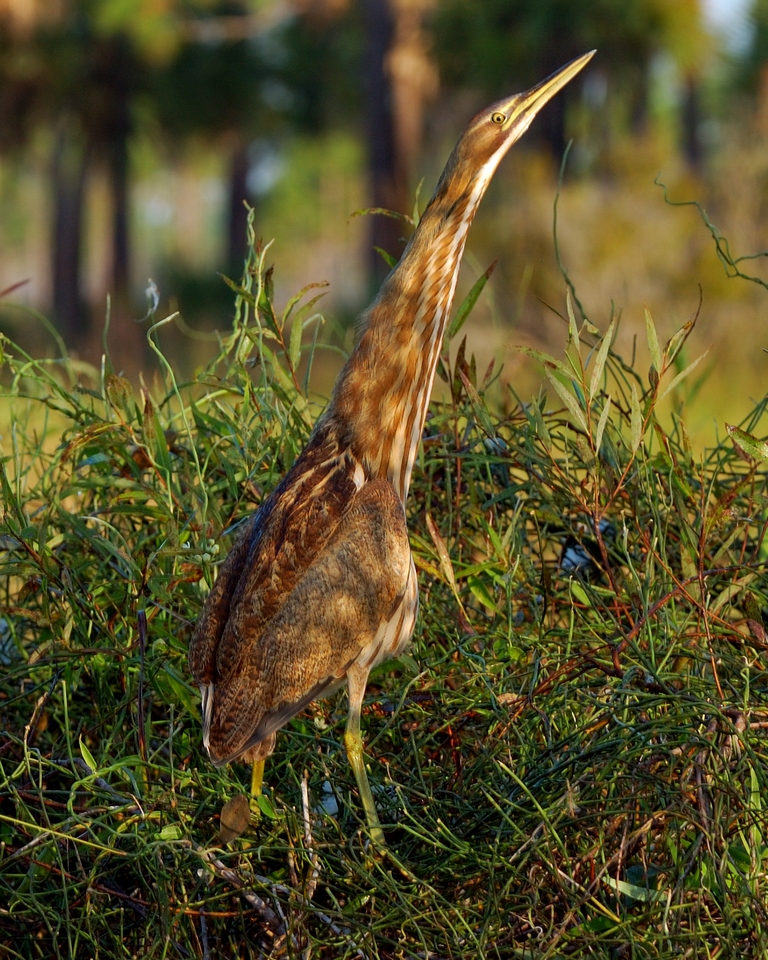
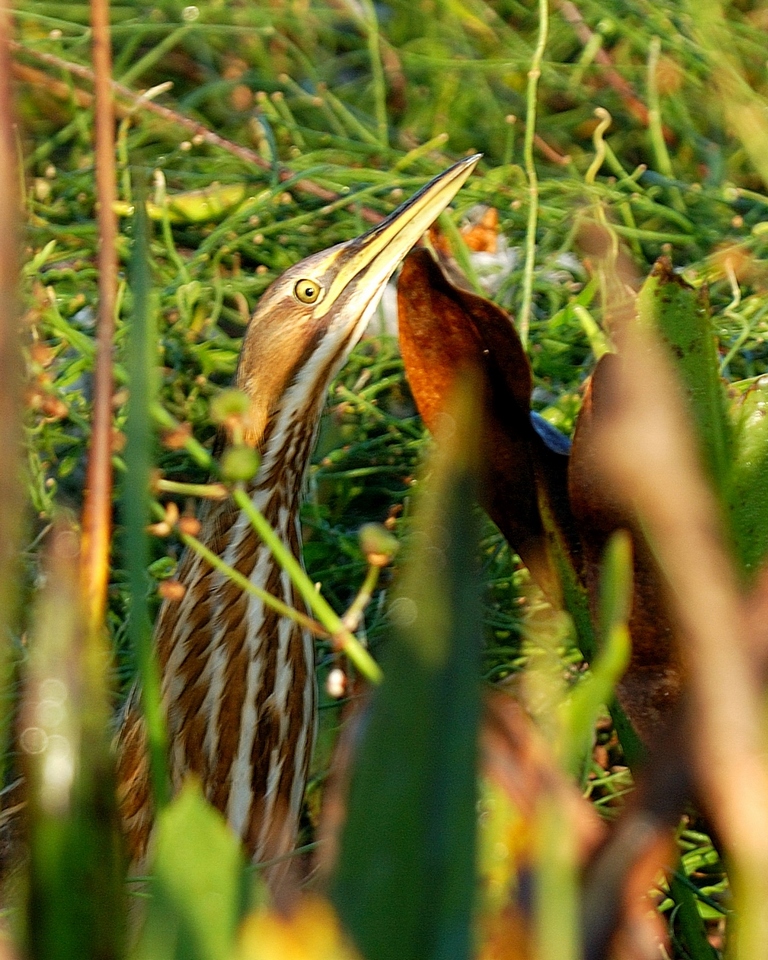
Speaking of the Sora at Ollies Pond reminded me of another reclusive marsh dweller. The American Bittern is a bird of the heron family. It is about the size of the Little Green Heron but in a less distinctive plumage.

When frightened, it stands absolutely still with it’s neck extended upward trying to look like the reeds it inhabits. It’s coloration helps a lot in that as you can see. This one was found along Tram Grade in the Babcock-Webb Wildlife Management area near Punta Gorda.


Posted in Bird | Tagged , , | Leave a comment