Charlotte Harbor National Estuary Program Calendars

For those of you who have been taking photos in the Peace and Myakka River watersheds, it’s time again to send three of your best to the Charlotte Harbor National Estuary Program Calendar contest.  The entries are due by July 14th.   Judging will take place online during August.  The rules and information are at the link above.  If you don’t want to enter but would like a copy of the calendar, all you have to do is subscribe to their periodical Harbor Happenings and other materials.  You will get this years calendar if you subscribe by Sept 14.


Have fun.

Posted in animal behavior, Bird, Photography | Tagged , , , , , , | Leave a comment

Killdeer – Charadrius vociferus

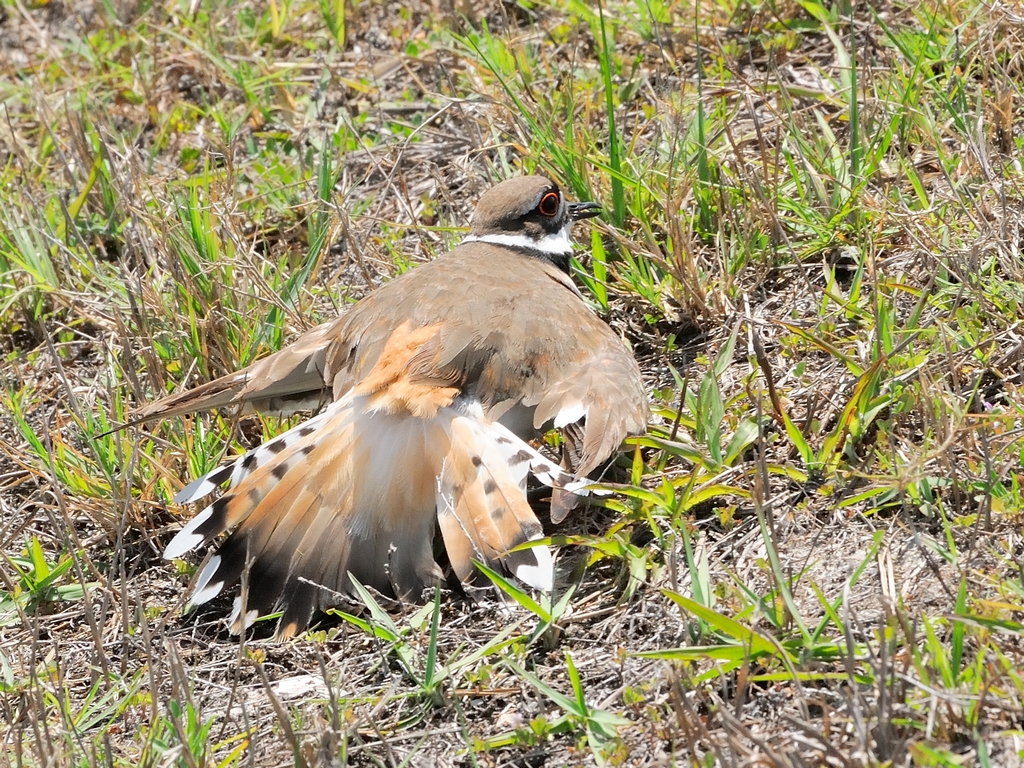
The Killdeer – Charadrius vociferus is a small plover that makes it’s nest on the ground.  It is an attractive little bird that I can find near ponds and meadows pretty easily.


If they happen to be nesting and you get near the nest, one of them immediately starts hopping around on the ground, dragging a wing and acting like it can’t fly.  Of course, it somehow manages to stay just out of reach as it draws you away from the nest.  Once it thinks you are far enough away, it is miraculously ‘cured’ and manages to strut around as if laughing at you.


I managed to find this one in an underdeveloped commerce park near the Punta Gorda Airport.  I did look for the nest but, since they nest on the ground in grasses, I was concerned that I would step on it.

Posted in animal behavior, Bird, Photography | Tagged , , , , | Leave a comment

Weekly Photo Challenge: Create

WordPress offers this photo challenge so, I thought I’d see how it goes.  There is a theme given each week and you are invited to enter a photo related to it.  So, here is a friend of mine creating a photograph.

this was taken on a field trip to the Circle B Bar Preserve with the Photo Adventures Camera Club.

Posted in Photography, Wordpress Photo Challenge | Tagged | Leave a comment

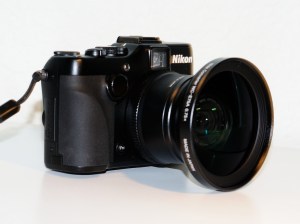
Nikon P7100 with the Nikon WC-E75A Wideangle Converter

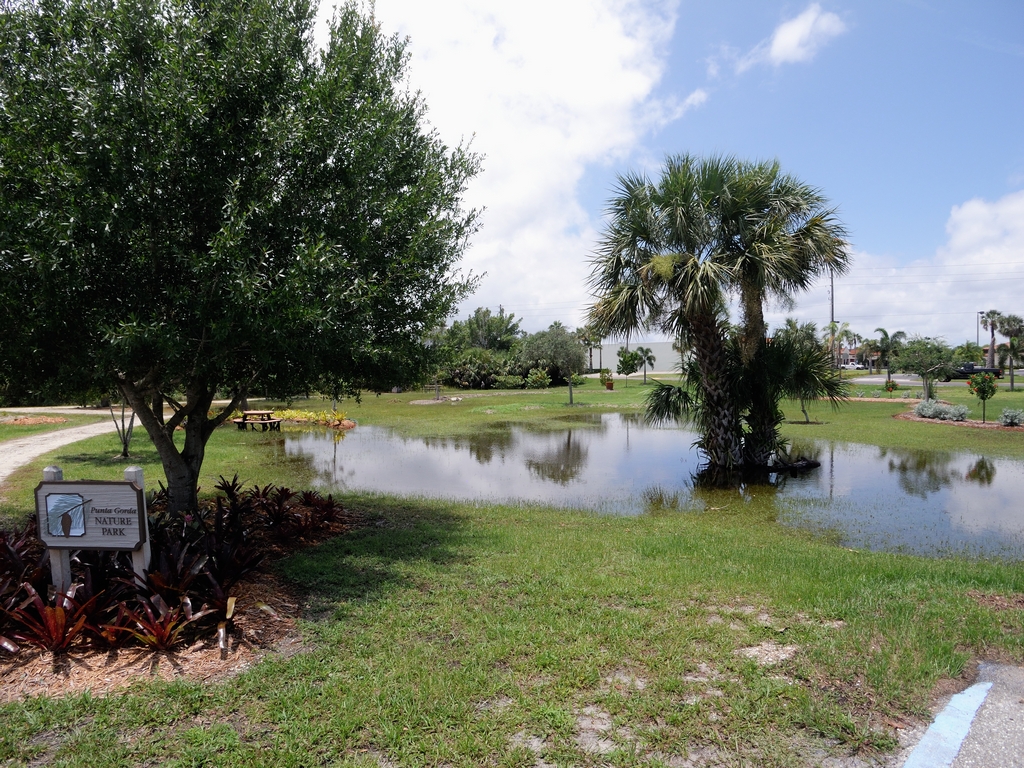
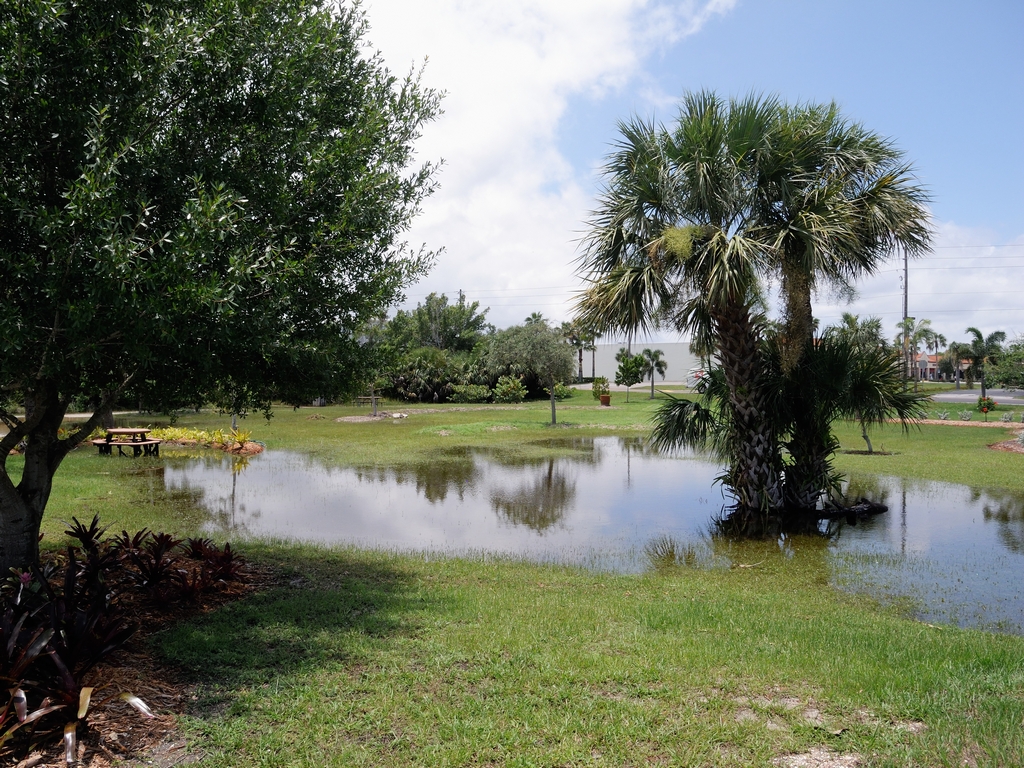
I mentioned the Nikon WC-E75A and UR-E22 adapter in a previous post.  Today, I went to the Punta Gorda Nature Park to see how it had fared with the rains and flooding of Tropical Storm Debby.  It was hard to tell.  The paths were still flooded so, I was pretty much stuck at the parking lot without using better boots than I had on.  I decided this was a chance to show the WC-E75A again and it’s effect on a scene.  The converter and adapter look like this off and on camera.


The wideangle of the P7100 is 6mm, a 28mm equivalent in 35mm terms.  The 75 means that it makes the focal length 3/4 of it’s original length or a 4.5mm or a 21mm equivalent.  In practice, it does add a good deal to the field of view of the lens.  The left picture here was taken with the WC-75A and the one on the right without the converter.


It certainly adds to the FOV and does not hurt image quality.  It is a fairly expensive way to get more FOV but, if that suits your needs is worthwhile.

Posted in Camera Gear, Park, Photography, Scenic | Tagged , , , , , , , | Leave a comment

More with the Nikon P7100 and Raynox 150 macro lens

My first experiment (below) with the Raynox 150 on the Nikon P7100 convinced me that I should try it again.  So, I headed off to the butterfly garden at the Punta Gorda History Park to see what it would do.

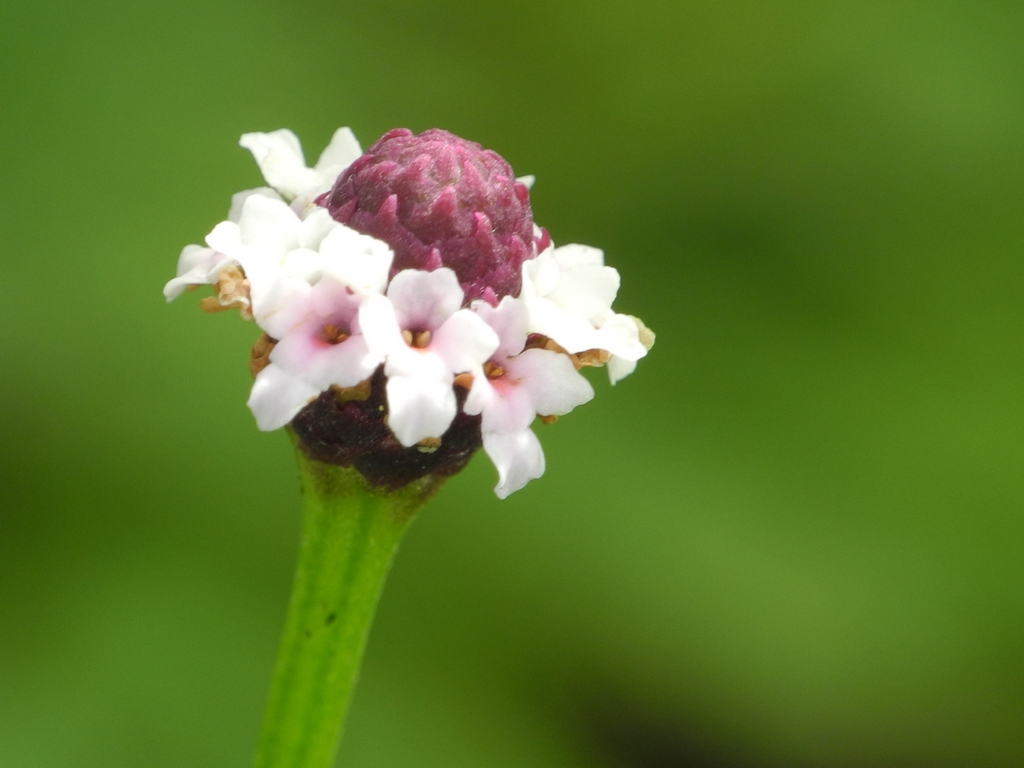
I did find that handholding was OK but, more support was merited.  I have a lightweight monopod that doesn’t get used with the DSLRs but, is fine with the P7100.  Using it also means that I don’t need to keep a mounting plate on the camera and it keeps it’s compact form.  The monopod made a world of difference in the keeper rate.  So, here are a few shots from today.  Most are somewhat cropped.  The purple flower is a crop and the close up is a crop of that.  As usual, just click on an image for an enlarged view.


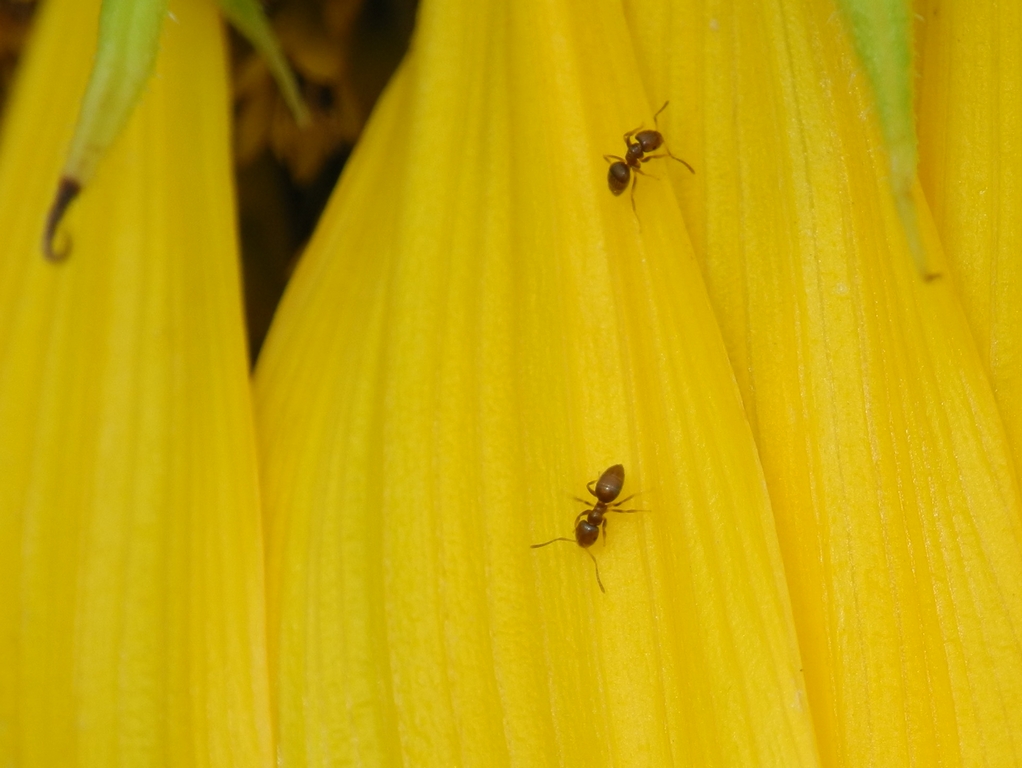
I then took a shot of sunflower petals which had ants running all over it.  This combo is tough to track moving insects with.  The optical viewfinder isn’t any help and my tracking skills with the rear screen leave a lot to be desired.  The next shot is an emerging Black-eyed Susan.  The bud has just opened to the point that the petals are beginning to show.


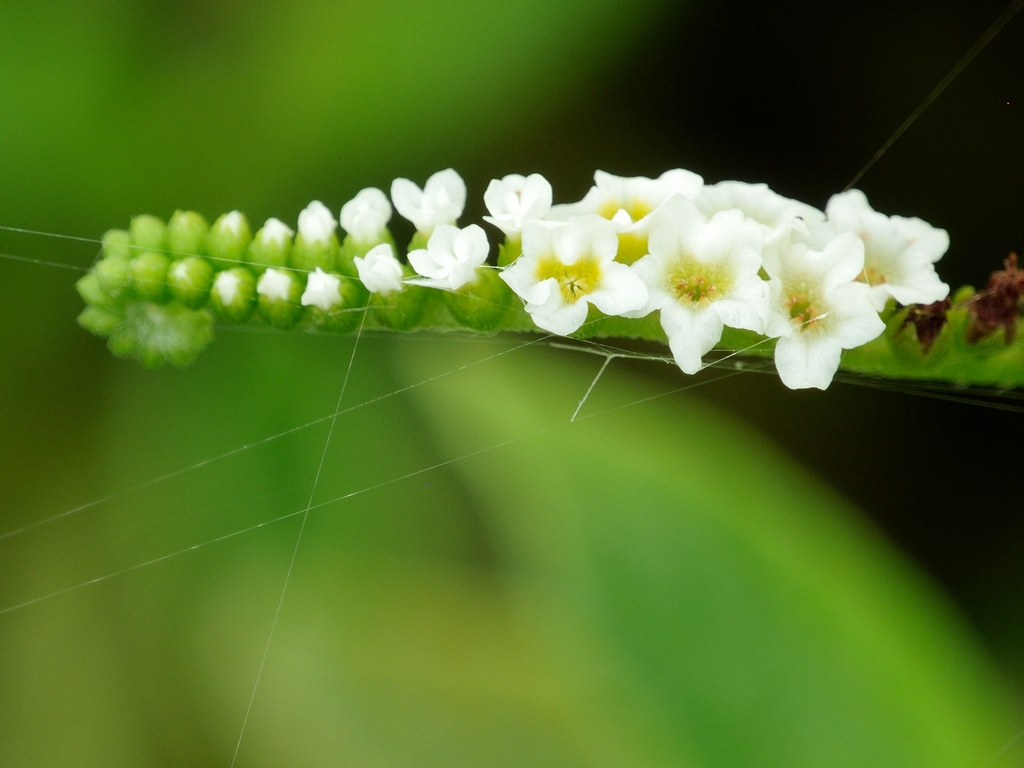
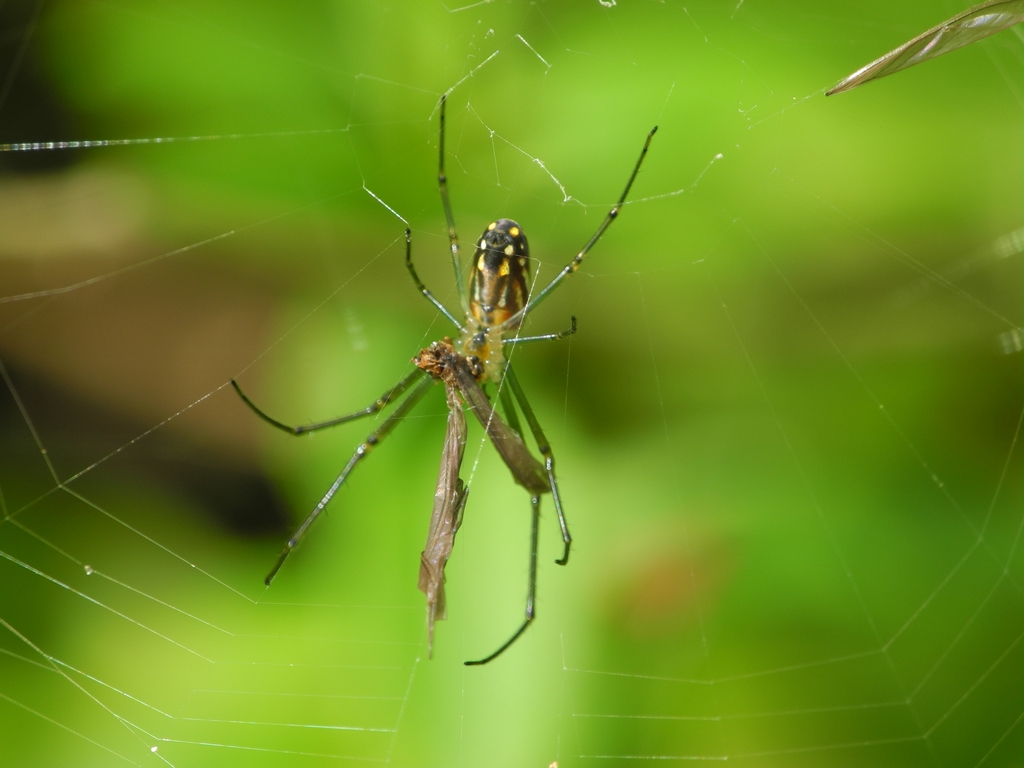
This next pair are a soft focus (unintentional 🙂 but nice) image of a plumbago flower and a Scorpions Tail – Heliotropium andiospermum.  The Scorpions tail consists of a lot of small flowers which bloom in sequence.   You can see those that have already bloomed, been pollinized and gone to seed on the right while the other blooms lead to the buds of the final flowers.  You can tell the small size by the spider web attached to it.


Finally, another small flower with progressive blooming and a spider.


This combo is so satisfactory, I think I will get the Raynox 250 to add to the capabilities.

Posted in Camera Gear, Flower, Park, Shooting closeups, Spider | Tagged , , , , , , | Leave a comment

Nikon P7100 accessory lenses

The Nikon P7100 is Nikon’s premier Point and Shoot camera.  Point and shoot is an oversimplification because the camera does offer raw image format for better post processing and a viewfinder which is often useful in bright sunlight.  It is also one of the few compacts designed to accept filters and accessory lenses easily.  While Nikon makes only one accessory lens, the WC-E75 wide angle converter, there are a number of third party providers with other lenses.  I have the WC-E75 and the Raynox 15o macro converter.  Both require an adapter tube for operation.  The WC-E75 is designed to work with the Nikon UR-E22 and the Raynox uses a pinch type filter mount and will work with any adapter.

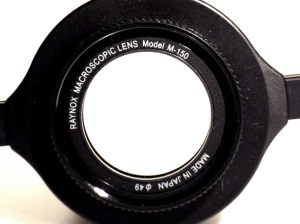
   

The photo on the left here shows a generic Polaroid branded mounting tube with the Raynox mounted and the Nikon UR-E22/WC-E75 combination.  The right photo  shows the Raynox ‘macroscopic’ lens with it’s pinch mount.  The base of both tubes is the same.  It has a bayonet type mount that surrounds the P7100 lens.  You simply remove the cosmetic ring that covers the mount and place the tube on it.  Once on, they look like this.
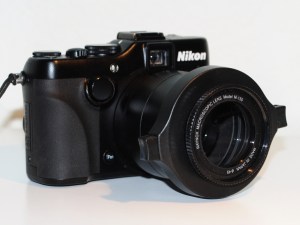
   

Raynox on the left, Nikon on the right.  There is a difference in the mounting tubes.  The generic tubes come in two pieces and allow the camera lens to be zoomed.  When the shorter one piece Nikon UR-E22 is mounted, the lens is retracted to it’s wide angle position.  There is a reason for this.  If you click on the picture above, you will see that the fixed zoom of the P7100 is almost touching the back of the wide angle converter.  Attempting to zoom with that on the camera could cause damage to the lenses or zoom and focus motors.  The WC-E75 turns the 28mm wide angle position of the P7100 into a 20mm equivalent.

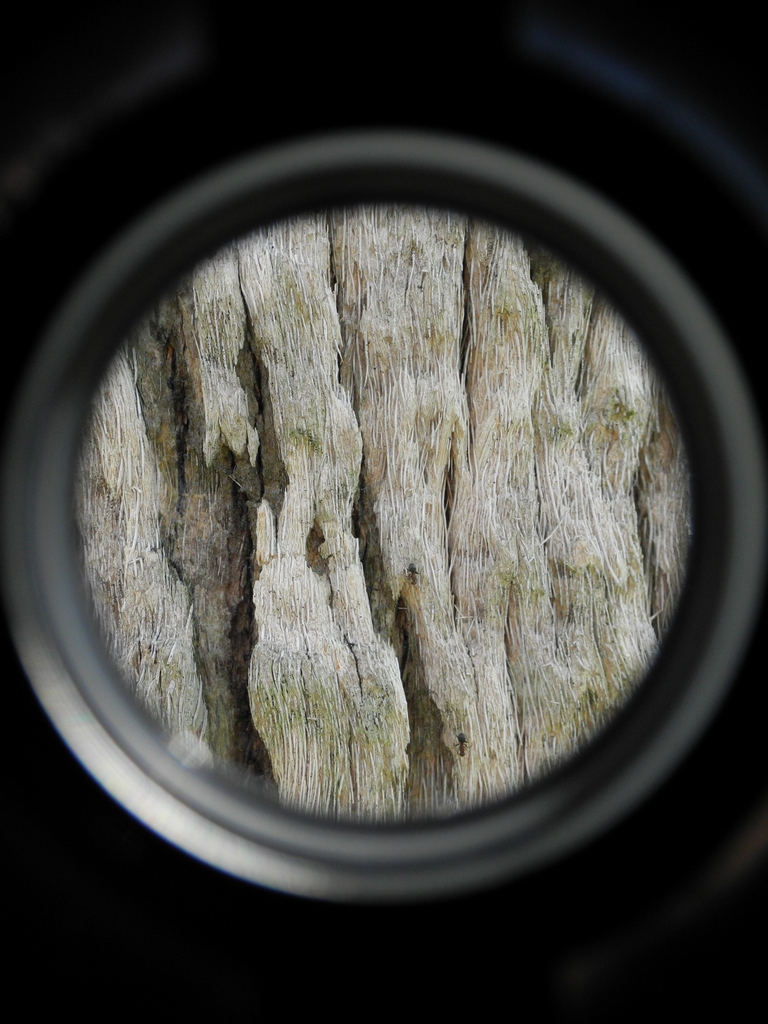
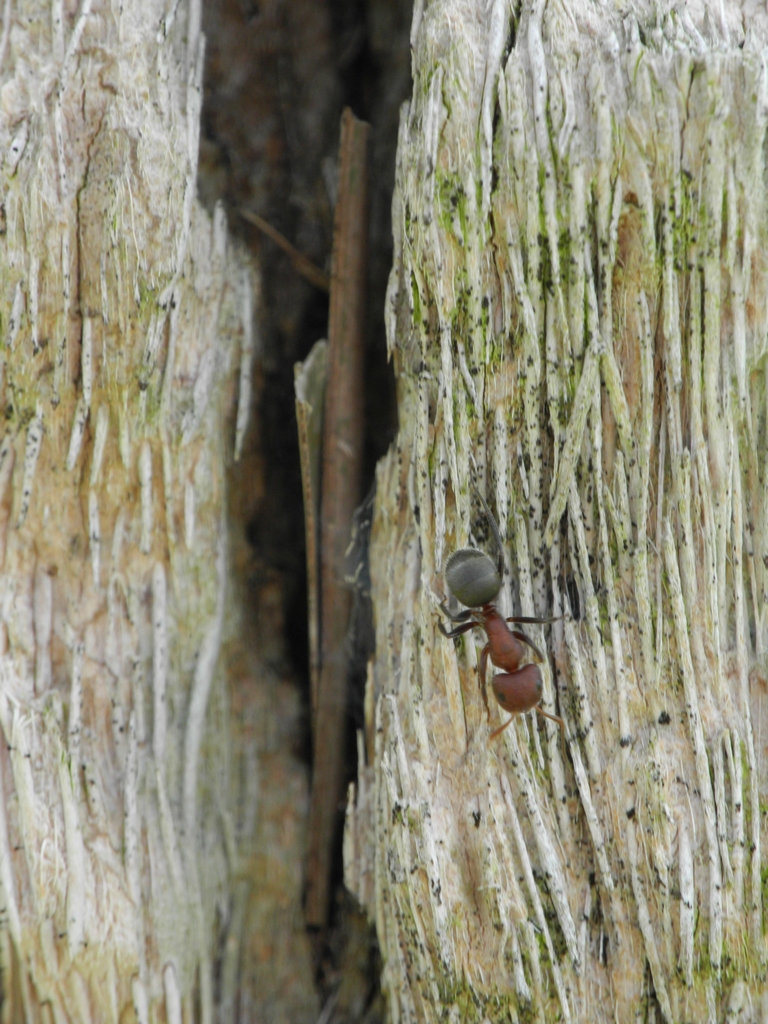
Using the Raynox is equally simple.  Just put the tubes on the  camera and put the Raynox 150 on the end of the tubes.  Unlike the UR-E22, these tubes allow you to use the zoom capability.  It is in two pieces so that at the wider end, you can still use filters if desired.  That isn’t necessary for the macro adapter though because you will normally be shooting at the long end.  Shooting at the short end doesn’t give you much magnification and does produce a lot of vignetting.  Here are two shots at 28mm and 200mm equivalents using the Raynox.  There is actually an ant in both pictures.
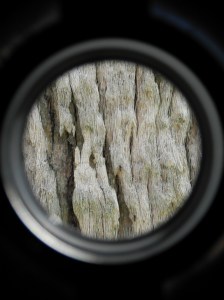
   

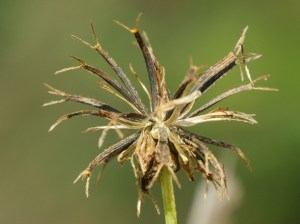
The vignetting and lack  of magnification at wide angle is obvious.  The raynox does not give the high quality of a good macro lens but, for non interchangeable lens cameras, it’s two element design is about as good as it can get.  The pinch mount also means that you can use it on other lenses.  Here is a shot of Spanish Needle seeds straight out of the camera and cropped for more detail.  The individual seeds are about 1/4 inch long.
   

I am happy with the combination and it’s easy enough to carry around in a jacket pocket.  Even easier in a small belt bag.
Posted in Camera Gear, Photography, Shooting closeups | Tagged , , , , , , , | 3 Comments

Sawgrass Lake Park

We were in St. Petersburg FL over the weekend for a get together and I took some time to look at the local parks.  One interesting one I found was Sawgrass Lake Park at 7400 25th St. N, 33702.  There is an environmental center there at the park and it is obviously used for school trips.

The park is adjacent to Interstate 275 but there is no direct exit.  Most of the park is a boardwalk which winds through maple swamp.  there is an elevated viewing platform at one part of the boardwalk which overlooks a swamp area and pond.  There are a number of shelters along the boardwalk for rainy days.  Here are a couple of views in the park, just click the pic for a larger view.


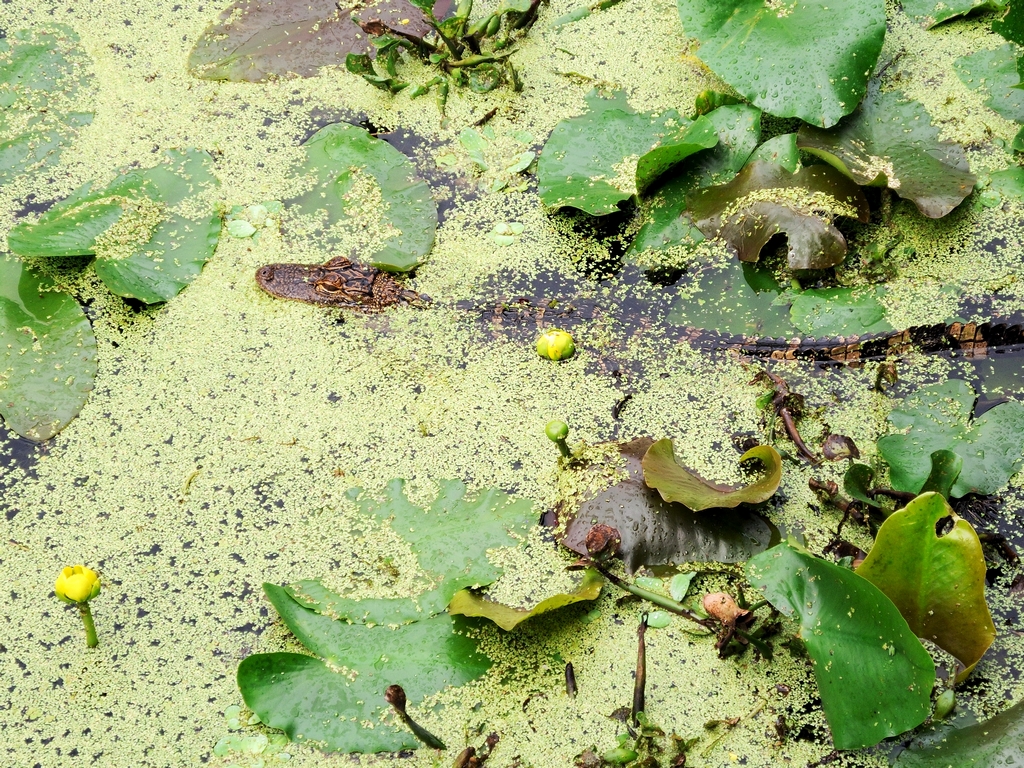
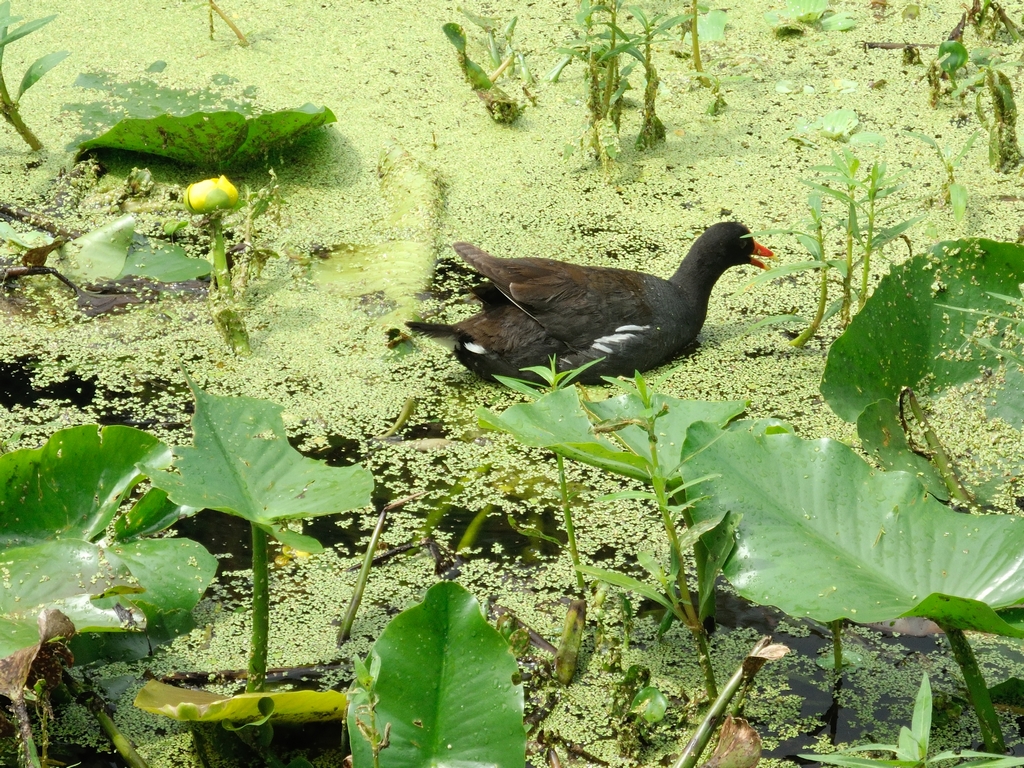
Since it was one of those rainy days, I decided not to lug the big camera but took my Nikon P7100 along.  It is really good for days like this since it fits easily into the pockets of my waterproof jacket.  The cloudy day made for poor bird shooting but, there were plenty along the drainage canal and boardwalk.  I saw Little Blue Herons, Limpkins, Moorhens, Ibis, Great and Snowy Egrets, etc.  At the first of the shelters, I found several young alligators.  One of them decided to stalk a moorhen but, wasn’t very good at it.  As it moved through the duckweed and spatterdock, the moorhen caught sight of it and paddled off squawking it’s alarm call.
   

It would certainly be a great place to spend time on a nicer day.

Posted in Bird, Flower, Park, Photography, reptile | Tagged , , , , , , , , | Leave a comment

Pelican feeding dives

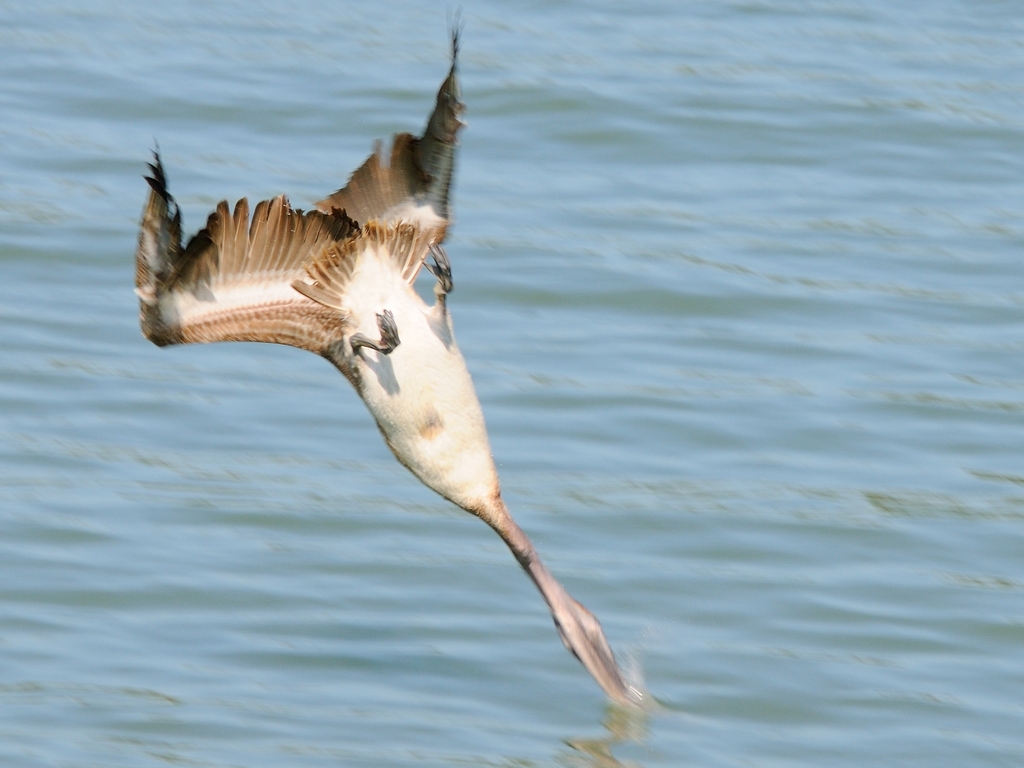
An internet forum post on trying to get pictures of feeding Brown Pelicans – Pelecanus occidentalis got me to pull out these pictures of the behavior.  None are particularly great photographs but, they do illustrate the events.  The pelican begins with gliding over the feeding ground.  When prey is spotted, it puts it’s neck into an ‘S’ shape and rolls into a dive.  Just as it nears the water, the neck strikes forward like a snake, making a very clean entry.  Notice that the beak is upside down so that the pouch is the top of the bill as it enters.


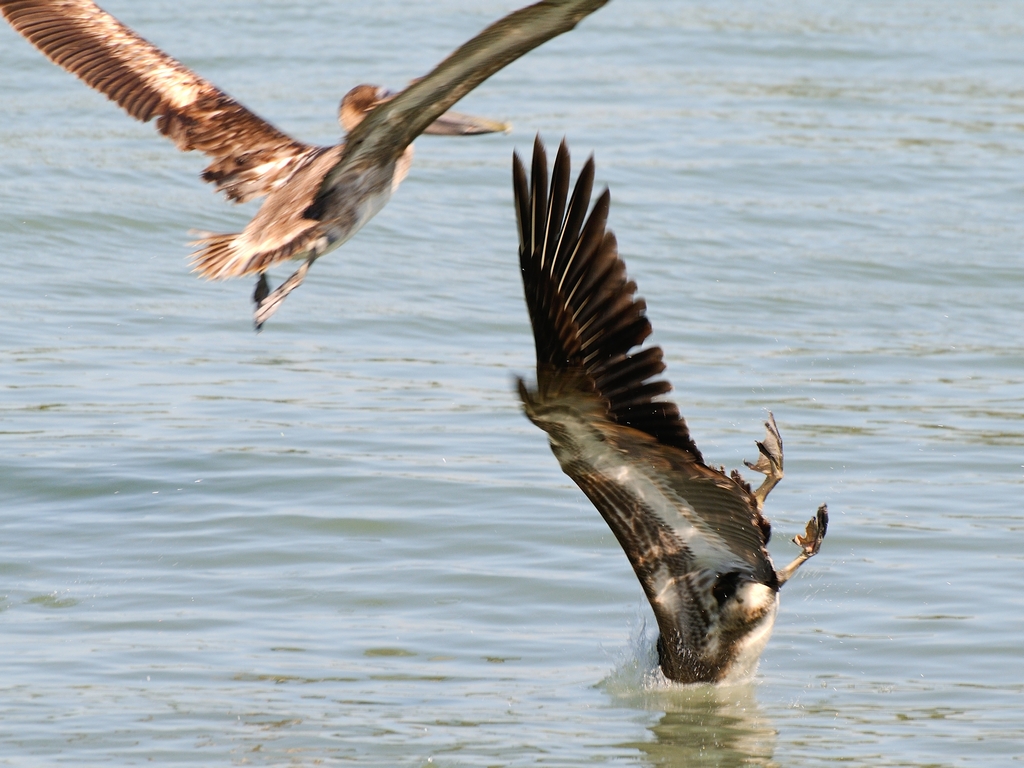
With the neck extended, there is almost no splash until the body and wings hit the water.  But, the pouch is opening quickly with the force of the water.  That stops the head and the neck curves again to absorb the shock and the pelican flips upright.


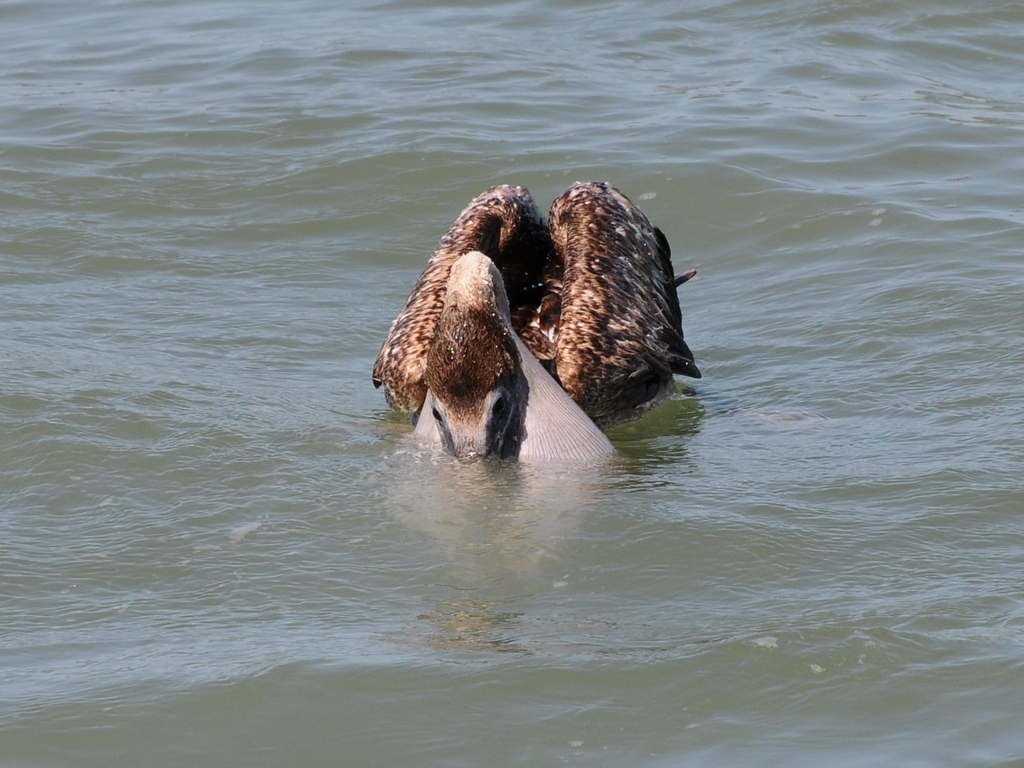
When the pelican dives in, the pouch is opened by the force of the water and spreads out like a parachute or castnet.  The two pictures below show this about as well as possible.  The first shows the pouch with the pelicans head fully immersed.  It is heavy with water at this point and, with luck, some fish.  The pelican settles on the water and then slowly lifts its head as the pouch drains.


As you can see in the second it is still very full.  As usual, just click on any of the images for a larger version.

Posted in animal behavior, Bird | Tagged , | Leave a comment

Guess where I am

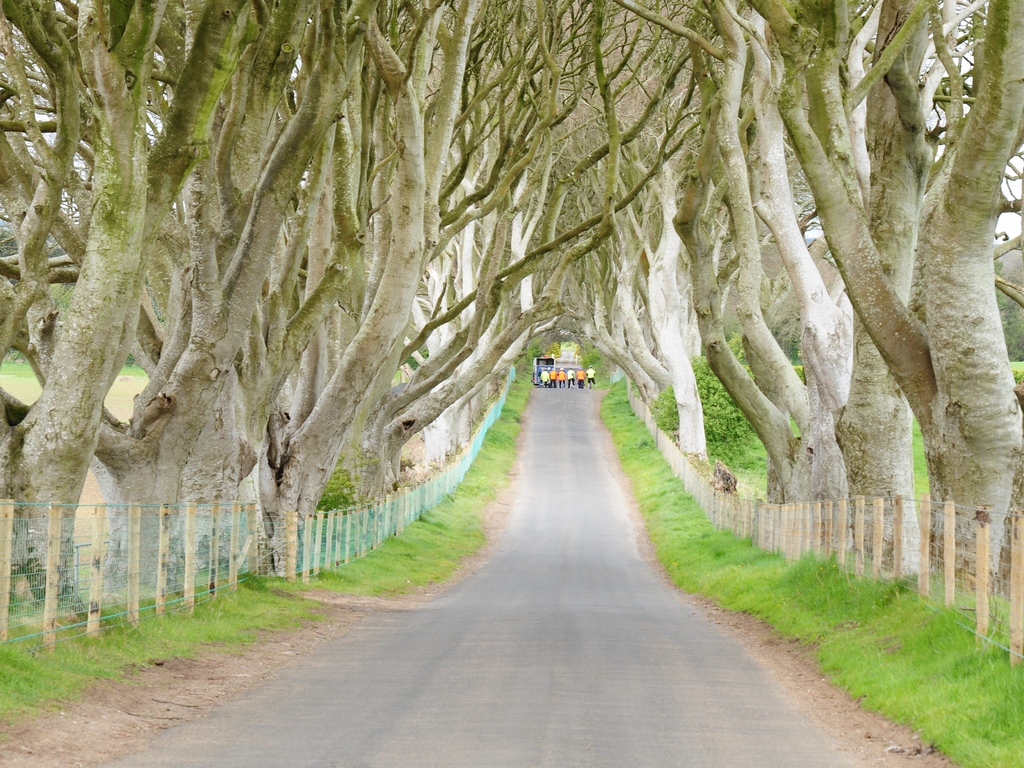
This is NOT Florida.  I was ready to shoot this arch of 300 year old beech trees over a road when the cyclists decided it would be a great place to stop.  It only took a shor while to load their bikes and they were off leaving the field of view clear.

Posted in Scenic | Tagged | 2 Comments

Little Blue Heron color changes

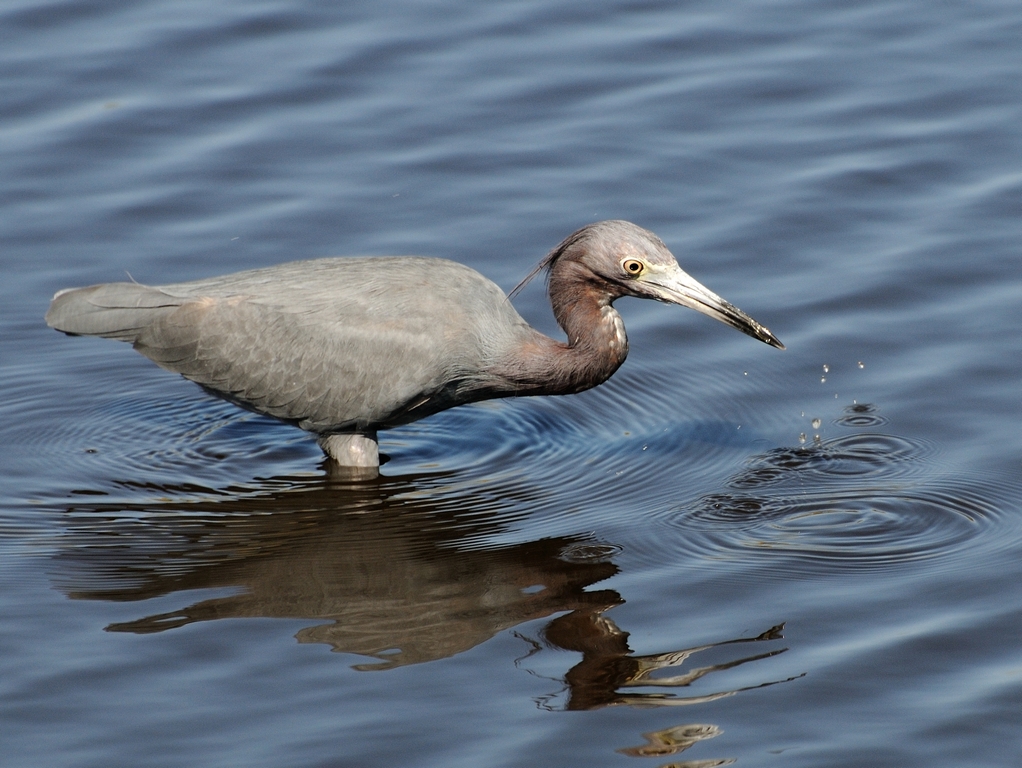
I found a Little Blue Heron – Egretta caerulea in Ponce de Leon Park this afternoon. It was showing full mating colors with a brilliant patch of blue before it’s eyes. Once mating season is over this will fade to a more normal color. Just click on the images for a larger view.
   
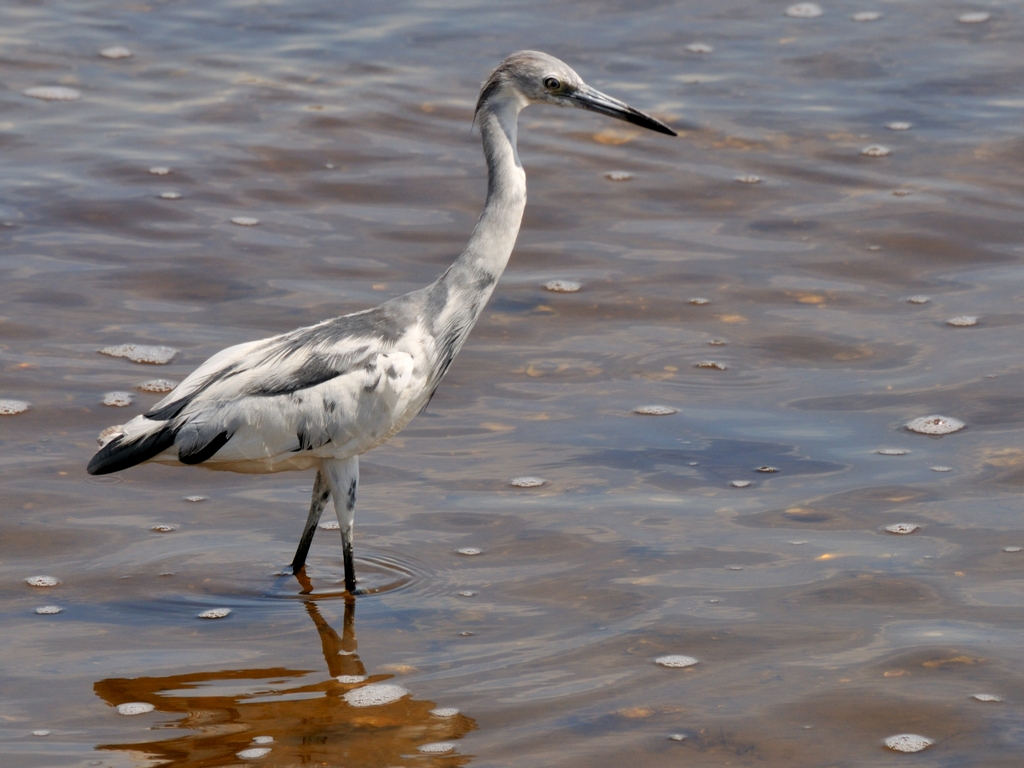
When young, Little Blue Herons are actually white and are often confused with Snowy Egrets which are about the same size. The gradually go through a dappled phase as their blue coloring comes in.
   

Posted in animal behavior, Bird | Tagged , , | 5 Comments